How Long Should a Chapter Be? A Complete Guide for Writers
4 October 2026 · 4 min read
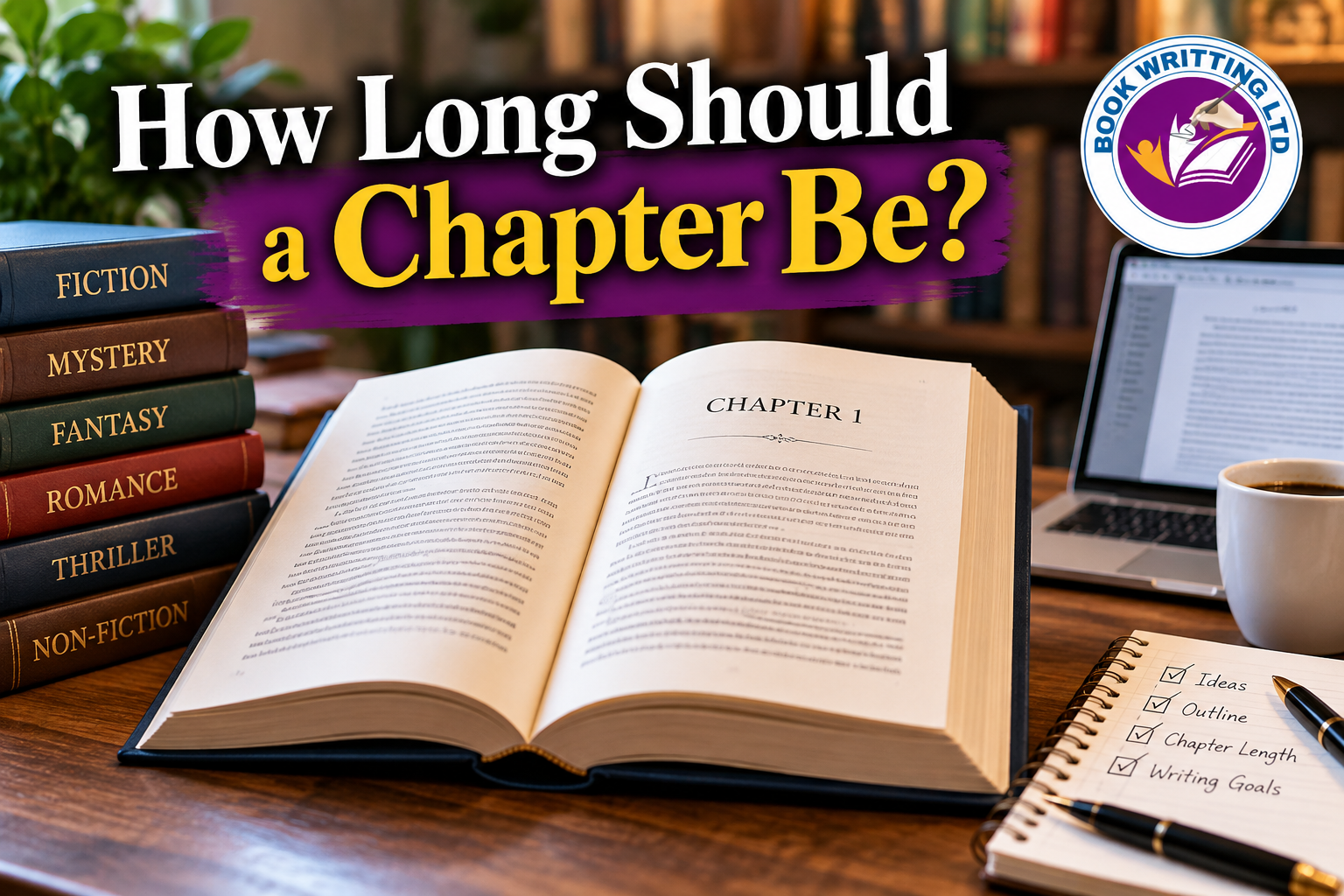
One of the most common questions writers ask is, "How long should a chapter be?" The simple answer is that there is no universal rule. Chapter length varies depending on genre, writing style, target audience, and the needs of the story. Some chapters may be only a few hundred words long, while others can stretch to several thousand words.
Rather than focusing on a specific word count, writers should think about the purpose of each chapter and how it contributes to the overall reading experience.
Is There an Ideal Chapter Length?
Most chapters in novels range between 1,500 and 5,000 words. However, successful books exist well outside this range. Some thrillers use short chapters to create momentum and suspense, while epic fantasy novels often feature longer chapters that allow for extensive world-building and character development.
The most important factor is whether the chapter feels complete. A chapter should accomplish a specific purpose and leave readers eager to continue.
Chapter Length by Genre
Different genres often favor different chapter lengths.
Thriller & Mystery
1,000–3,000 words
Fast pacing
Frequent cliffhangers
Encourages page-turning
Romance
2,000–4,000 words
Balanced pacing
Focus on character development
Fantasy & Science Fiction
3,000–6,000+ words
Detailed world-building
Multiple plot elements
Young Adult Fiction
1,500–3,500 words
Quick pacing
Easy readability
Nonfiction
Varies widely
Organized around topics
Focused on delivering information clearly
Why Chapter Length Matters
Chapter length affects how readers experience your book. Short chapters can make a story feel faster and more exciting. Longer chapters allow deeper exploration of characters, settings, and themes.
Benefits of shorter chapters include:
Faster pacing
Increased momentum
Easier reading sessions
More frequent stopping points
Benefits of longer chapters include:
Greater depth
Stronger immersion
More detailed storytelling
Richer character development
Should Every Chapter Be the Same Length?
No. In fact, varying chapter lengths often improves the reading experience. Some scenes require more space, while others work best when delivered quickly and efficiently.
For example, a major confrontation may need several thousand words to build tension and emotional impact. Meanwhile, a shocking revelation might be more powerful in a brief chapter that ends with a dramatic twist.
The goal is not consistency in word count but consistency in quality and pacing.
Professional Writing Tip
Many successful authors focus less on chapter length and more on chapter purpose. Every chapter should move the story forward, reveal important information, develop characters, or increase tension. When a chapter has fulfilled its purpose, it may be time to end it.
Writers seeking professional guidance with manuscript development, editing, publishing, and book marketing can explore the services available through Book Writting Ltd.
Signs a Chapter Is Too Long
Your chapter may be too long if:
Readers struggle to find a stopping point.
The pacing feels slow.
Multiple unrelated events occur in the same chapter.
The chapter loses focus.
Breaking long chapters into smaller sections can improve readability and maintain engagement.
Signs a Chapter Is Too Short
Your chapter may be too short if:
Important scenes feel rushed.
Character development is limited.
Events happen too quickly.
Readers feel disconnected from the story.
Short chapters can be effective, but they should still provide meaningful content.
How to Decide Where a Chapter Ends
Good chapter endings often occur when:
A major goal is achieved.
A new question is introduced.
A conflict escalates.
A perspective changes.
A cliffhanger is revealed.
Strong chapter endings encourage readers to continue to the next section.
Publishing Your Book
After completing your manuscript, professional editing, formatting, cover design, and marketing can help maximize its impact. Authors looking for comprehensive publishing support can learn more at bookwritting.com and explore services designed to help writers bring their books to readers worldwide.
There is no perfect chapter length for every book. The best chapter length is the one that serves your story, maintains reader engagement, and supports the pacing you want to achieve. Whether your chapters are 1,000 words or 5,000 words, focus on creating meaningful content that keeps readers interested and invested in the journey.
A well-structured chapter isn't defined by its word count—it's defined by its purpose and impact.