
What Is the Difference Between an Author and a Co-Author? A Complete Guide
12 November 2026 · 8 min read
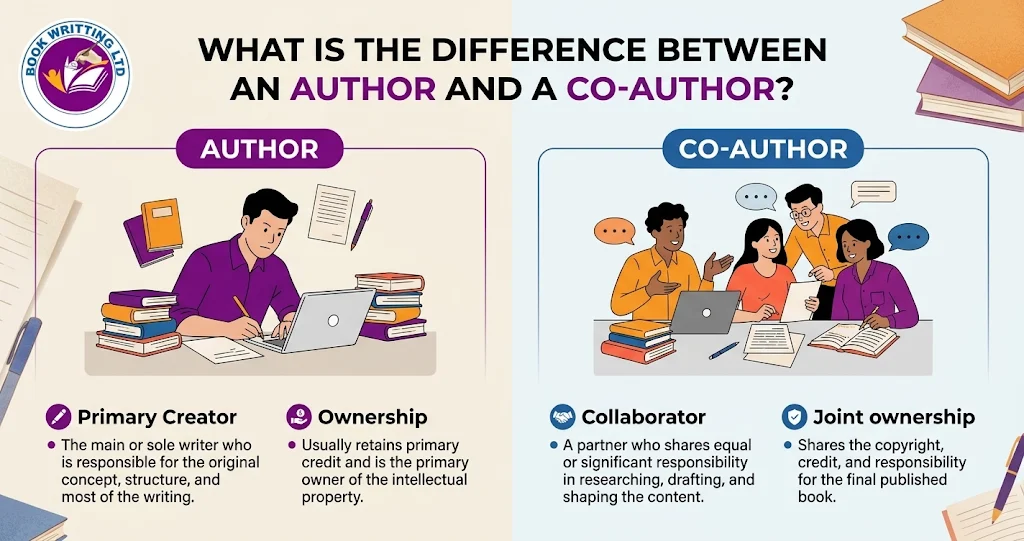
Writing a book can be a personal creative journey, but sometimes two or more people work together to develop a manuscript. One person might create the original concept and write most of the content, while another contributes research, develops chapters, or shares responsibility for the final work.
This raises an interesting question: What is the difference between an author and a co-author?
Understanding these roles is important for writers, publishing professionals, researchers, and anyone considering a collaborative book project.
An author is a person who creates an original written work. A co-author is also an author, but the term generally describes someone who shares creative responsibility for producing a work with another writer or group of writers.
The distinction involves creative contributions, collaboration, recognition, and sometimes legal ownership. Understanding these differences before beginning a project can help prevent misunderstandings and create a more productive writing relationship.
Let's explore what authors and co-authors do, how their responsibilities differ, and what writers should consider when collaborating on a book.
1. What Is an Author?
An author is a person who creates an original written work, such as a novel, short story, memoir, educational guide, article, or nonfiction book.
Authors develop ideas, organize information, create characters, structure narratives, and communicate their thoughts through writing.
Depending on the project, an author may work independently or collaborate with other creative professionals.
An author commonly takes responsibility for:
Developing the central concept.
Planning the book's structure.
Writing the manuscript.
Creating characters and storylines when writing fiction.
Researching relevant subjects.
Revising and improving the content.
Preparing the manuscript for publication.
For example, someone who independently writes a novel, develops its characters, organizes its chapters, and completes the manuscript is generally described as the author.
Authors may also work with editors, illustrators, researchers, designers, and publishers without necessarily sharing authorship with every person involved.
2. What Is a Co-Author?
A co-author is a person who collaborates with another author to create a written work.
Instead of developing the entire manuscript independently, co-authors contribute their creative skills, knowledge, experience, or writing to a shared project.
Two writers might work together on every chapter, or they may divide responsibilities according to their individual expertise.
For example, one person might develop the concept and organize the chapters, while another writes substantial sections, develops examples, and helps shape the final manuscript.
Both individuals may receive co-author credit when their contributions meet the relevant authorship expectations and they are recognized as joint creators.
Co-authorship is common in:
Collaborative novels.
Educational textbooks.
Academic books.
Business publications.
Research-based nonfiction.
Professional guides.
Multi-author creative projects.
The most important feature of co-authorship is meaningful creative collaboration rather than simply providing occasional assistance.
3. Author vs. Co-Author: Key Differences
The main difference concerns whether a person creates a work independently or shares its creative development with another writer.
Aspect | Author | Co-Author |
|---|---|---|
Creative role | Creates a written work | Collaborates in creating a shared work |
Writing responsibility | May handle the entire manuscript | Shares writing responsibilities |
Decision-making | Generally manages their own project | Decisions may be shared |
Creative contribution | Develops the work independently | Adds substantial creative contributions |
Publishing credit | Usually receives individual author credit | Receives shared author credit |
Collaboration | May work independently | Works with one or more other authors |
It is important to remember that a co-author is also an author. The distinction describes how the work is created, not whether one person is more qualified to be called an author.
4. What Responsibilities Does an Author Have?
An independently working author usually has substantial control over the creative direction and development of the manuscript.
This may involve choosing the subject, organizing the chapters, establishing the writing style, and deciding how the information or story will be presented.
For fiction writers, responsibilities may include:
Developing the main characters.
Creating the setting.
Building the central conflict.
Establishing the storyline.
Writing dialogue.
Developing the ending.
For nonfiction writers, responsibilities may include:
Selecting the subject.
Conducting research.
Organizing information.
Explaining important concepts.
Providing examples.
Developing practical guidance.
Although an author may receive assistance from editors and other professionals, the author generally directs the creative development of their own work.
5. What Responsibilities Do Co-Authors Have?
Co-authors share creative responsibilities throughout a collaborative writing project.
Their exact roles depend on their agreement and the nature of the book.
For example, consider two writers developing a book about entrepreneurship.
One co-author might contribute business experience, case studies, and practical examples, while the other develops the chapter structure and writes explanations.
They may also review each other's writing, discuss ideas, revise sections, and work together on the final manuscript.
Successful collaboration requires clear communication and an understanding of each person's responsibilities.
Co-authors should discuss questions such as:
Who develops the original concept?
Who writes each chapter?
Who verifies research and references?
Who manages editing and revisions?
Who makes final editorial decisions?
How will disagreements be resolved?
How will the authors be credited?
A clear arrangement helps ensure that everyone understands their contribution and responsibilities.
6. Does a Co-Author Need to Write an Equal Amount?
No. Co-authors do not necessarily need to contribute exactly the same number of words.
A collaborative book may involve different types of creative contributions.
For example, one person might write several chapters while another contributes a substantial amount of original research, develops important material, and helps shape the overall manuscript.
The appropriate recognition depends on the nature and significance of the contributions and the standards being applied.
In some academic fields, journals and publishers have formal authorship criteria. Book publishing arrangements may use different approaches.
The number of pages written is not automatically the only measure of a person's contribution.
Discuss expectations and credit before beginning the project rather than waiting until the manuscript is completed.
7. Author vs. Co-Author vs. Editor vs. Ghostwriter
These roles are sometimes confused, but they are not necessarily interchangeable.
Author: Creates an original written work independently or as part of a recognized collaborative project.
Co-Author: Shares creative authorship with another writer or group of writers.
Editor: Reviews and improves a manuscript's structure, clarity, language, consistency, and overall quality. Ordinary editorial assistance does not automatically make someone a co-author.
Ghostwriter: Writes material on behalf of another person under an agreed arrangement. The credited author and contractual rights may differ from the identity of the person who drafted the material.
Contributor: Supplies specific material, research, examples, or other assistance. Whether this qualifies as authorship depends on the contribution, applicable standards, and agreements.
Choosing the correct role helps establish professional expectations and avoids misunderstandings about recognition.
8. How Does Copyright Ownership Work Between Co-Authors?
Copyright ownership is an important issue when multiple people create a book.
In general, the original creator is usually the first copyright owner, but exceptions and collaborative-work rules vary between countries.
When two or more people create a work together, they may qualify as joint authors or joint copyright owners under applicable law.
However, being credited as an author and owning copyright are related but separate questions.
For example, a publishing contract may transfer certain economic rights to a publisher, even though the creators remain identified as authors.
Co-authors should discuss and document:
Copyright ownership.
Revenue and royalty arrangements.
Permissions and licensing.
Rights to revise the manuscript.
Translation and adaptation rights.
Publishing responsibilities.
What happens if someone leaves the project.
A written collaboration agreement can help clarify these matters before work begins.
International copyright rules are not identical, so authors should obtain appropriate legal advice when dealing with important ownership or publishing agreements. <Cite refs={["turn846503view2","turn846503view1","turn846503view0"]}/>
9. Advantages of Writing a Book with a Co-Author
Working with another writer can offer several creative and practical benefits.
Different Perspectives: Co-authors may bring different experiences and ideas to a project, making the content more varied.
Shared Responsibilities: Dividing appropriate tasks can make a large project more manageable.
Combined Knowledge: Writers with different areas of expertise may produce a more comprehensive book.
Creative Discussion: Collaboration provides opportunities to exchange feedback and develop ideas.
Shared Planning: Co-authors can help each other organize chapters, research material, and meet agreed deadlines.
However, collaboration is not automatically easier than writing independently. It requires communication, mutual respect, and clear expectations.
10. How to Choose Between Writing Alone and Working with a Co-Author
The best approach depends on your project, experience, subject, and working preferences.
Writing independently may be suitable when you have a clear concept, want full creative control, and can manage the entire manuscript yourself.
Working with a co-author may be useful when your book requires different areas of expertise, involves substantial research, or benefits from multiple creative perspectives.
Before making a decision, consider:
The complexity of your book.
The knowledge required.
Your available time.
Your preferred writing style.
Your ability to collaborate.
Your publishing goals.
If you choose to work with another writer, discuss authorship, responsibilities, credit, and ownership at the beginning.
Understanding the difference between an author and a co-author helps writers make better decisions about collaboration, creative responsibilities, and publishing recognition.
An author creates an original written work, while a co-author shares creative responsibility for producing a work with another writer. Both roles involve authorship, but the way the manuscript is developed can be different.
Remember that editors, researchers, ghostwriters, and other contributors may provide valuable assistance without automatically becoming co-authors.
Whether you choose to write independently or collaborate with another writer, clear communication, thoughtful planning, and appropriate agreements can help create a successful publishing experience.
Your writing journey is unique. Choose the approach that best supports your ideas, creative goals, and the book you want to bring into the world.
Start writing today and move closer to your published book. Visit : https://bookwritting.com