What Is the Difference Between Fiction and Nonfiction?
6 October 2026 · 4 min read
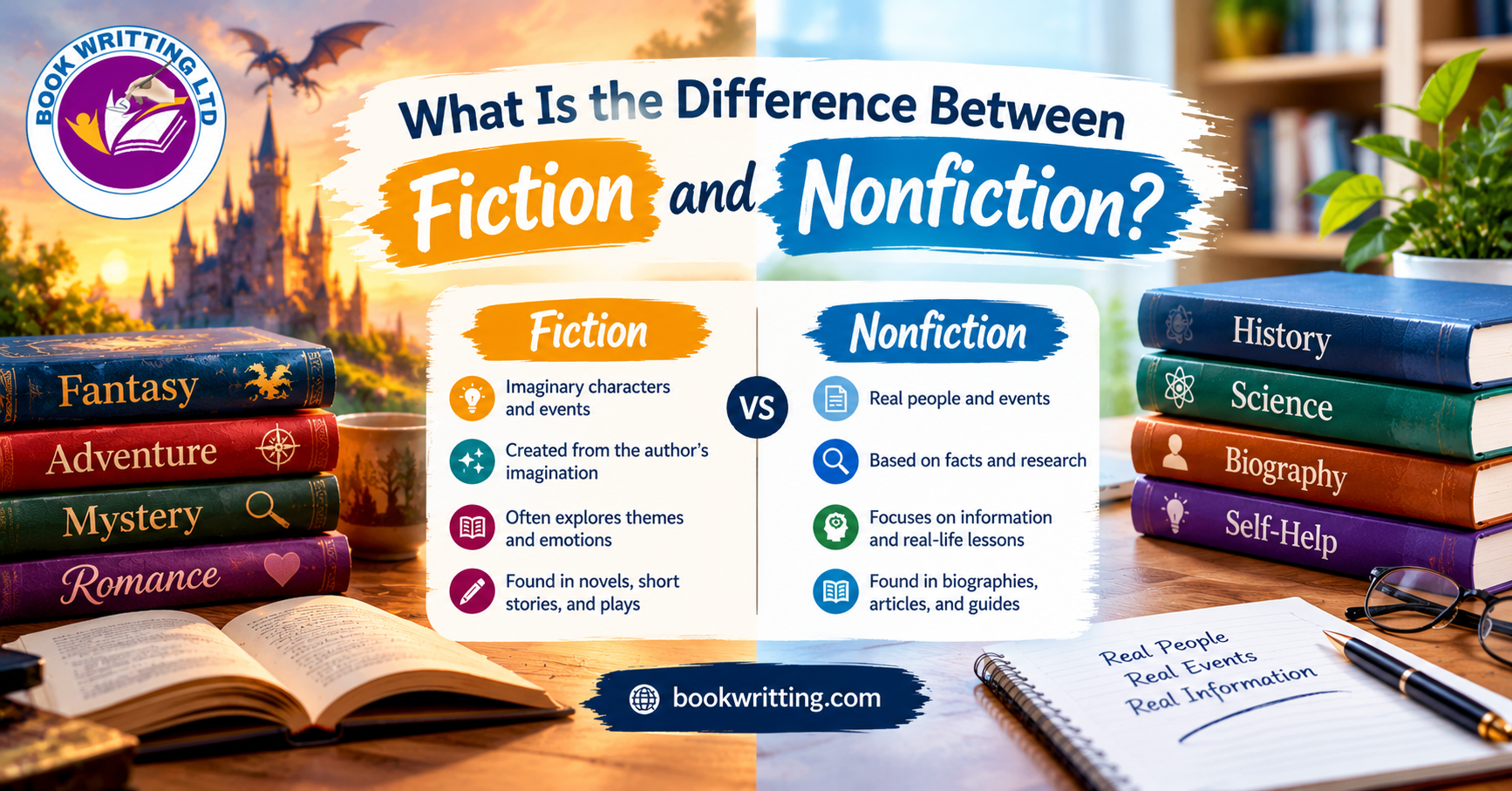
Books are generally divided into two major categories: fiction and nonfiction. While both forms of writing can educate, entertain, and inspire readers, they differ significantly in their purpose, content, and approach. Understanding the difference between fiction and nonfiction is essential for writers, readers, students, and aspiring authors who want to choose the right format for their ideas.
At the most basic level, fiction is based on imagination, while nonfiction is based on facts. However, the distinctions go much deeper than that. Each category has unique characteristics, writing techniques, and goals that shape how stories and information are presented.
What Is Fiction?
Fiction refers to literature created from the author's imagination. While fictional stories may be inspired by real events, people, or experiences, the characters, settings, and plotlines are primarily invented.
Common fiction genres include:
Fantasy
Science Fiction
Mystery
Romance
Thriller
Historical Fiction
Adventure
Horror
The primary goal of fiction is often to entertain readers while exploring themes, emotions, relationships, and human experiences.
Characteristics of Fiction
Imaginary characters
Invented settings
Creative storytelling
Plot-driven narratives
Flexible world-building
Artistic expression
Fiction allows writers to create entirely new worlds and scenarios without being limited by factual accuracy.
What Is Nonfiction?
Nonfiction is based on real people, real events, and factual information. The goal is usually to inform, educate, explain, or document reality.
Examples of nonfiction include:
Biographies
Memoirs
History books
Self-help books
Educational guides
Business books
Journalism
Research publications
Unlike fiction, nonfiction writers must prioritize accuracy, credibility, and evidence when presenting information.
Characteristics of Nonfiction
Real people and events
Fact-based content
Research and evidence
Educational purpose
Informational structure
Verifiable details
Readers expect nonfiction books to provide reliable information they can trust.
Key Differences Between Fiction and Nonfiction
1. Source of Content
Fiction: Based on imagination and creativity.
Nonfiction: Based on facts, research, and real-life experiences.
2. Characters
Fiction: Characters are usually invented.
Nonfiction: Characters are real people or accurately portrayed individuals.
3. Purpose
Fiction: Primarily entertains and engages emotions.
Nonfiction: Primarily informs, educates, or explains.
4. Storytelling Style
Fiction: Uses creative narratives, dialogue, and imaginative scenarios.
Nonfiction: Focuses on presenting factual information clearly and accurately.
5. Accuracy Requirements
Fiction: Creative freedom is encouraged.
Nonfiction: Accuracy and credibility are essential.
Can Fiction and Nonfiction Overlap?
In some cases, the line between fiction and nonfiction becomes less clear.
Examples include:
Historical fiction based on real events
Memoirs with narrative storytelling techniques
Creative nonfiction
Docudramas
Narrative journalism
These works combine factual elements with storytelling methods to create engaging reading experiences while maintaining varying degrees of accuracy.
Professional Writing Support
Whether you're writing a novel, memoir, biography, self-help guide, or educational book, professional editing and publishing support can help improve your manuscript. Writers looking to refine their work and prepare it for publication can explore the services available through Book Writting Ltd.
Which Type of Writing Is Right for You?
Choosing between fiction and nonfiction depends on your goals.
You may prefer fiction if you:
Enjoy storytelling
Love creating characters
Want creative freedom
Enjoy world-building
You may prefer nonfiction if you:
Want to teach or inform
Have expertise in a subject
Enjoy research
Want to share real experiences
Many successful authors write in both categories throughout their careers.
Why Understanding the Difference Matters
Recognizing the distinction between fiction and nonfiction helps writers meet reader expectations. A reader who picks up a nonfiction book expects reliable information, while a fiction reader expects an engaging story.
Understanding genre expectations also helps authors market their books more effectively and connect with the right audience.
Publishing Your Book
After completing your manuscript, professional editing, formatting, cover design, and marketing can make a significant difference in its success. Authors interested in publishing support can learn more at bookwritting.com and explore services designed to help writers publish with confidence.
Fiction and nonfiction are both valuable forms of writing, but they serve different purposes. Fiction relies on imagination and creativity to entertain and inspire, while nonfiction focuses on facts and real-world information to educate and inform.
Understanding these differences helps writers choose the right approach for their projects and enables readers to find books that meet their interests and expectations. Whether you're crafting an epic fantasy novel or writing a practical guide, mastering your chosen category is the first step toward creating a successful book.