Writing Science Fiction | Building New Worlds
5 October 2026 · 4 min read
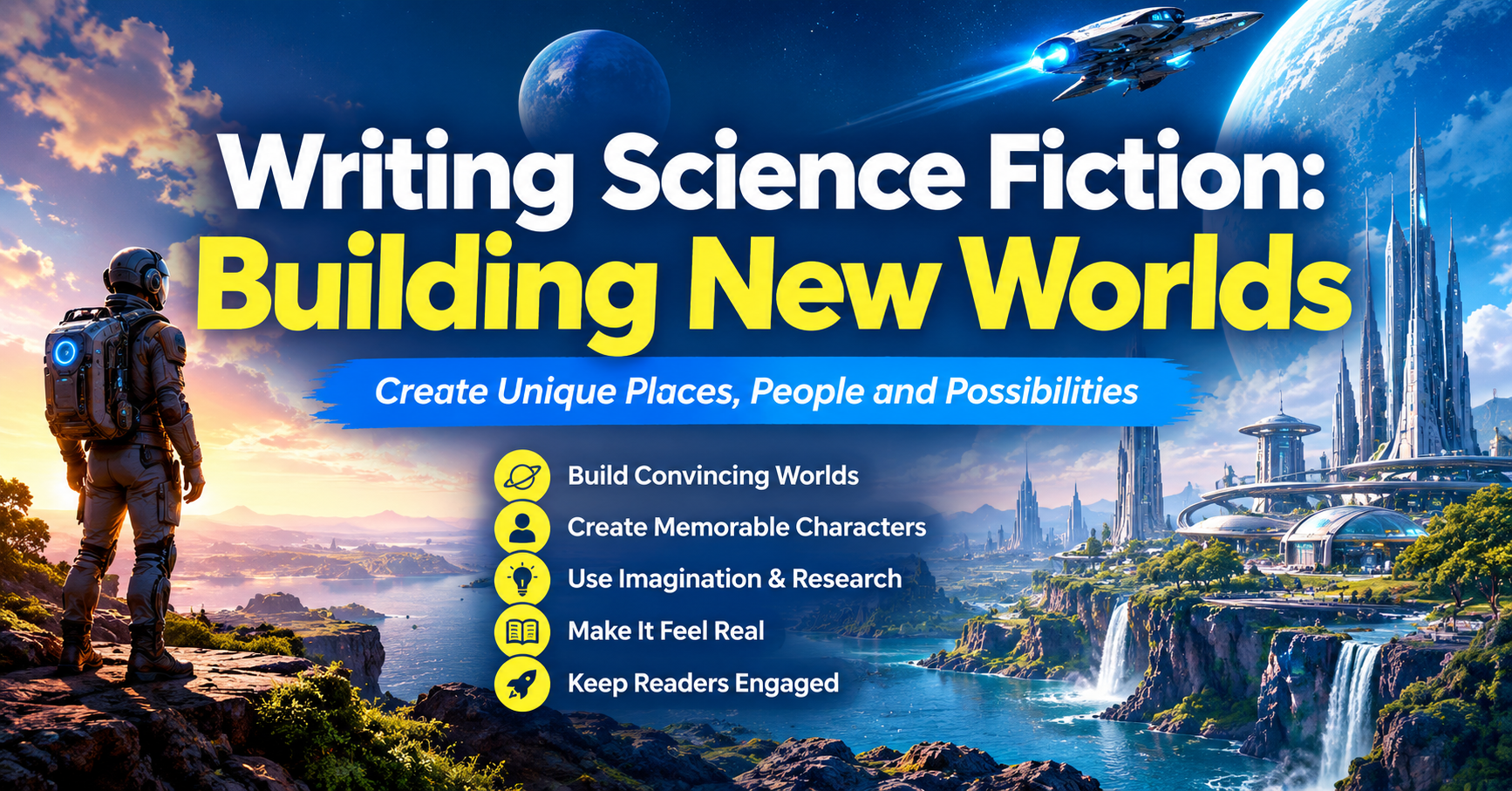
Science fiction is a genre built on imagination, innovation, and exploration. It allows writers to create futuristic civilizations, distant planets, advanced technologies, and entirely new ways of life. However, successful science fiction is more than inventing cool gadgets or placing characters in space. Great sci-fi stories create believable worlds that feel real, immersive, and consistent.
World-building is one of the most important skills a science fiction writer can develop. A carefully crafted world provides the foundation for compelling stories, memorable characters, and meaningful conflicts. Whether your story takes place on a distant planet, a futuristic Earth, or within a sprawling galactic empire, effective world-building can transform a simple idea into an unforgettable reading experience.
Start with the Big Picture
Before creating details, consider the overall concept of your world.
Ask yourself:
Where does the story take place?
What makes this world unique?
How advanced is the technology?
What challenges do people face?
What historical events shaped society?
Answering these questions helps establish a solid framework for the rest of your world-building process.
Create Believable Environments
Readers should be able to visualize and understand the setting. Consider factors such as geography, climate, natural resources, and ecosystems.
If your story takes place on another planet, think about:
Gravity
Atmosphere
Weather patterns
Native life forms
Available resources
The environment should influence how people live, work, travel, and survive.
Build Unique Cultures
A believable science fiction world needs more than futuristic landscapes. The people who inhabit the world should have distinct cultures, traditions, beliefs, and social structures.
Consider:
Government systems
Religious beliefs
Social classes
Languages
Education systems
Family structures
These elements add depth and realism to your fictional universe.
Develop Realistic Technology
Technology is often a major component of science fiction. However, advanced technology should have clear rules and limitations.
When designing technology, think about:
How it works
Who controls it
How it affects society
Its advantages and drawbacks
Technology becomes more believable when it creates opportunities and challenges rather than solving every problem instantly.
Professional Writing Support
Building an immersive science fiction world requires creativity, planning, and attention to detail. Writers seeking assistance with manuscript development, editing, publishing, and book marketing can explore the services available through Book Writting Ltd. Professional guidance can help transform imaginative ideas into polished and engaging stories.
Establish Consistent Rules
Consistency is essential in science fiction. Readers are willing to accept advanced technology, alien civilizations, and futuristic concepts as long as the rules remain consistent.
If faster-than-light travel exists, explain how it functions within your world. If psychic abilities are possible, establish limitations. Consistency helps maintain immersion and prevents confusion.
Create Memorable Characters
Even the most impressive world will feel empty without compelling characters. Readers connect with people, not settings.
Strong science fiction characters should:
Have clear goals
Face meaningful challenges
Reflect aspects of the world around them
Grow throughout the story
Characters help readers experience the world firsthand and provide an emotional connection to the narrative.
Explore Conflict and Consequences
Conflict drives storytelling. A well-developed science fiction world naturally creates opportunities for tension and drama.
Potential conflicts include:
Human versus technology
Political struggles
Resource shortages
Alien encounters
Ethical dilemmas
Environmental disasters
Meaningful conflict helps reveal the strengths and weaknesses of your world.
Balance Description with Story
World-building is important, but readers are primarily interested in the story. Avoid overwhelming readers with lengthy explanations or excessive background information.
Instead:
Reveal details naturally
Integrate world-building into scenes
Show rather than tell
Focus on information relevant to the plot
A gradual approach keeps readers engaged while expanding their understanding of the world.
Make Your World Feel Alive
The most memorable science fiction worlds feel dynamic and lived-in. People should have routines, traditions, occupations, and concerns beyond the main storyline.
Small details can make a significant difference:
Popular entertainment
Local customs
Everyday technology
Transportation systems
Food and clothing
These elements help create the illusion of a functioning society.
Publishing Your Science Fiction Novel
Completing a science fiction manuscript is a major accomplishment. Professional editing, formatting, cover design, and marketing can help ensure your work reaches the right audience. Authors interested in publishing support can learn more at bookwritting and explore services designed to help writers succeed in today's competitive publishing industry.
Writing science fiction is an opportunity to explore limitless possibilities while telling meaningful stories. Strong world-building combines imagination with logic, creating settings that feel believable despite their extraordinary nature.
By developing unique environments, realistic technology, compelling cultures, and engaging characters, writers can build worlds that capture readers' imaginations and leave a lasting impression. The best science fiction doesn't just show readers a new world—it makes them want to live in it, explore it, and return to it again and again.