What Is a Book Synopsis?
12 October 2026 · 6 min read
Writing a book involves more than creating interesting characters and developing a compelling story. Authors also need to present their work clearly when approaching publishers, literary agents, or other publishing professionals. One important document that can help accomplish this is a book synopsis.
But what is a book synopsis, and why is it important?
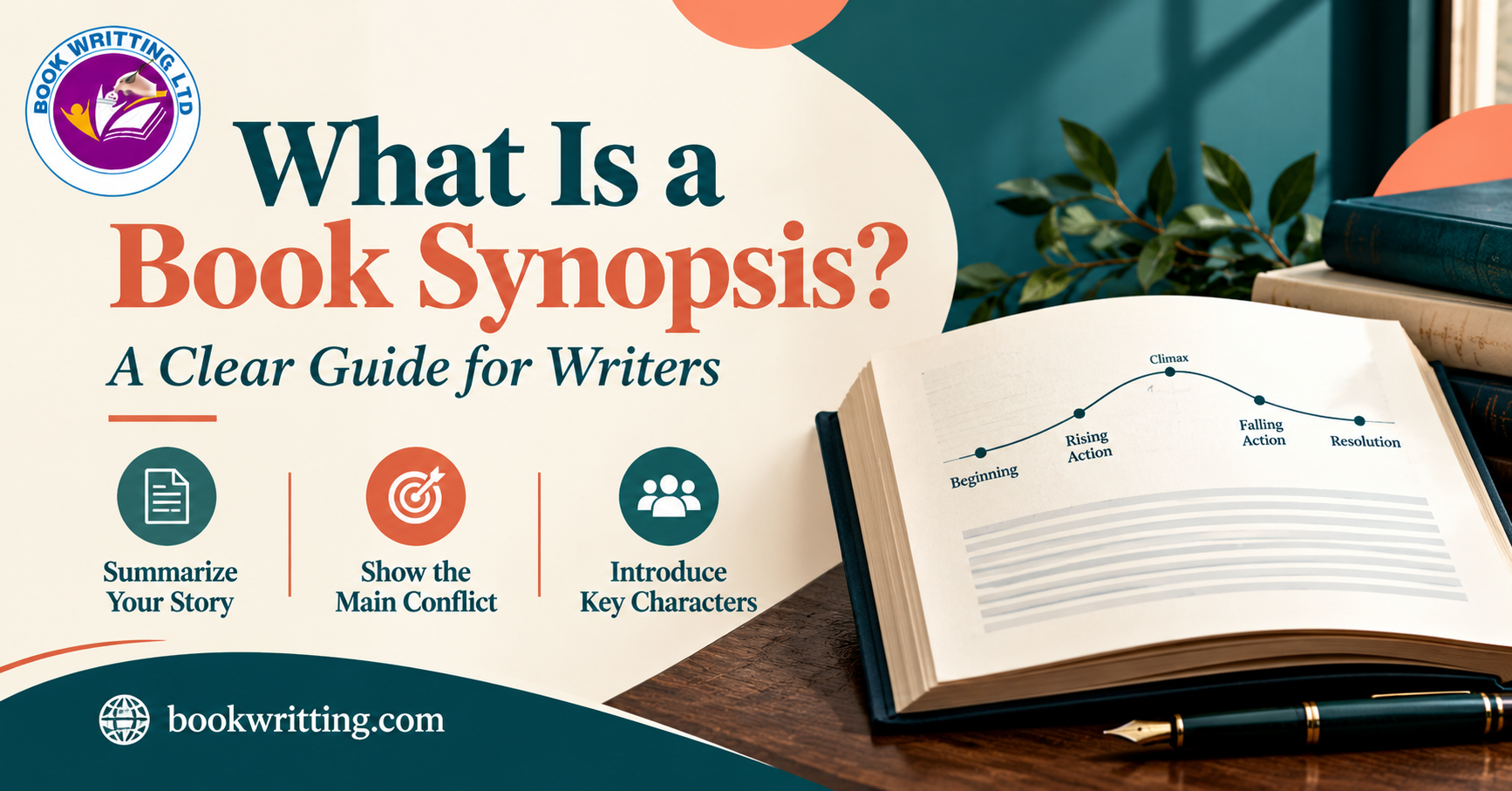
A book synopsis is a concise summary of a book's main storyline, important characters, central conflict, major developments, and ending. It gives readers a clear overview of the story without requiring them to read the entire manuscript.
For fiction writers, a synopsis explains how the plot unfolds and how the story concludes. For nonfiction authors, it outlines the book's central subject, main ideas, structure, and purpose.
Learning to write an effective synopsis can help you communicate your book's value and prepare your manuscript for submission or publication.
What Is the Purpose of a Book Synopsis?
A book synopsis helps someone understand the essential content of your book quickly. Publishers and literary agents may use it alongside a query letter, sample chapters, or a full manuscript when evaluating a submission.
A well-written synopsis demonstrates that you understand your story and can explain its structure clearly.
The main purposes of a book synopsis include:
Summarizing the central storyline or subject.
Introducing the main characters or key ideas.
Explaining the primary conflict or problem.
Showing how the story develops and concludes.
Helping publishing professionals assess the book's potential.
A synopsis should focus on the substance of your book rather than trying to reproduce every detail.
What Should a Book Synopsis Include?
The information in a synopsis depends on whether you are writing fiction or nonfiction.
1. The Main Character or Central Subject
For a novel, introduce the protagonist and explain what makes their situation important. Readers should understand who the character is, what they want, and what challenges they face.
For nonfiction, identify the subject and explain the main question, problem, or opportunity the book addresses.
2. The Central Conflict or Problem
Every compelling story has a central conflict. Explain the main obstacle that drives the narrative and why it matters.
For nonfiction, describe the issue your book explores and the questions it seeks to answer.
3. Major Plot Developments
A fiction synopsis should explain the most important events in the story, including significant turning points and decisions that influence the outcome.
You do not need to describe every scene or secondary character. Focus on developments that are essential to understanding the narrative.
4. The Ending or Final Outcome
For most fiction submissions, a synopsis should reveal the ending. Publishers and agents generally want to understand how the plot resolves, not just how it begins.
For nonfiction, explain the conclusions, insights, or practical outcomes the book delivers.
5. The Book's Main Appeal
Show what makes your book distinctive. This might be an unusual central conflict, a fresh perspective, a specialized subject, or an important practical benefit for readers.
Keep the emphasis on the book itself rather than making unsupported claims about its success.
How Long Should a Book Synopsis Be?
There is no universal length requirement for a book synopsis. The appropriate length depends on the publisher, literary agent, genre, and purpose of the document.
Common guidelines include:
One paragraph: A very brief overview for informal introductions.
One page: A concise synopsis when a submission guideline requests a short summary.
Two to three pages: A more detailed overview of the main storyline.
Longer synopses: Sometimes required for complex novels or particular submission processes.
Always follow the specific requirements provided by the publisher or literary agent. If no length is specified, a clear, concise summary is usually a sensible starting point.
How to Write a Book Synopsis Step by Step
Writing a synopsis can feel challenging because you must reduce a large manuscript to its essential elements. These steps can make the process easier.
Step 1: Finish and Understand Your Manuscript
Whenever possible, complete your manuscript before writing the final synopsis. Knowing the entire story helps you identify the most important developments and explain the ending accurately.
Step 2: Identify the Main Storyline
Write down the protagonist's goal, the central conflict, the most significant turning points, and the resolution.
For nonfiction, identify the main argument, the key topics, and the outcome readers can expect.
Step 3: Remove Unnecessary Details
A synopsis is not a chapter-by-chapter retelling of every event. Remove minor subplots, supporting characters who do not affect the main story, and descriptions that do not contribute essential information.
Step 4: Write in Clear Language
Use straightforward sentences and logical transitions. A synopsis should be easy to follow, even when the book contains several characters or complicated events.
For fiction, the present tense is commonly used when summarizing the plot. Keep character names and relationships consistent throughout.
Step 5: Revise for Clarity
After drafting your synopsis, check whether someone unfamiliar with your book could understand the main storyline or subject.
Remove repetition, clarify confusing sections, and make sure the summary accurately represents the finished manuscript.
Book Synopsis vs. Book Blurb: What's the Difference?
Writers sometimes confuse a synopsis with a book blurb, but the two serve different purposes.
Feature | Book Synopsis | Book Blurb |
|---|---|---|
Main purpose | Summarizes the book | Encourages readers to read or buy it |
Typical audience | Publishers and literary agents | Potential readers |
Plot ending | Usually revealed for fiction submissions | Usually kept secret |
Writing style | Direct and informative | Persuasive and engaging |
Common use | Manuscript submissions | Book covers and sales pages |
A synopsis explains the story or content. A blurb highlights its appeal and encourages interest without revealing everything.
Common Mistakes to Avoid
Even a promising book can be difficult to evaluate if its synopsis is unclear. Avoid these common problems:
Including too many minor plot details.
Introducing numerous characters without explaining their roles.
Hiding the ending in a fiction submission synopsis.
Using vague language instead of explaining what happens.
Making exaggerated claims about the book.
Writing a synopsis that does not match the manuscript.
Ignoring the publisher's submission instructions.
Remember that a synopsis is a practical document. Clarity and accuracy matter more than elaborate language.
Should You Get Professional Help?
Writing and revising a manuscript requires time, attention, and careful planning. The same is true of preparing a strong synopsis.
Feedback from an experienced editor or writing professional can help you identify unclear explanations, strengthen the structure, and remove unnecessary details. It can be particularly useful if you are preparing your first submission or working with a complex storyline.
If you need assistance with manuscript development, editing, publishing, or book marketing, explore the services available through Book Writting Ltd.
A book synopsis is an essential tool for explaining what your book is about. It summarizes the main storyline or subject, introduces the important characters or ideas, describes the central conflict, and explains the outcome.
To write an effective synopsis, focus on the most important information, use clear language, and follow the requirements of your intended publisher or literary agent.
Whether you are preparing a mystery novel, a romance manuscript, a fantasy adventure, or a nonfiction guide, a well-crafted synopsis can help others understand your work and evaluate its potential.
The key is simple: explain your book clearly, accurately, and concisely.