AI Tools for Authors in 2026: Transforming the Way Writers Create Books
28 September 2026 · 3 min read
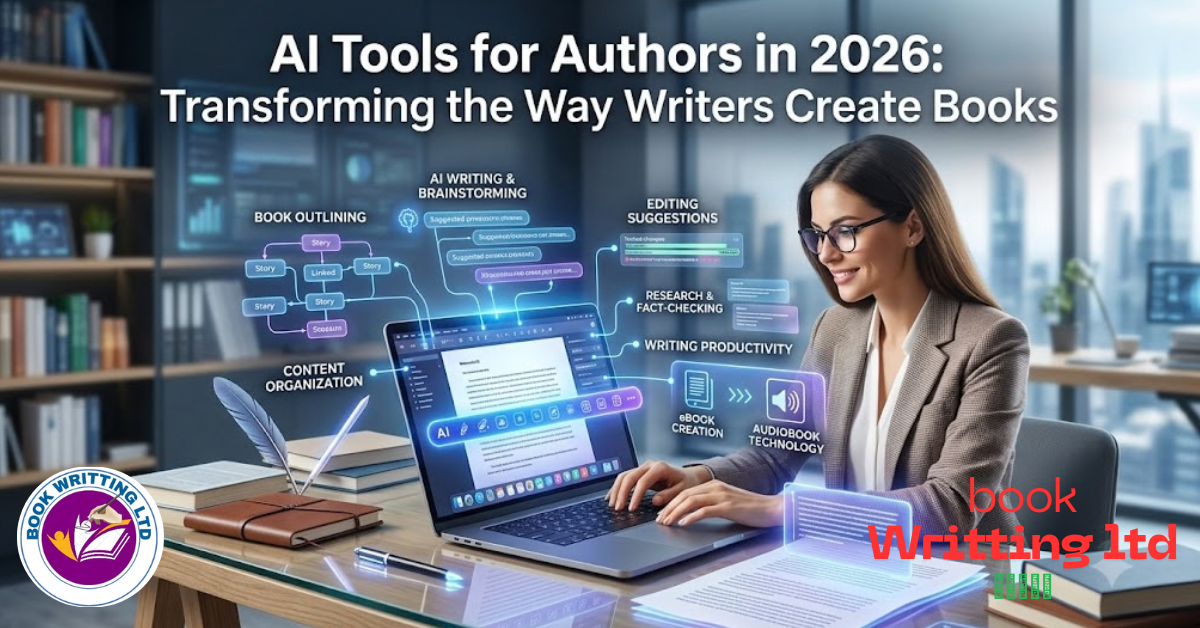
Writing a book has always required creativity, patience, research, and discipline. In 2026, authors have another powerful resource available: artificial intelligence (AI). From brainstorming ideas to editing manuscripts and creating marketing content, AI tools can support writers throughout the publishing journey.
AI does not replace an author's creativity or personal voice. Instead, it can help authors save time, organize their ideas, and improve the overall writing process.
What Are AI Tools for Authors?
AI tools for authors are software applications that use artificial intelligence to assist with different parts of book creation. Depending on the tool, authors can use AI for brainstorming, research, outlining, writing assistance, proofreading, editing, book descriptions, and marketing.
The growing popularity of these tools makes AI an important technology trend for both new and experienced authors in 2026.
1. AI for Book Ideas and Brainstorming
Coming up with a strong book idea can sometimes be difficult. AI can help authors brainstorm potential topics, characters, plot ideas, chapter concepts, titles, and questions that readers may be interested in.
For nonfiction writers, AI can also help organize a broad subject into focused chapters and subtopics.
The author remains responsible for selecting the ideas that fit the book's purpose, audience, and personal perspective.
2. AI for Creating Book Outlines
A well-structured outline can make writing a book easier. AI tools can help turn a basic concept into a chapter-by-chapter structure.
For example, an author can provide a book topic and target audience and ask AI to suggest possible chapters, key points, and logical transitions.
This can reduce planning time and give writers a clear starting point.
3. AI Writing and Editing Assistance
AI writing assistants can help authors improve sentences, identify repetitive wording, adjust tone, and make paragraphs easier to understand.
Editing tools can also identify grammar, spelling, punctuation, and readability issues. This is particularly useful during the revision stage.
However, authors should carefully review AI suggestions rather than accepting every recommendation automatically. Maintaining an authentic writing style is essential.
4. AI for Research and Organization
Research is an important part of many books. AI-powered tools can help writers organize information, summarize notes, generate research questions, and identify areas that require further investigation.
Authors should still verify important facts using reliable and original sources, especially when writing about history, science, law, finance, or other factual subjects.
5. AI for Book Marketing
AI is also changing book marketing in 2026. Authors can use AI to brainstorm social media posts, email campaigns, blog topics, advertisements, and promotional ideas.
AI can help create different versions of marketing content for platforms such as LinkedIn, Instagram, Facebook, and other channels.
The Future of AI and Authors
AI tools are becoming part of the modern author's toolkit. The most effective approach is not to let AI take over the creative process, but to use it as an assistant.
Authors provide the ideas, experience, creativity, and unique voice, while AI can help with planning, organization, editing, and repetitive tasks.
As AI technology continues to develop, writers who learn how to use these tools responsibly can potentially make their writing and publishing workflows more efficient.
Final Thoughts
AI tools for authors in 2026 offer new opportunities at almost every stage of book creation. Whether you are writing your first book or managing multiple publishing projects, AI can support brainstorming, outlining, editing, research, and marketing.
The key is to use AI thoughtfully while keeping your own creativity and authentic voice at the center of the book.