How to Write a Children’s Book | A Complete Step-by-Step Guide for New Authors
29 September 2026 · 11 min read
Writing a children’s book can begin with something incredibly simple: a character, a funny situation, a childhood memory, or one question that sparks your imagination.
But turning that idea into a finished book requires more than simply putting words on a page.
A successful children's book needs a clear audience, an engaging story, memorable characters, appropriate language, strong pacing, and—especially for picture books—a thoughtful relationship between words and illustrations.
The good news is that you don't have to figure everything out at once.
By breaking the process into manageable steps, aspiring authors can move from an initial idea to a polished manuscript and eventually explore their publishing options.
Here is a practical guide on how to write a children's book from start to finish.
1. Start With a Clear Book Idea
Every children's book begins with an idea.
It might be:
A child discovering something unusual
An animal trying to solve a problem
A friendship story
A funny family adventure
A fantasy world
A story about emotions
An educational concept
A childhood experience transformed into fiction
The important thing is to find the central idea before worrying about every sentence.
Try describing your story in one or two sentences.
For example:
A curious child discovers that the old tree in the backyard seems to change every night.
That simple premise gives you somewhere to begin.
You can then ask:
Who is the main character?
What does the character want?
What problem appears?
What happens when the character tries to solve it?
How does the character change?
How does the story end?
Having a clear central idea can make the rest of the writing process much easier.
2. Decide Who Your Book Is For
One of the most important steps is deciding exactly who you are writing for.
“Children” is a very broad audience.
A book for a preschooler can be dramatically different from a book written for an older independent reader.
Consider:
The reader's approximate age
Reading ability
Vocabulary
Attention span
Emotional development
Story complexity
Illustration needs
For example, a picture book may rely heavily on illustrations and read-aloud rhythm, while an older children's novel can support more complex characters and longer story arcs.
Current children's publishing guides recommend identifying the target age group early because it influences the voice, structure, language, and overall format of the book.
3. Choose the Type of Children's Book
Before writing, determine what kind of book you want to create.
Possible formats include:
Board Books
These are generally designed for very young children and often use simple concepts, repetition, and highly visual storytelling.
Picture Books
Picture books combine relatively concise text with illustrations. The pictures are not merely decoration—they can be an important part of the storytelling.
Early Readers
These are designed for children beginning to read independently and generally use controlled language and straightforward stories.
Chapter Books
Chapter books allow more room for characters, adventures, conflicts, and multiple scenes.
Middle-Grade Fiction
These books can support more developed plots, relationships, settings, themes, and character arcs.
Understanding your format before drafting helps you make appropriate decisions about story complexity and presentation.
4. Create a Main Character Children Can Follow
A strong children's story usually needs a character readers can understand and follow.
Your main character doesn't have to be perfect.
In fact, imperfections can make characters more interesting.
Your protagonist might be:
Curious
Nervous
Adventurous
Stubborn
Creative
Shy
Funny
Determined
Give the character something they want.
Then give them something that makes achieving that goal difficult.
For example:
Character: Maya, a curious eight-year-old
Goal: Find her missing sketchbook
Problem: She believes it disappeared into an abandoned garden
Challenge: She must overcome her fear of exploring the garden
Now you have the foundation of a story.
A particularly useful principle in picture-book writing is character agency—allowing the protagonist to make choices and take meaningful action rather than having an adult solve every problem for them.
5. Give Your Story a Simple Structure
Children's stories can be imaginative and creative, but readers still need a sense of progression.
A simple structure is:
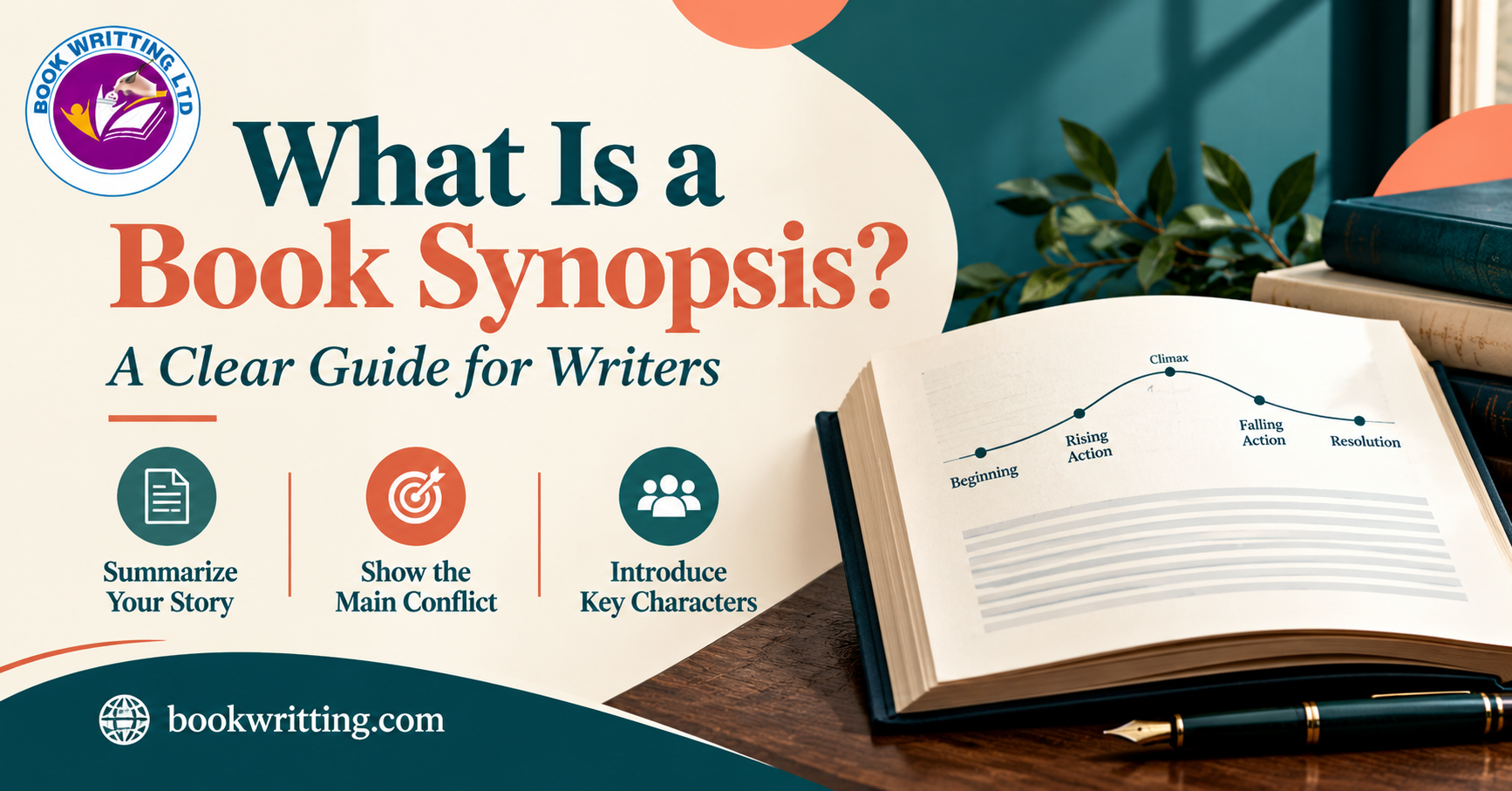
Beginning → Problem → Attempts → Turning Point → Resolution
Beginning
Introduce the character and their world.
Problem
Something changes or creates a challenge.
Attempts
The character tries to solve the problem.
Turning Point
Something important happens that changes the direction of the story.
Resolution
The character reaches a satisfying conclusion.
You don't necessarily need a complicated plot.
A simple story told well can be more effective than a complicated story with too many characters, locations, and subplots.
6. Think About Page Turns
If you're writing a picture book, don't think only in terms of paragraphs.
Think visually.
What happens when the reader turns the page?
A page turn can reveal:
A surprise
A new character
A funny moment
A new location
A problem
A dramatic discovery
Modern picture-book guidance emphasizes planning the relationship between scenes and page turns because the physical act of turning a page can contribute to suspense and pacing.
For example:
Page: “Milo opened the mysterious door.”
Page turn: A giant colorful room is revealed.
The illustration can deliver the surprise.
7. Write With Illustrations in Mind
One of the biggest differences between a children's picture book and a text-only story is the relationship between words and images.
You don't need to describe everything the illustration can already show.
Instead of writing:
“Lily wore a red coat, blue boots, a yellow scarf, and a purple hat while standing beside a tall green tree under a bright blue sky.”
you might simply write:
“Lily stepped into the garden.”
The illustration can show the clothing, garden, weather, and surroundings.
This allows the words and pictures to work together instead of repeating exactly the same information.
Reedsy specifically recommends thinking in scenes and allowing visuals to communicate information that does not need to appear in the text.
8. Make the Language Easy to Read Aloud
Many children's books are shared between children and adults.
That means your manuscript should sound natural when spoken.
Read your story aloud.
Listen for:
Awkward sentences
Repeated words
Unnecessary phrases
Difficult-to-pronounce sections
Weak rhythm
Sentences that are too long
If you stumble while reading a sentence aloud, revise it.
Shorter writing doesn't automatically mean better writing. The goal is to make every word contribute something useful to the story.
For picture books in particular, current guidance places considerable emphasis on concise language, rhythm, and read-aloud quality.
9. Be Careful With Rhyming Stories
Rhyming children's books can be fun and memorable, but rhyme also creates additional writing challenges.
A rhyme should feel natural.
Avoid changing the meaning of a sentence simply because you need a particular word to rhyme.
Read the story aloud and listen to the rhythm.
Ask:
Does the sentence flow naturally?
Does the rhyme sound forced?
Does the rhythm remain consistent?
Does the rhyme improve the story?
If the answer is no, consider whether the story might work better in prose.
Rhyme can be wonderful when it serves the story, but it shouldn't become more important than the story itself.
10. Create a First Draft Without Trying to Make It Perfect
Your first draft doesn't have to be perfect.
In fact, trying to make every sentence perfect before finishing the story can slow down the creative process.
Instead:
Develop the basic idea.
Write the complete story.
Finish the ending.
Step away from the manuscript.
Return later for revision.
During the first draft, focus primarily on discovering the story.
You can improve the wording afterward.
11. Revise the Story
Revision is where the manuscript starts becoming a book.
Read the entire story and ask:
Does the story have a clear beginning?
Can the reader quickly understand the situation?
Does the main character have a goal?
Is there something the character wants or needs to accomplish?
Is there a meaningful problem?
Does something create tension or curiosity?
Does the story move forward?
Are there sections that repeat the same idea?
Is the ending satisfying?
Does the conclusion feel connected to everything that came before?
Don't be afraid to remove material.
In children's writing, fewer words can sometimes create more room for imagination, pacing, and illustrations.
12. Look for Unnecessary Words
After the structural revision, go sentence by sentence.
Look for:
Repeated information
Extra adjectives
Unnecessary explanations
Long descriptions
Repetitive dialogue
Sentences that illustrations could replace
Ask yourself:
Can the reader understand this without this sentence?
If the answer is yes, consider removing it.
The goal isn't simply to make the manuscript shorter. The goal is to make it stronger.
13. Build a Storyboard
A storyboard can help you visualize how your children's book might work as a finished product.
You can create simple boxes representing pages or spreads.
Inside each box, note:
Text
Main action
Character position
Important visual information
Page-turn moments
You don't need professional artwork at this stage.
Simple sketches or notes are enough.
Storyboarding can help reveal pacing problems before you spend significant time on final illustrations. Reedsy's children's-book layout guidance recommends mapping spreads and page turns as part of the planning process.
14. Think About the Illustration Style
Once your story is developing, consider the visual direction.
Possible styles include:
Watercolor
Digital illustration
Cartoon
Collage
Hand-drawn
Minimalist
3D illustration
Painted artwork
Think about what style matches the mood of your story.
A playful animal adventure might benefit from bright, expressive illustrations, while a quiet bedtime story might work with softer visual treatment.
If you're working with an illustrator, communicate the story, characters, mood, and important visual elements clearly.
15. Work With an Illustrator Carefully
If you aren't illustrating the book yourself, finding the right illustrator can become an important part of the project.
Before beginning, discuss:
Character appearance
Illustration style
Number of illustrations
Revision process
Deadlines
File requirements
Ownership and usage rights
Payment terms
It's also useful to establish expectations before the artwork begins.
Professional children's-book production often involves storyboards, character development, visual planning, revisions, typography, and final file preparation.
16. Get Feedback
Don't rely only on your own judgment.
Ask trusted readers, writers, editors, or publishing professionals for feedback.
Instead of asking only:
“Do you like it?”
ask more specific questions:
Where did the story become interesting?
Was anything confusing?
Did the ending feel satisfying?
Was any section too slow?
Which character stood out?
Were there places where the language felt awkward?
Did the story feel appropriate for its intended audience?
Specific feedback is much more useful than a simple thumbs-up or thumbs-down.
17. Proofread the Final Manuscript
After the larger revisions are finished, carefully check the manuscript for:
Spelling
Grammar
Punctuation
Character names
Repeated words
Consistent capitalization
Dialogue formatting
Typographical errors
It's often helpful to read the manuscript in a different format or have another person proofread it.
Fresh eyes can catch mistakes you may overlook after reading the same draft many times.
18. Decide How You Want to Publish
Once your manuscript is ready, you can explore different publishing paths.
Traditional Publishing
You submit your manuscript to agents or publishers according to their requirements.
If you pursue this route, always follow the current submission guidelines of the specific agent or publisher.
Self-Publishing
You manage more of the publishing process yourself, potentially including:
Editing
Illustration
Cover design
Interior formatting
Printing
Distribution
Marketing
Professional Publishing Services
Some authors choose to work with professional editors, designers, illustrators, or publishing specialists.
There isn't one publishing route that works for every author. Your goals, budget, experience, and desired level of control can influence the choice.
19. Create a Final Children's Book Checklist
Before moving forward, review your manuscript.
Story
☐ The central idea is clear
☐ The target reader is defined
☐ The main character is memorable
☐ The character has a meaningful goal
☐ The story has a clear problem
☐ The plot moves forward
☐ The ending feels satisfying
Writing
☐ Language suits the intended audience
☐ Sentences sound natural when read aloud
☐ Unnecessary words have been removed
☐ Dialogue feels natural
☐ The manuscript has been carefully revised
Visual Storytelling
☐ Illustrations complement the text
☐ Important visual moments are identified
☐ Page turns have been considered
☐ Character appearance remains consistent
☐ Illustration requirements are clear
Publishing
☐ Manuscript has been proofread
☐ Feedback has been considered
☐ Publishing route has been researched
☐ Submission or production requirements have been checked
☐ Cover and interior design needs have been considered
Turn Your Idea Into a Story
Learning how to write a children's book doesn't require you to have everything figured out before you begin.
Start with one idea.
Choose your audience.
Create a character with something to accomplish.
Give that character a meaningful challenge.
Build a simple story structure.
Then revise until every scene, sentence, and page contributes to the experience.
For picture books especially, remember that the words and illustrations can share the storytelling. You don't have to explain everything in the text when an illustration can communicate part of the story.
Most importantly, give yourself permission to write a first draft that isn't perfect.
A children's book develops through the process of writing, reading, revising, and refining.
Your next great story may start with nothing more than a character, a question, or a single sentence.
Start writing it.Ready to turn your children's book idea into a finished manuscript? Start with your character, central idea, and story problem today—and take the first step toward creating a book young readers can enjoy.