Writing Romance That Sells | How to Create Love Stories Readers Can't Put Down
30 September 2026 · 6 min read
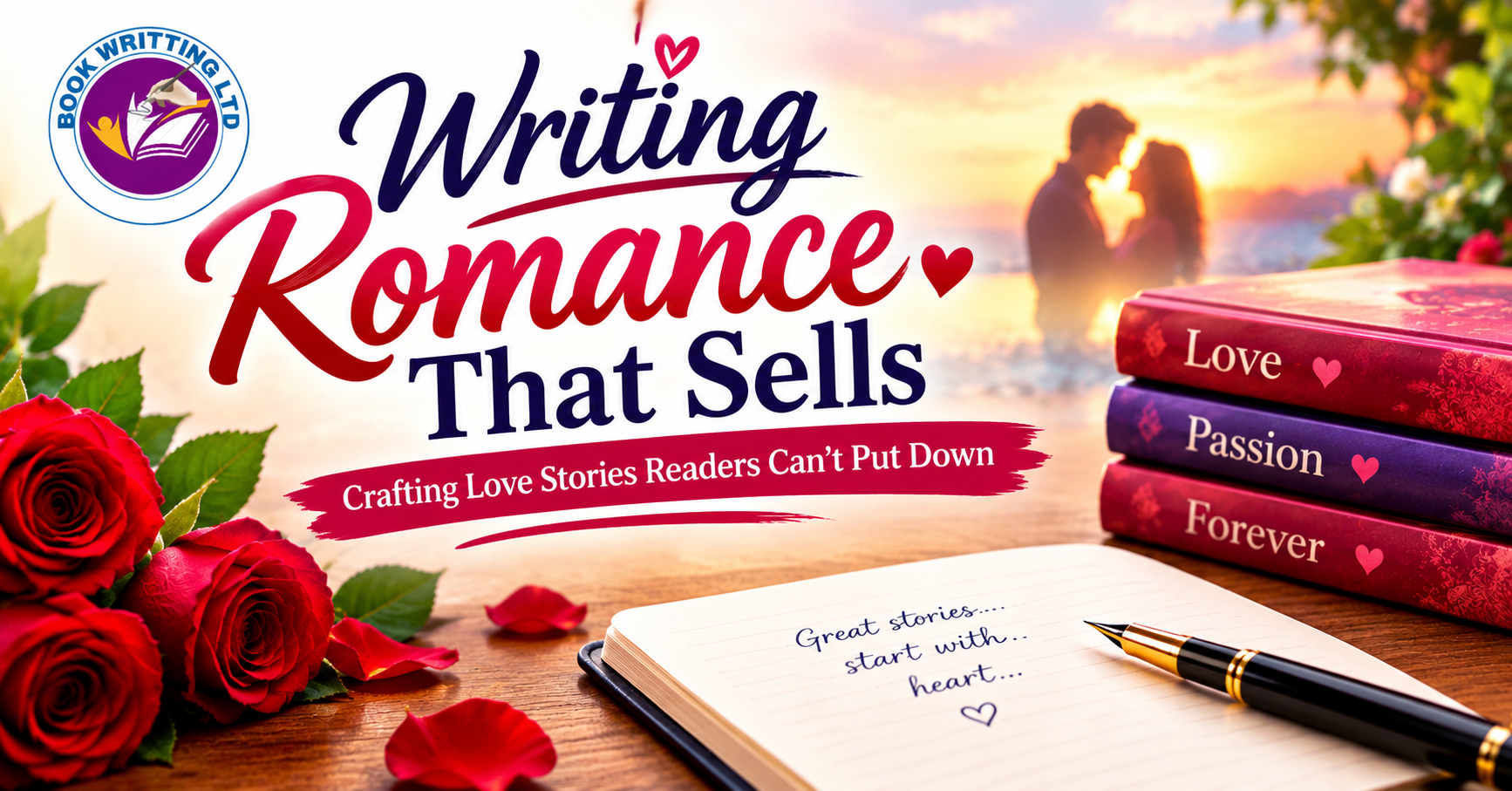
Romance is one of the most emotionally driven forms of storytelling. Readers don't simply want to watch two characters fall in love—they want to feel the attraction, uncertainty, conflict, hope, heartbreak, and satisfaction along the way.
Writing romance that connects with readers requires more than creating two attractive characters and putting them together. A strong romance story needs memorable characters, believable chemistry, meaningful conflict, emotional tension, and an ending that delivers the emotional experience readers expect.
If you're learning how to write a romance novel, this guide will help you build the essential elements of a compelling love story.
What Makes a Romance Story Compelling?
A successful romance usually revolves around a central emotional question:
Will these two people find their way to each other?
Everything from the characters' personalities to the obstacles they face should contribute to that emotional journey.
Strong romance writing combines:
Compelling characters
Genuine emotional connection
Romantic chemistry
Conflict and obstacles
Emotional tension
A satisfying progression
A rewarding conclusion
Good fiction writing also requires attention to craft, revision, and the business side of publishing, areas commonly covered in professional writing resources.
1. Create Characters Readers Care About
Before readers can become emotionally invested in a relationship, they need to care about the people involved.
Give your main characters:
Clear goals
Personal strengths
Weaknesses
Fears
Past experiences
Emotional needs
Personal boundaries
Something meaningful to lose
For example, instead of writing:
Sarah is a successful businesswoman who meets James.
Give Sarah a deeper internal conflict:
Sarah has built her entire life around independence after a painful relationship, but meeting James forces her to question whether protecting herself is worth giving up genuine intimacy.
Now the romance has emotional stakes.
2. Build Chemistry Between the Characters
Chemistry doesn't necessarily mean constant flirting.
Sometimes chemistry appears through:
Eye contact
Humor
Small gestures
Shared interests
Intellectual disagreement
Unexpected kindness
Playful teasing
Emotional vulnerability
A couple becomes interesting when readers can sense that something exists between them—even when the characters aren't ready to admit it themselves.
Show attraction instead of simply announcing it.
Instead of:
"Emma was attracted to Daniel."
Try showing her reaction:
Emma suddenly became aware of how close Daniel was standing. She looked away, hoping he hadn't noticed her smile.
The second approach allows the reader to experience the attraction.
3. Give Your Romance Real Conflict
A romance without obstacles can become predictable.
Your characters should have reasons they can't simply fall in love immediately.
Possible obstacles include:
Different goals
Family expectations
Career conflicts
Distance
Past relationships
Trust issues
Personal fears
Social differences
Misunderstandings
Competing responsibilities
The important thing is that the conflict should feel meaningful.
Ask yourself:
What is preventing these characters from being together—and why does it matter?
4. Create Romantic Tension
Romantic tension keeps readers turning pages.
You can create tension by allowing attraction to develop gradually.
For example:
They almost kiss—but someone interrupts.
Or:
One character realizes they are falling in love while the other is still afraid to trust.
Or:
They both want the relationship, but neither is willing to make the first move.
These moments create anticipation.
Readers want to know:
What happens next?
That question is extremely valuable in romance writing.
5. Make the Relationship Feel Earned
One of the biggest challenges in romance writing is making readers believe that the characters genuinely belong together.
Don't rely only on physical attraction.
Show them:
Supporting each other
Learning from each other
Sharing secrets
Facing problems together
Making sacrifices
Challenging each other's beliefs
Becoming better versions of themselves
The relationship should change both characters.
6. Use Emotional Stakes
Romance is fundamentally emotional.
Ask:
What happens if they don't end up together?
Maybe one character will remain emotionally isolated.
Maybe another must choose between love and a long-held dream.
Maybe both characters must overcome something from their past before they can build a future together.
The higher the emotional stakes, the more meaningful the relationship becomes.
7. Don't Forget the Supporting Characters
Supporting characters can make a romance story feel richer.
Friends, family members, coworkers, rivals, and mentors can:
Challenge the main characters
Provide advice
Create conflict
Add humor
Reveal character traits
Help move the story forward
However, make sure supporting characters serve the story rather than distracting from the central relationship.
8. Keep the Pacing Moving
Romance novels need breathing room, but they also need momentum.
Avoid spending too many pages repeating the same emotional situation.
Instead, allow the relationship to evolve.
A useful progression might look like:
Meeting → Attraction → Connection → Conflict → Deeper Feelings → Crisis → Resolution
The exact structure can vary, but readers should feel that the relationship is moving somewhere.
9. Write Emotional Scenes With Specific Details
Generic emotional writing can feel flat.
Instead of:
"She was sad."
Show the emotion.
For example:
She read his message three times before placing the phone face down. For several minutes, she simply stared at the wall, refusing to let herself cry.
Specific physical and behavioral details allow readers to experience the emotion rather than simply being told what the character feels.
10. Create a Satisfying Ending
Readers invest emotionally in a romance story because they want a meaningful payoff.
The ending should resolve the central romantic journey and demonstrate how the characters have changed.
A satisfying ending doesn't necessarily need to be predictable. But it should feel earned by everything that came before it.
Before finishing your manuscript, ask:
Have the major relationship conflicts been addressed?
Have the characters changed?
Does their final decision make sense?
Does the ending provide emotional satisfaction?
Does the conclusion fit the story's tone?
Common Romance Writing Mistakes
Even a promising romance story can lose readers when the execution isn't strong.
Mistake 1: Making the characters too perfect
Perfect characters can feel unrealistic.
Give your characters flaws, fears, and contradictions.
Mistake 2: Rushing the relationship
Let attraction and trust develop naturally.
Mistake 3: Relying only on physical attraction
Physical attraction can start a relationship, but emotional connection makes readers care about it.
Mistake 4: Creating conflict just for the sake of conflict
Your obstacles should have a believable purpose.
Mistake 5: Telling instead of showing
Instead of repeatedly explaining emotions, use dialogue, behavior, body language, thoughts, and sensory details.
Mistake 6: Forgetting the character arc
A great romance isn't only about getting two people together. It's also about how love changes them.
How to Make Your Romance Book More Appealing to Readers
Writing the manuscript is only one part of the process.
Your book also needs a clear concept, appealing title, professional presentation, strong description, and an audience-focused marketing strategy.
Consider:
Who is your target reader?
What type of romance are you writing?
What makes your story different?
What emotional experience does your book offer?
Does your cover communicate the genre?
Does your book description create curiosity?
Are your promotional messages aimed at the right readers?
Writing resources and publishing-focused platforms commonly emphasize both improving the manuscript and understanding the publishing/business side of writing.
Writing romance that sells begins with writing a romance that readers can emotionally experience.
Create characters readers care about. Give them believable chemistry. Introduce meaningful obstacles. Build tension gradually. Let the characters grow. Most importantly, make the relationship feel earned.
A memorable romance isn't simply a story about two people falling in love.
It's a story about two people becoming brave enough to choose love.
Ready to develop your next book?
Explore the books, resources, and author services available through Book Writting. The platform currently presents ebooks, audiobooks, courses, summaries, and services related to writing, editing, and publishing.