How Do You Choose a Good Book Title?
20 October 2026 · 7 min read
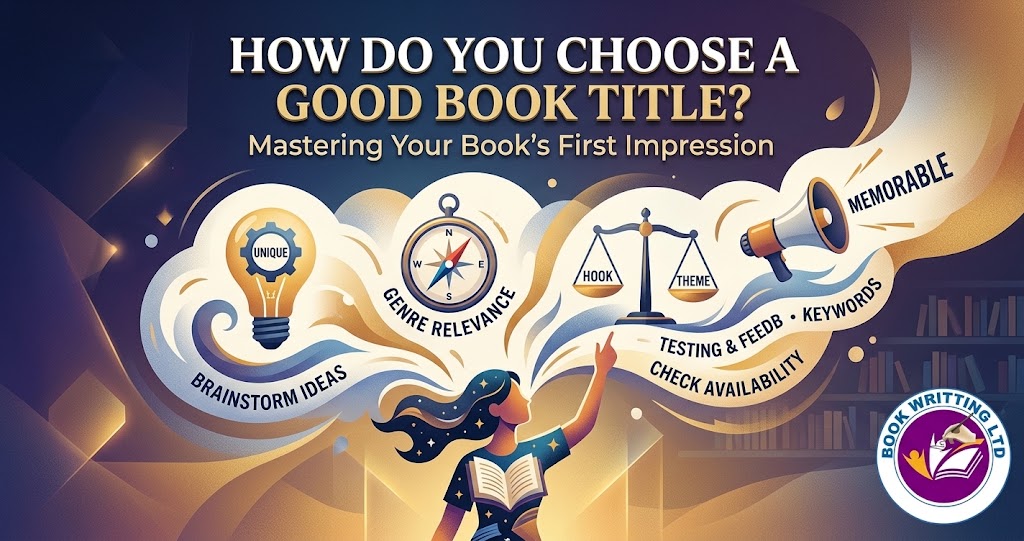
Choosing a title is one of the most important creative decisions an author makes. A good book title can spark curiosity, communicate the mood of a story, and help readers understand what kind of experience a book offers. Whether you're writing a novel, memoir, business guide, or children's book, your title is often one of the first things potential readers notice.
But how do you choose a title that feels memorable, meaningful, and appropriate for your book?
The process involves creativity, careful thought, and an understanding of your intended audience. By exploring different ideas, considering your genre, and testing possible titles, you can find a name that represents your book and makes a strong first impression.
1. Understand Your Book’s Main Idea
Before brainstorming titles, identify what your book is really about. Think beyond the basic plot or subject and consider its central message, emotional core, or main promise to readers.
For fiction, ask yourself what makes the story distinctive. Is it a mystery, a journey of self-discovery, a forbidden friendship, or a battle against an unexpected challenge?
For nonfiction, consider the problem your book addresses or the knowledge readers will gain.
Write down a few words that capture your book’s main themes, characters, setting, or benefits. These words can become starting points for possible titles.
A title does not need to explain everything about the book. It should create a meaningful connection between the content and the reader's expectations.
2. Match the Title to Your Genre
Readers often use a title to make an initial judgment about a book's genre. A mysterious phrase may suggest suspense, while a warm and expressive title might suit a romance or personal memoir.
Think about the expectations of your intended audience.
Mystery and thrillers: Titles that suggest secrets, questions, danger, or uncertainty can create curiosity.
Romance: Emotional language, relationships, and imagery can communicate the story's mood.
Fantasy and science fiction: Distinctive names, unusual concepts, or references to imaginary worlds may suit the genre.
Nonfiction: Clear titles that communicate a topic, benefit, or problem can help readers understand the book's purpose.
Children's books: Playful language, memorable phrases, and simple wording may work well for younger audiences.
These are creative possibilities rather than strict rules. The best choice is a title that suits your particular book instead of simply copying conventions from similar titles.
3. Keep It Memorable and Easy to Understand
A memorable title is usually easy to recall, pronounce, and share with others. A title that is unnecessarily complicated may be difficult for readers to remember, even when the book itself is excellent.
Try experimenting with short phrases, vivid words, meaningful questions, or unusual combinations of familiar concepts.
Read each potential title aloud. Consider whether it sounds natural and whether someone could remember it after hearing it once.
Longer titles can also work, especially when a subtitle clarifies the subject or benefit. The goal is not to make every title as short as possible, but to ensure that every word contributes something useful.
4. Brainstorm Multiple Ideas
Avoid settling on the first title that comes to mind. Instead, create a list of possibilities before evaluating them.
Try these brainstorming techniques:
Theme-based titles: Focus on the central message or idea.
Character-based titles: Use a memorable character's name or defining quality.
Question-based titles: Raise a question that the book explores.
Image-based titles: Use a meaningful object, place, symbol, or recurring image.
Benefit-based titles: For nonfiction, explain what readers can learn or accomplish.
You can combine ideas from different lists to discover something more distinctive. For example, a phrase associated with the story's setting might become more compelling when paired with a central theme.
Give yourself permission to explore unusual options during brainstorming. You can narrow the list once you have several promising candidates.
5. Make the Title Relevant to Your Readers
A good title considers not only what the author wants to express but also what the intended audience might find interesting.
Think about who is most likely to read your book, what they care about, and what might encourage them to learn more.
For a practical nonfiction guide, clarity may be more important than mystery. For a literary novel, an evocative phrase might communicate the tone better than a direct description of the plot.
Ask a few people from your intended audience to review your shortlist. Find out what each title makes them expect, which one they remember, and whether any option creates the wrong impression.
Their responses can reveal useful differences between what you intended and what readers actually understand.
6. Check Whether the Title Is Already in Use
Before committing to a title, search online bookstores, library catalogs, search engines, and publishing databases for similar titles.
Discovering other books with the same or a similar title does not automatically mean you cannot use it. However, it may affect how easily readers find your book or distinguish it from other works.
Also consider whether the proposed title could create confusion with an existing brand or series. When necessary, research relevant naming and trademark considerations in your intended market or seek qualified advice.
For online discoverability, a clear and distinctive title can be helpful. Nonfiction authors may also consider using a descriptive subtitle that communicates the subject or practical benefit.
7. Test Your Shortlist Before Deciding
Once you have narrowed your choices to three or five strong options, evaluate them against a few simple questions.
Does the title reflect the book accurately? Is it appropriate for the genre? Is it easy to remember? Does it appeal to your intended audience? Does it look good on a cover and remain readable as a small online thumbnail?
You might also ask trusted readers or writing colleagues to rank your options. Treat their feedback as helpful information rather than an absolute verdict.
A title should attract attention without making promises the book does not fulfill. The strongest choice combines appeal with an accurate representation of the content.
8. Prepare Your Book for Publication
Selecting a title is an important milestone, but it is only one part of preparing a professional book. The title, subtitle, cover design, description, and overall presentation should work together to communicate the book's identity.
Authors who are refining a manuscript or preparing for publication may benefit from a careful editorial review and a clear publishing plan. Book Writting Ltd offers writing-related services, including editing, publishing, and book marketing support, for authors exploring the next stage of their projects.
Consider reviewing the title alongside your book cover and promotional description. This can help you present a consistent message when your book appears on a website, in an online store, or on social media.
Choosing a good book title takes creativity, patience, and an understanding of your readers. Start by identifying your book's central idea, explore a range of possibilities, and select a title that suits your genre and intended audience.
Before making your final decision, check for similar titles, gather useful feedback, and consider how your choice will appear on a book cover and online.
Remember that the best title is not necessarily the cleverest or most complicated. It is the one that captures the spirit of your book, creates the right expectations, and gives readers a reason to take a closer look.