
Writing Dystopian Fiction: Building a Unique World
23 October 2026 · 6 min read
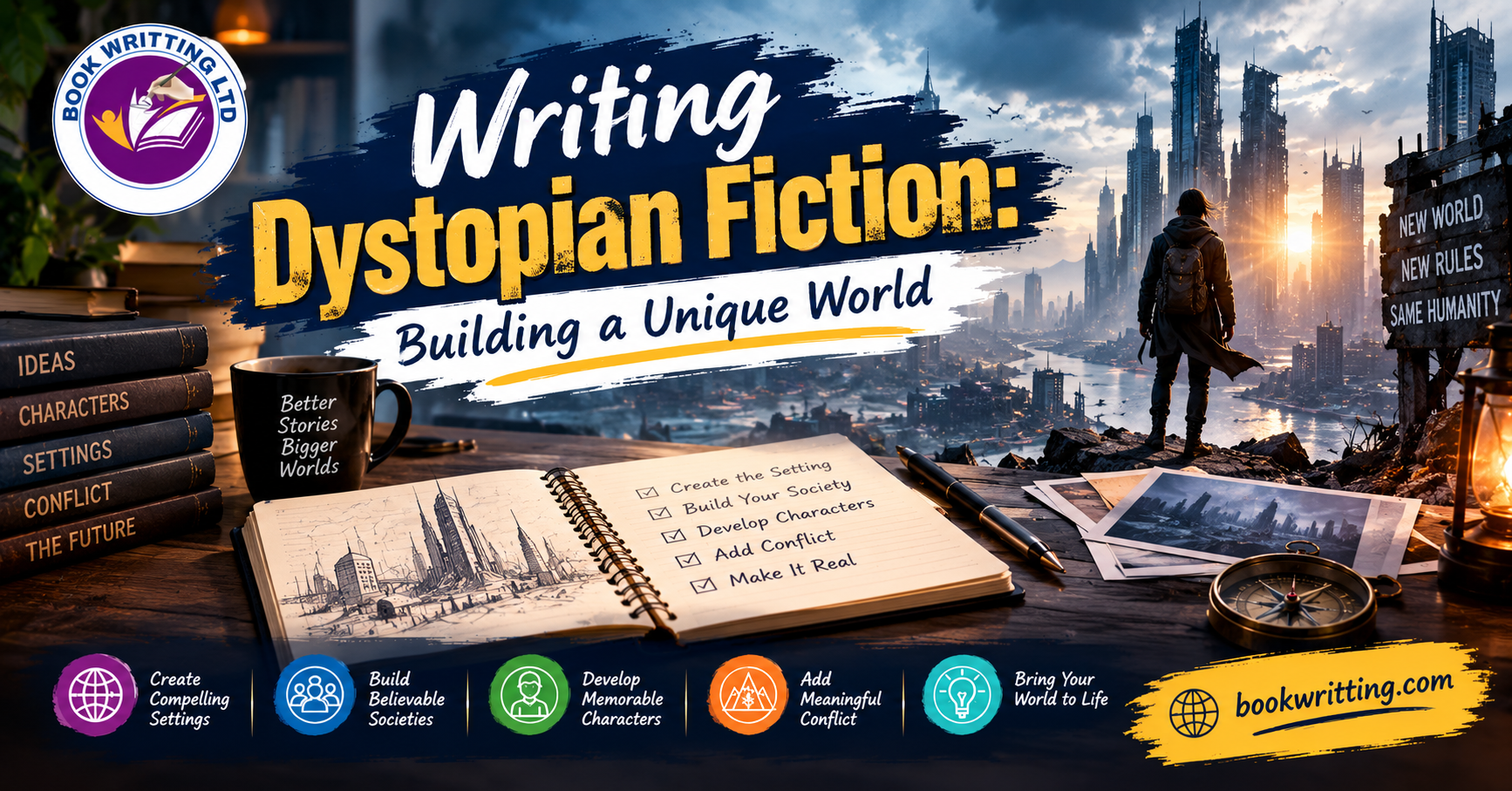
Dystopian fiction invites readers to explore societies where freedom is restricted, powerful systems control everyday life, and ordinary people struggle against difficult circumstances. These stories often imagine futures shaped by environmental disasters, technological dependence, political oppression, or extreme social inequality. Although dystopian worlds can be unsettling, they also encourage readers to question the present and imagine how societies might change.
Creating a memorable dystopian setting requires more than describing a ruined city or an authoritarian government. A compelling world has its own history, rules, culture, and internal logic. Its conditions influence how characters think, behave, form relationships, and respond to challenges.
Whether you're writing a futuristic science fiction novel or a story about a society that has gradually lost its freedoms, thoughtful world-building can help you create a distinctive and believable dystopian experience.
1. Begin with a Central Idea
Every dystopian world needs a defining concept. Start by asking what has changed in society and why that change matters.
Perhaps technology monitors every interaction, natural resources have become scarce, or citizens must follow strict rules to maintain their social status. Your world might even appear peaceful and prosperous on the surface while hiding serious problems beneath its polished exterior.
Choose one central idea and explore its consequences. Consider how it affects education, employment, family life, communication, and personal freedom.
Avoid combining too many unrelated problems simply to make the setting feel darker. A focused premise gives your fictional society a clearer identity and allows readers to understand the forces shaping the story.
2. Establish the Rules of Society
Readers need to understand how your dystopian world operates. Decide who holds power, how laws are enforced, and what happens when someone challenges established rules.
Government control might take the form of surveillance, strict regulations, restricted information, or unequal access to essential resources. In other stories, corporations, automated systems, or influential social groups may determine how people live.
Consider how ordinary citizens experience these systems. What choices are available to them? Which activities are encouraged or forbidden? How do people obtain food, education, housing, or employment?
You do not need to explain every rule immediately. Reveal important details through daily routines, conversations, public announcements, and the protagonist's experiences.
When the rules remain consistent, the world feels credible and readers can understand the risks associated with breaking them.
3. Build a Distinctive Environment
A dystopian setting can be a crowded futuristic city, a remote settlement, an isolated island, or a familiar town transformed by new restrictions.
Think about the environment's physical appearance and practical conditions. Are buildings carefully maintained to create an illusion of order, or are neighborhoods deteriorating because resources are distributed unfairly? Are public spaces constantly monitored, or have communities created hidden places where people can speak freely?
Climate, geography, architecture, transportation, and technology should influence everyday life.
Use sensory details to make these places memorable. The constant hum of machines, empty streets after curfew, artificial lighting, or advertisements repeating official messages can communicate the atmosphere without long explanations.
Choose details that reveal how the society functions, rather than describing the environment only for decoration.
4. Create Believable Social Divisions
Many dystopian stories explore differences in power, wealth, information, or opportunity. These divisions can create tension and reveal what the society values.
Perhaps residents of one district receive advanced education while another community has limited access to information. Maybe certain occupations provide privileges, or citizens are judged according to a rigid social ranking.
Develop the reasons these divisions exist and consider how people respond to them. Some may accept the system, others may benefit from it, and others may quietly resist.
Avoid presenting every character on one side as identical. People within the same social group can disagree about what should change and how it should happen.
Complex social relationships make the world feel more realistic and create meaningful conflicts for the plot.
5. Develop Characters Who Are Shaped by Their World
Dystopian settings become engaging when readers experience them through believable characters.
Your protagonist might be someone who follows the rules until an unexpected event challenges their beliefs. Another character might know the system is unfair but fear the consequences of opposing it.
Give your characters personal goals, relationships, weaknesses, and responsibilities. They should have reasons for making difficult choices, not simply act as representatives of a political idea.
Their environment should influence their decisions, vocabulary, assumptions, and expectations. Someone raised in a society with restricted information might struggle to imagine a different way of living.
As the plot develops, let characters question their beliefs, discover new information, and face consequences for their actions.
6. Explore Themes Through Everyday Life
Dystopian fiction often examines freedom, privacy, inequality, conformity, environmental responsibility, and the relationship between individuals and institutions.
These themes are most effective when readers encounter them through the story itself. Instead of explaining every problem directly, show how rules affect a character's family, friendships, opportunities, or sense of identity.
A restriction on personal communication, for example, could create conflict between friends who have different opinions about following the rules. A shortage of resources might reveal how neighbors cooperate or compete when circumstances become difficult.
Allow characters to hold different perspectives. Thoughtful disagreement makes the fictional society more complex and gives readers room to consider the questions raised by the narrative.
7. Balance World-Building with Plot
One common challenge in dystopian writing is providing too much background information before the story begins.
Although world-building is important, readers also need characters with immediate goals and problems. Introduce the setting as the protagonist encounters it, and prioritize details that influence current events.
A scene at a checkpoint might reveal surveillance rules while advancing the plot. A family conversation could show social expectations while exposing a disagreement. A routine journey might reveal divisions between wealthy and disadvantaged districts.
This approach allows readers to learn about the world while remaining interested in what happens next.
8. Make Your World Consistent and Revise Carefully
A distinctive dystopian world needs internal consistency. If certain actions are forbidden, readers should understand how the restriction works. If technology has major limitations, those limitations should remain meaningful throughout the story.
During revision, check timelines, social rules, character knowledge, geography, and the consequences of important decisions. Look for contradictions that might weaken the fictional world.
Ask whether every major world-building detail contributes to the plot, character development, atmosphere, or themes.
If you need assistance developing or refining your manuscript, explore writing, editing, publishing, and book marketing services through Book Writting Ltd.
Writing dystopian fiction is an opportunity to create imaginative societies while exploring meaningful questions about human behavior and the direction of the world.
Start with a central idea, establish consistent rules, develop a distinctive environment, and consider how the society shapes its people. Then build a plot that allows your characters to respond to the challenges around them.
The most memorable dystopian worlds are not simply unusual or frightening. They feel believable because their systems affect everyday life and force characters to make difficult choices. When world-building, character development, and conflict work together, your story can entertain readers while encouraging them to think beyond the final page.