
How Do You Prepare a Book for International Publication? A Complete Guide
25 November 2026 · 8 min read
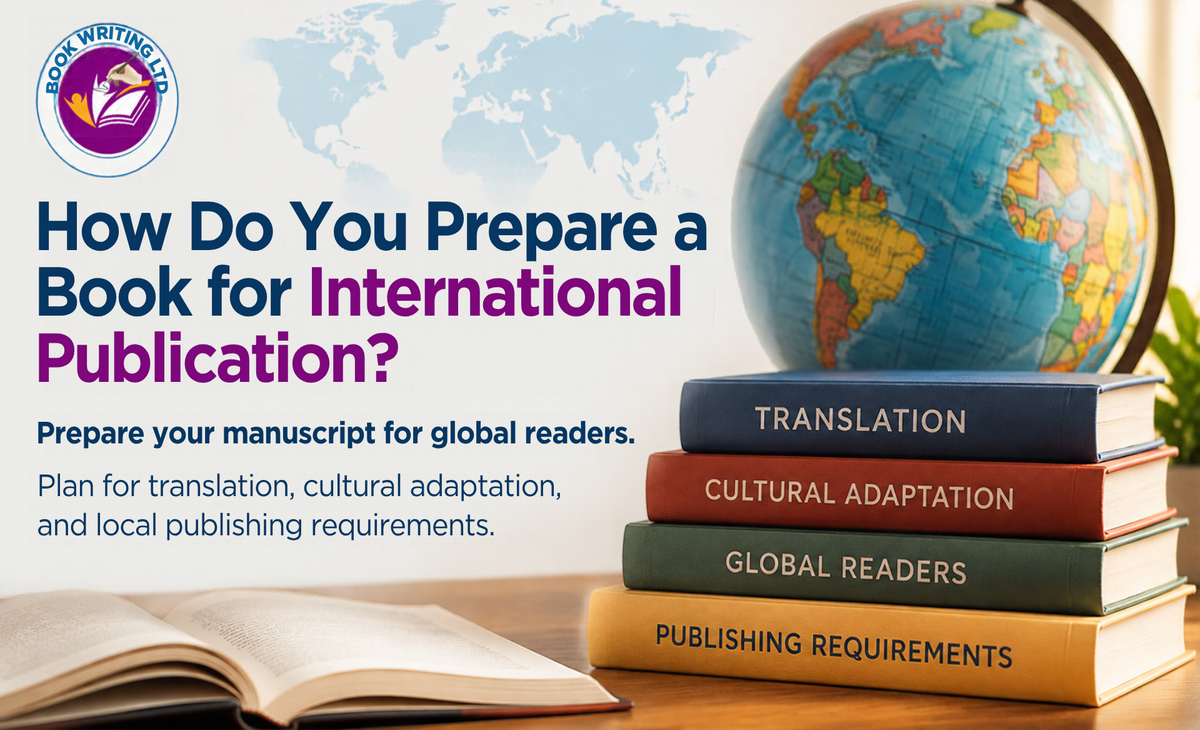
additional preparation. A manuscript that is ready for publication in one market may need changes before it can successfully reach an international audience.
International book publishing involves more than making a book available online. Authors must consider professional editing, translation, cultural differences, copyright permissions, ISBN registration, book formatting, distribution, pricing, and marketing.
Whether you're writing fiction, nonfiction, children's books, educational guides, or memoirs, preparing your manuscript for international publication can help you reach readers beyond your home country.
However, expanding into international markets requires thoughtful planning and an understanding of different publishing requirements.
Here are ten practical steps to help you prepare your book for readers around the world.
1. Prepare Your Manuscript Professionally
The first step toward international publication is ensuring that your manuscript is complete and professionally prepared.
Your book should have a clear structure, consistent writing style, well-developed chapters, and accurate information.
Before considering international distribution, focus on:
Professional manuscript editing.
Grammar and spelling corrections.
Consistent chapter organization.
Clear and readable language.
Accurate references and citations.
A complete introduction and conclusion.
If your book contains technical information, historical details, or research-based content, verify important facts carefully.
A well-prepared manuscript provides a strong foundation for translation, formatting, and international publishing.
2. Identify Your International Target Audience
Not every book appeals equally to every market.
Before choosing international publishing destinations, identify the readers who are most likely to appreciate your subject.
For example, a children's educational book may attract different readers from a business guide, fantasy novel, or personal development publication.
Consider:
Which countries have readers interested in your subject?
Which languages might suit your book?
What cultural interests are relevant?
Are readers more likely to prefer print or digital editions?
Which publishers or distribution platforms serve your intended markets?
Researching your audience helps you make better decisions about translation, pricing, book descriptions, and promotion.
Start with markets that closely match your subject rather than trying to target every country simultaneously.
3. Consider Professional Book Translation
Language is one of the most important considerations in international publishing.
Publishing an English-language book worldwide may be suitable for some audiences, but other readers may prefer publications in their native languages.
A professional translator can help communicate your ideas accurately while maintaining the original meaning, tone, and writing style.
When translating your book, consider:
Correct terminology.
Natural sentence structure.
Cultural expressions.
Dialogue and character voices.
Humour and idioms.
Titles and chapter headings.
Avoid relying entirely on automated translation without careful human review.
A translated manuscript should ideally receive proofreading and editorial review by someone familiar with the target language.
Also remember that each language edition may need its own publication details and ISBN.
4. Adapt Your Book to Different Cultures
Translation and cultural adaptation are related, but they are not the same.
A sentence can be grammatically correct while still being confusing or unsuitable for readers from another cultural background.
For example, humour, traditional celebrations, food references, measurements, educational examples, and everyday expressions may require additional explanation or adaptation.
Consider whether your book contains:
Local measurements and currencies.
Cultural references.
Historical events.
Regional expressions.
Food and lifestyle examples.
Illustrations and visual symbols.
Make sure adaptations preserve the original meaning without introducing misleading information.
Cultural sensitivity is particularly important when writing about real communities, traditions, and historical experiences.
5. Understand Copyright and International Publishing Rights
Copyright is an important consideration when preparing a book for international publication.
Before distributing your work in different territories, confirm that you own or have permission to use all the material included in your manuscript.
This may include written content, photographs, illustrations, quotations, translations, maps, and other creative elements.
If your publishing agreement grants specific rights to another publisher, check which countries, languages, and formats are covered.
You should understand:
Copyright ownership.
Translation rights.
International distribution rights.
Print and ebook rights.
Licensing arrangements.
Adaptation rights.
Royalty agreements.
Copyright protection and publishing arrangements can differ between countries. International distribution should therefore be planned with the relevant legal requirements in mind.
If necessary, consult an intellectual property professional before signing publishing or licensing agreements.
6. Obtain the Appropriate ISBNs
An ISBN, or International Standard Book Number, is a unique identifier used to distinguish individual book publications.
It helps bookstores, libraries, distributors, and online retailers identify and manage different editions.
When preparing your book internationally, remember that separate ISBNs are generally required for different language editions and publication formats.
For example, your English paperback, English hardcover, and translated paperback may each require separate ISBNs.
The International ISBN Agency advises publishers to apply through the national ISBN agency where the publisher is based, rather than choosing an agency simply because the book is written in a particular language.
Also remember that an ISBN identifies a publication; it does not itself provide copyright protection.
Check your national ISBN agency's requirements before publication.
7. Format Your Book for International Readers
Professional formatting helps ensure that your book is readable and suitable for different publishing platforms.
Depending on your book and intended market, you may need paperback, hardcover, ebook, or audiobook editions.
Consider:
Appropriate book dimensions.
Readable fonts and typography.
Consistent margins and spacing.
Proper chapter headings.
Correct page numbering.
High-quality cover artwork.
Accurate digital formatting.
If you publish in languages that use different writing directions or scripts, formatting may require additional attention.
For example, Arabic and other right-to-left writing systems may require special page-layout arrangements.
Always review the final digital files and, when possible, order a printed proof before making the publication widely available.
8. Choose Suitable International Distribution Channels
Once your book is ready, decide how readers in different countries will purchase it.
Authors can consider traditional publishers, international distributors, print-on-demand services, online retailers, and digital publishing platforms.
Each option has different requirements, costs, distribution territories, and payment arrangements.
For example, Amazon Kindle Direct Publishing provides options for publishing ebooks, paperbacks, and hardcovers for eligible international markets.
However, availability differs by format and distribution option. Its Expanded Distribution service for paperbacks has specific territorial availability and does not guarantee that every bookstore will stock a title.
Compare distribution arrangements before choosing a platform.
Check the supported countries, production expenses, printing locations, delivery arrangements, royalties, and return policies.
9. Create an International Marketing Strategy
Publishing internationally is only part of reaching readers around the world. Your book also needs an effective marketing strategy.
Start by creating promotional materials that communicate the book's value clearly.
Useful marketing activities include:
A professional author website.
Search-engine-friendly book descriptions.
Social media promotional content.
Author interviews and guest articles.
Email newsletters.
Book review outreach.
Relevant international reading communities.
Localized promotional materials.
Consider adapting your marketing messages to different languages and audiences.
For example, a book description that works well in one market may need different examples or wording in another.
Be realistic about promotional budgets and focus on channels that reach your intended readers.
10. Review Your International Publishing Plan Before Launch
Before releasing your book internationally, conduct a final review of the entire publishing project.
Check that the manuscript, cover, ISBN information, publication metadata, rights, and distribution arrangements are consistent.
A useful final checklist includes:
Final manuscript editing and proofreading.
Approved translation, if applicable.
Cultural and factual review.
Copyright and permission checks.
Correct ISBN assignment.
Print and ebook formatting.
International pricing.
Publishing rights and distribution territories.
Marketing materials and launch schedule.
If possible, ask experienced publishing professionals to review important parts of your preparation.
Professional guidance can help identify problems before your book reaches readers.
For assistance preparing your manuscript, explore writing, editing, proofreading, publishing, and book marketing services through Book Writting Ltd
Conclusion
Preparing a book for international publication requires more than completing a manuscript and uploading it to a publishing platform.
Authors must consider language, cultural differences, copyright, ISBN registration, professional formatting, distribution arrangements, and international marketing.
Start by preparing a strong manuscript and identifying your intended readers. Then consider translation, cultural adaptation, publishing rights, and suitable distribution channels.
Remember that every international market has its own requirements and opportunities. Careful research and professional preparation can help you avoid unnecessary problems and create a better reading experience.
Whether you're publishing your first novel or expanding an established book catalogue, a thoughtful international publishing strategy can help your work reach readers across borders.
Your story deserves the opportunity to travel beyond its original market. With creativity, planning, and the right publishing preparation, you can take the next step toward sharing your book with the world.
For more writing inspiration, manuscript preparation, editing, proofreading, publishing, and book marketing resources, visit Book Writting Ltd and explore services designed to support your publishing journey