How Does Print-on-Demand Publishing Work? A Complete Beginner’s Guide
19 November 2026 · 6 min read
Have you ever dreamed of publishing your own book without spending thousands of dollars on printing and storing copies? Print-on-demand (POD) publishing makes this possible.
Print-on-demand publishing is a modern book production method that allows authors to print books only when customers place orders. Instead of printing hundreds or thousands of copies in advance, the publishing platform produces individual copies as needed.
This approach is becoming increasingly popular among independent authors, new writers, and self-publishers because it reduces upfront costs and simplifies book distribution.
In this guide, we'll explain how print-on-demand publishing works, its four main steps, its benefits, and how beginners can get started.
What Is Print-on-Demand Publishing?
Print-on-demand publishing is a publishing model where books are printed only after a customer purchases them.
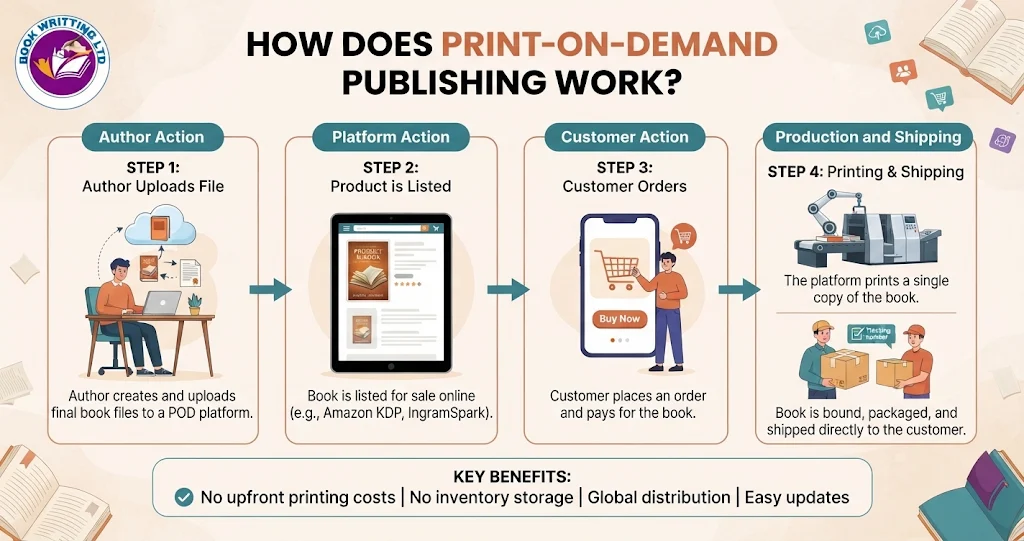
Authors upload their completed book files to a print-on-demand platform. The platform displays the book in its online marketplace or makes it available through distribution channels. When someone orders a copy, the platform prints, binds, packages, and ships the book directly to the customer.
Popular platforms include Amazon Kindle Direct Publishing (KDP) and IngramSpark.
Unlike traditional bulk printing, POD eliminates the need for authors to purchase large quantities of books before making sales.
How Does Print-on-Demand Publishing Work?
The print-on-demand publishing process generally involves four simple steps.
Step 1: The Author Uploads the Book Files
The first step begins when the author completes the manuscript and prepares the book for publication.
Authors typically need to prepare:
A professionally formatted interior manuscript.
A suitable book cover design.
The book title and description.
Relevant keywords and categories.
Pricing and distribution information.
After preparing these materials, the author uploads the files to a print-on-demand publishing platform.
The platform checks the files to ensure they meet its publishing requirements.
Step 2: The Book Is Listed for Sale Online
Once the book files are approved, the platform creates a product listing.
Customers can discover the book through online bookstores and supported distribution channels.
The listing usually includes the book cover, title, author information, description, price, and other relevant details.
For example, authors can use Amazon KDP to publish paperback and hardcover books for sale on supported Amazon marketplaces. IngramSpark provides additional print and distribution options.
At this stage, the book is available for customers to purchase.
Step 3: A Customer Places an Order
When a reader finds a book they like, they can place an order through the online bookstore.
The customer pays for the book through the retailer's checkout system.
The order information is then sent to the appropriate print-on-demand production facility.
The author generally does not need to handle individual customer orders or communicate directly with printing companies.
Step 4: The Book Is Printed and Shipped
After receiving the order, the print-on-demand facility produces a copy of the book.
The production process typically includes:
Printing the book's interior pages.
Printing and preparing the cover.
Binding the pages together.
Checking and packaging the finished book.
Shipping the book to the customer.
The customer receives the completed book without the author needing to store inventory or arrange individual shipments.
Key Benefits of Print-on-Demand Publishing
Print-on-demand publishing offers several advantages for independent authors and beginners.
1. No Large Upfront Printing Costs
Traditional bulk printing often requires authors to pay for hundreds or thousands of copies in advance.
With POD, individual copies are generally printed after orders are placed. This reduces the need for a large initial printing investment.
2. No Inventory Storage
Authors do not need to purchase and store large quantities of books at home or in a warehouse.
The publishing platform or its production partners handle printing and fulfillment.
3. Wider Distribution Opportunities
Print-on-demand platforms can make books available through online marketplaces and supported distribution networks.
This gives independent authors opportunities to reach readers in different locations.
4. Easy Book Updates
Authors can often upload revised manuscript or cover files when they need to correct errors or improve their books.
The updated files can be used for future print orders, subject to the platform's review and publishing requirements.
5. More Opportunities for New Authors
POD makes it easier for first-time authors to publish books without managing traditional printing operations.
Writers can focus more on creating quality content, marketing their books, and building an audience.
Popular Print-on-Demand Publishing Platforms
Several platforms offer print-on-demand publishing services.
Amazon Kindle Direct Publishing (KDP): A popular option for independent authors who want to publish paperback and hardcover books for sale through supported Amazon marketplaces.
IngramSpark: Offers print-on-demand services and access to a broad book distribution network.
Before selecting a platform, compare printing costs, distribution options, royalty structures, file requirements, and publishing terms.
Is Print-on-Demand Publishing Right for Beginners?
Yes! Print-on-demand publishing can be a practical option for beginners who want to publish their first book.
You do not need to manage a printing warehouse or purchase large quantities of books in advance.
However, successful publishing still requires preparation. Authors should invest time in writing, editing, formatting, cover design, pricing, and book promotion.
It is also important to understand that printing costs, platform fees, and retailer commissions affect how much money you earn from each sale.
Tips for Getting Started with Print-on-Demand Publishing
If you want to publish your first book, follow these simple tips:
Choose a topic that has a clear target audience.
Write useful and engaging content.
Edit and proofread your manuscript carefully.
Create an attractive and professional book cover.
Format your book according to the platform's requirements.
Research printing costs and royalty calculations.
Write an engaging book description.
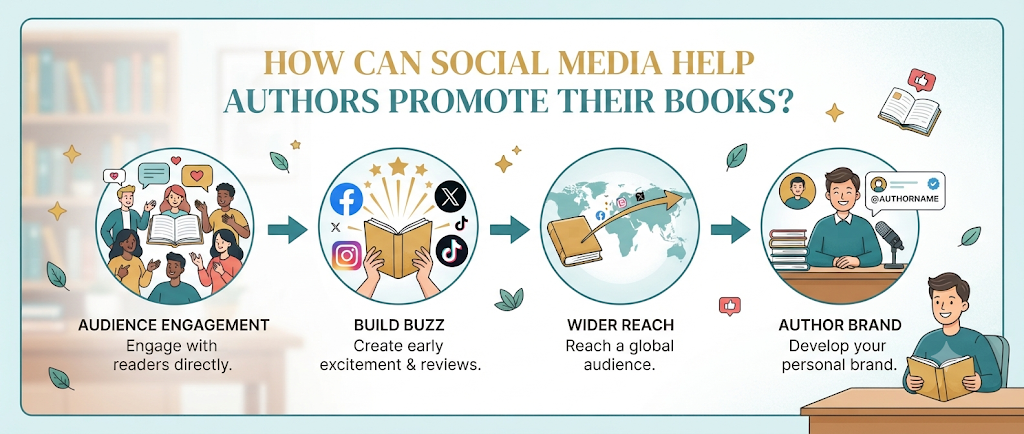
Promote your book through websites and social media.
Taking these steps can help you create a professional book and improve its chances of attracting readers.
Print-on-demand publishing has made book publishing more accessible to independent writers and new authors. By printing books only when customers place orders, this model reduces the need for upfront bulk printing, inventory storage, and manual shipping.
From uploading your manuscript to listing your book online, processing customer orders, and delivering finished copies, the entire process can be managed through a publishing platform.
Whether you're publishing your first book or expanding your existing collection, print-on-demand publishing offers a flexible way to bring your ideas to readers.
Ready to publish your own book? 👉 Read the complete guide: https://bookwritting.com/ Start exploring print-on-demand platforms and take the first step toward becoming a published author.