How to Copyright Your Book? A Complete Guide for Authors
3 November 2026 · 9 min read
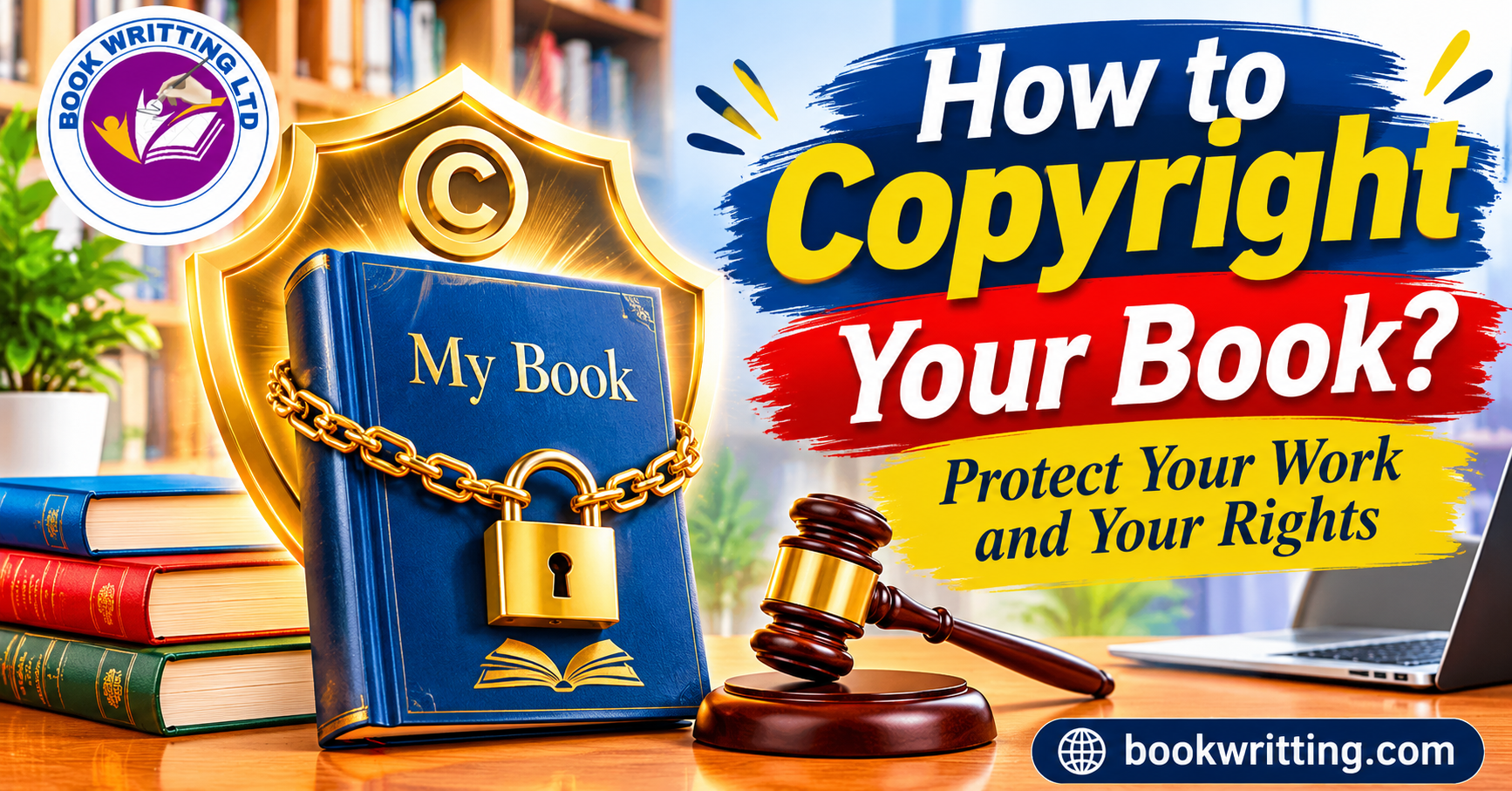
Writing a book takes creativity, dedication, and countless hours of effort. Whether you're creating a novel, memoir, children's book, educational guide, or nonfiction manuscript, your original work deserves appropriate protection.
But how do you copyright your book? Do you need to register it officially? Does copyright protection apply internationally? And what should you do if someone uses your writing without permission?
Understanding copyright is an important part of becoming an author. It helps you recognize your legal rights, document ownership, make informed publishing decisions, and protect your creative work.
The good news is that copyright protection arises automatically in most countries that follow the Berne Convention, without requiring authors to register their books or pay a registration fee. However, national laws and registration procedures can differ.
In this worldwide guide, we'll explore how copyright works, practical ways to protect your manuscript, and important considerations before publishing your book.
1. Understand What Copyright Means
Copyright is a form of intellectual property protection that gives creators certain exclusive rights over their original creative works.
For authors, copyright commonly applies to:
Novels and short stories.
Memoirs and autobiographies.
Children's books.
Poetry and literary works.
Educational books and guides.
Original written articles and essays.
Original illustrations and artwork.
Depending on the applicable law, copyright can give the rights holder control over reproducing, distributing, translating, adapting, and publicly communicating the work.
One important distinction is that copyright protects the original expression of an idea, not the underlying idea itself.
For example, you may own copyright in an original fantasy novel about a magical kingdom, but you cannot claim exclusive ownership of the general idea of magical kingdoms.
This distinction helps writers understand what copyright actually protects and why originality matters.
2. Know When Your Book Receives Copyright Protection
Many new authors believe they must register their books before receiving copyright protection. However, this is not generally necessary in countries that follow the Berne Convention.
Under the international principle of automatic protection, copyright generally begins when an original work is created, without requiring registration, payment, or another formal procedure in those countries.
This means that an unpublished manuscript can already be protected. You do not necessarily need to print your book, sell copies, or obtain a copyright certificate before protection arises.
However, legal requirements can vary in countries outside the Berne framework and under different national laws. Some jurisdictions may also have specific requirements concerning fixation, ownership, or particular types of works.
For international authors, understanding the applicable copyright laws is important. <Cite refs={["turn641225search0","turn641225search2","turn641225search4"]}/>
3. Does Copyright Protect Your Book Worldwide?
International copyright protection is supported by international agreements, particularly the Berne Convention for the Protection of Literary and Artistic Works.
The Berne Convention establishes important principles for protecting literary and artistic works across participating countries.
One of its central principles is that authors from participating countries generally receive copyright protection in other member countries without having to complete a separate registration process in every country.
However, copyright law remains territorial. This means that the applicable national law can affect how rights are exercised, enforced, and resolved in legal disputes.
There is also no single worldwide copyright registration certificate that automatically replaces every country's national procedures.
The World Intellectual Property Organization (WIPO) provides international copyright information, but it does not operate a universal copyright registration system.
Therefore, authors should understand the relevant rules in the countries where they live, publish, distribute, or need to enforce their rights. <Cite refs={["turn641225search1","turn641225search2","turn641225search12","turn641225search14"]}/>
4. Keep Evidence of Your Original Manuscript
Even when copyright protection is automatic, keeping reliable records of your writing process is a sensible precaution.
Evidence of authorship and creation can become important if ownership is disputed.
Consider keeping:
Original Manuscript Files: Preserve your earliest drafts and completed manuscript.
Dated Versions: Save different versions as your writing develops.
Research Notes: Keep outlines, chapter plans, character notes, and supporting research.
Digital Backups: Store copies in secure cloud storage and on a separate storage device.
Editorial Records: Retain relevant correspondence with editors, illustrators, and collaborators.
Publishing Documents: Keep contracts, permissions, licenses, and ownership agreements.
These records do not guarantee the outcome of a legal dispute, but they can help demonstrate how your work developed and document your creative process.
5. Add a Copyright Notice to Your Book
A copyright notice is a simple way to identify the person or organization claiming copyright ownership.
Although a notice is not required to establish copyright in many countries, it can help inform readers and other users about the rights holder.
A conventional copyright notice looks like this:
© 2026 [Author's Name]. All rights reserved.
A copyright page may also include:
Book title.
Author's name.
Copyright owner's name.
Publication year.
Publisher information.
ISBN, where applicable.
Permissions and acknowledgments.
The copyright owner should be identified accurately. If rights have been transferred or licensed through a publishing agreement, make sure the notice reflects the actual ownership arrangement.
6. Should You Register Your Book Copyright?
Copyright registration is voluntary in many countries, but it may provide additional documentation of ownership.
Some national copyright offices maintain official registration or recordation systems. These systems can provide records that may be useful in ownership disputes, licensing arrangements, or other legal matters.
Before registering, investigate the official copyright authority in your relevant jurisdiction.
Depending on the country, an application may request:
The title of the book.
The author's name.
The copyright owner's details.
The category of literary work.
Publication information, if applicable.
A copy of the manuscript.
Supporting ownership information.
Payment of an applicable fee.
Requirements, fees, deadlines, and the legal effects of registration vary by country.
Be careful with websites advertising universal or worldwide copyright registration. WIPO specifically warns that unofficial paid registration services do not create worldwide copyright protection or international recognition.
There is no need to pay an unfamiliar organization simply because it claims to provide a universal copyright certificate. Check the legitimacy of registration services before submitting money or personal information. <Cite refs={["turn641225search0","turn641225search1","turn641225search4"]}/>
7. Understand Your Rights When Working with Publishers
Publishing a book often involves agreements with publishers, editors, illustrators, distributors, and other professionals.
Before signing any agreement, understand which rights you retain and which rights you are granting or transferring.
Pay attention to the following areas:
Copyright Ownership: Does the author retain copyright, or does the agreement transfer ownership?
Publishing License: Which permissions does the publisher receive?
Formats: Does the agreement cover print books, ebooks, audiobooks, or other formats?
Territories: In which countries can the book be published and distributed?
Duration: How long does the agreement remain in effect?
Royalties: How will payments be calculated and reported?
Translation and Adaptation: Who controls permission for translations, film adaptations, or other derivative uses?
Rights Reversion: Under what circumstances can rights return to the author?
Do not assume that publishing a book automatically means the publisher owns its copyright. The agreement and applicable law determine the rights and responsibilities of each party.
For important contracts, consider seeking advice from a qualified intellectual property or publishing lawyer.
8. Understand the Difference Between Copyright and ISBN
Copyright and ISBN are two different things.
Copyright protects the original expression of a creative work.
An ISBN, or International Standard Book Number, identifies a particular book publication or edition within the book distribution and supply chain.
For example, a paperback and an ebook may require separate ISBNs depending on the publishing arrangements.
However, receiving an ISBN does not give you copyright protection or prove that you own the book's copyright.
The International ISBN Agency clearly explains that an ISBN is a product identifier, not a form of legal copyright protection. <Cite refs={["turn641225search3","turn641225search6"]}/>
9. What Should You Do If Someone Copies Your Book?
Discovering that someone has copied or distributed your writing without permission can be frustrating.
Start by collecting information about the suspected use.
Save relevant URLs, screenshots, dates, publication details, and copies of your original manuscript. Keep records of any communication with the person or platform involved.
Then consider the appropriate response based on your circumstances and the relevant country's legal system.
Possible steps may include contacting the platform, sending a formal notice, speaking with a publisher, or consulting a qualified copyright lawyer.
Before making accusations, verify the facts. Some uses may be permitted under copyright exceptions, licenses, or other legal arrangements.
A careful, evidence-based approach is more effective than making unsupported public claims.
10. Prepare Your Book for Worldwide Publication
Protecting your original writing is only one part of preparing a book for publication.
Authors should also consider manuscript editing, proofreading, cover design, formatting, ISBN requirements, publishing contracts, distribution arrangements, and international book marketing.
If you plan to sell your book in several countries, research the relevant publishing, tax, consumer, and copyright requirements for your intended markets.
For additional support with your manuscript and publishing journey, explore writing, editing, proofreading, publishing, and book marketing services through Book Writting Ltd.
Copyright protection is an important consideration for every author. Understanding your rights, keeping records of your manuscript, using an appropriate copyright notice, and reviewing publishing agreements can help you protect your creative work.
In most countries participating in the Berne Convention, copyright protection begins automatically when an original work is created. However, registration systems, legal procedures, and enforcement rules differ between countries.
Do not rely on unofficial worldwide copyright certificates or assume that an ISBN protects your writing.
Instead, learn the rules that apply to your intended publishing markets, preserve evidence of your work, and seek qualified advice when necessary.
Your book represents your creativity and dedication. Taking sensible steps to understand and protect your rights can help you move toward publication with greater confidence.