What Is the Best Format for a Book Manuscript?
4 November 2026 · 7 min read
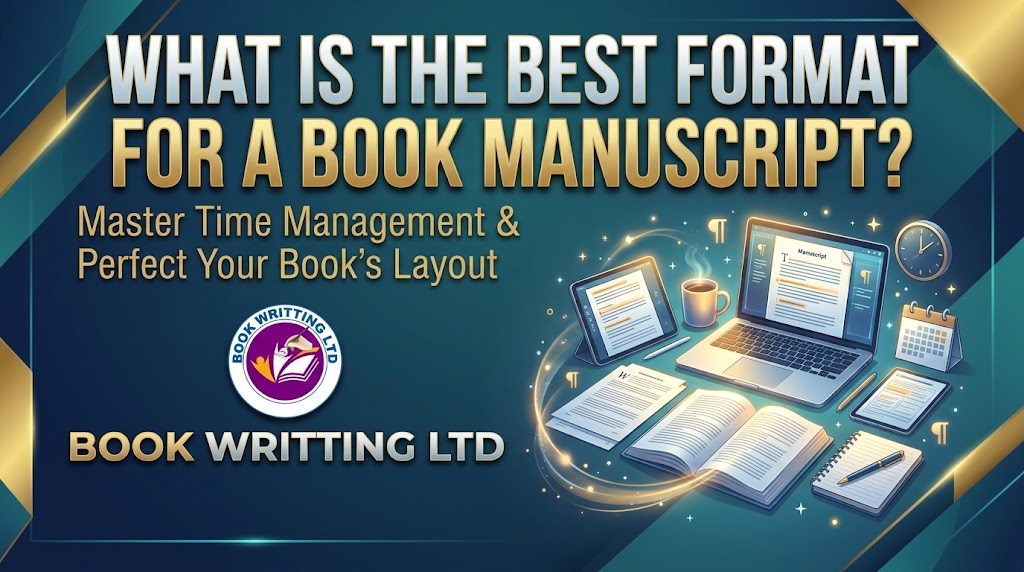
Writing a book requires creativity, patience, and careful planning. However, completing your manuscript is only one part of the publishing journey. Before submitting your work to a literary agent, publisher, editor, or self-publishing platform, you also need to consider how your manuscript is formatted.
A professionally formatted manuscript is easier to read, review, edit, and evaluate. Poor formatting can distract readers from your writing, while a clean and consistent layout helps your story or ideas receive the attention they deserve.
So, what is the best format for a book manuscript?
For many traditional publishing submissions, a simple, readable layout is the safest choice. This generally includes a standard font, double spacing, appropriate margins, consistent paragraph indentation, and clearly organized chapter headings. However, specific requirements can vary depending on the publisher, agent, genre, and publishing method.
Let's explore the essential elements of professional manuscript formatting.
1. Choose a Readable Font
Font selection is one of the first decisions when preparing a manuscript. Your primary goal should be readability rather than decoration.
Commonly accepted manuscript fonts include:
Times New Roman
Arial
Georgia
Courier New
A 12-point font is a widely used starting point for traditional manuscript submissions. Times New Roman, 12-point, is a particularly familiar choice.
Avoid decorative fonts, unusual typefaces, and excessive styling. Although creative typography can be useful in a finished book, a submission manuscript should prioritize clarity.
Always check the publisher's or literary agent's submission guidelines before choosing a font. If specific instructions are provided, follow them instead of relying on general recommendations.
2. Use Appropriate Line Spacing
Line spacing affects how easily an editor or agent can read and review your manuscript.
For many traditional fiction manuscript submissions, double spacing is a standard preference. It provides sufficient room for comments, corrections, and editorial notes.
A typical setup includes:
Double-spaced body text.
Consistent spacing throughout the manuscript.
No unnecessary blank lines between ordinary paragraphs.
Clear separation between chapters.
However, not every publishing project requires double spacing. Some nonfiction submissions, illustrated books, academic projects, and digital publishing workflows may use different specifications.
The important thing is to maintain consistency and follow the recipient's instructions.
3. Set Standard Page Margins
Margins create space around your text and help keep the manuscript organized.
A common starting point for traditional manuscript submissions is one-inch margins on all four sides of the page.
This provides a clean layout and makes the document easier to read and annotate.
Avoid squeezing text toward the edges to reduce page count. Extremely narrow margins can make a manuscript look crowded and unprofessional.
If a publisher provides a manuscript template, use its margin settings rather than changing them unnecessarily.
4. Format Paragraphs Consistently
Paragraph formatting helps readers follow your writing naturally.
For many fiction manuscripts, the first line of each new paragraph is indented. A standard starting point is approximately half an inch.
Keep these practices in mind:
Use consistent first-line indentation.
Align ordinary body text to the left.
Avoid manually inserting spaces to create paragraph indents.
Do not fully justify text unless requested.
Use paragraph breaks to separate different ideas or speakers.
In fiction, new paragraphs are particularly important when dialogue changes between characters.
For professional formatting, use your word processor's paragraph settings instead of repeatedly pressing the spacebar or tab key.
5. Create a Professional Title Page
A title page identifies your manuscript and provides essential information.
For a traditional submission, it commonly includes:
Book title.
Author's name or pen name.
Contact information, when requested.
Word count, when requested.
Relevant agent or publisher submission details.
Keep the design simple. Avoid decorative graphics, complex backgrounds, and unnecessary visual elements unless the submission guidelines specifically request them.
For privacy or blind-review requirements, some publishers may ask authors to remove identifying information. Always check the relevant instructions.
6. Organize Your Chapters Clearly
A well-organized manuscript should make it easy to identify where each chapter begins.
Start every chapter on a new page. Use consistent chapter headings and avoid unnecessary decorative formatting.
For example:
Chapter One
The First Journey
Or simply:
Chapter 1
Use a consistent approach throughout the manuscript.
For novels, chapter titles or numbers can help organize the narrative. For nonfiction books, headings and subheadings may provide additional structure.
If your book includes a preface, introduction, acknowledgments, appendix, or other supplementary sections, organize them in a logical order.
7. Add Page Numbers and Headers
Page numbers make manuscripts easier to review, discuss, and edit.
For traditional submissions, page numbers are commonly placed in the header or footer.
Some submission formats also request a running header containing the author's surname, shortened title, and page number.
For example:
Smith / The Hidden Garden / 12
However, this is not a universal requirement. Follow the publisher's preferred layout.
Avoid unnecessary headers, footers, and decorative elements that make the manuscript harder to review.
8. Choose the Right File Format
The file format you use depends on the purpose of your manuscript.
Microsoft Word (.docx): A common choice for submitting manuscripts to agents, editors, and publishers because it supports editing and comments.
Rich Text Format (.rtf): Sometimes accepted for document exchange and editing.
PDF (.pdf): Useful when you need to preserve a fixed layout or when the recipient specifically requests a PDF.
Google Docs: Convenient for collaborative writing and reviewing, although you may need to export the document into the requested format.
For traditional manuscript submissions, a Word document is often a practical starting point. For final ebook and print production, formatting requirements are different.
9. Understand the Difference Between Manuscript and Book Formatting
One important mistake new authors make is treating manuscript formatting and finished book formatting as the same process.
They serve different purposes.
A manuscript is a working document prepared for reading, editing, evaluation, or submission.
A finished book requires publication-ready layout, which may include:
Trim size.
Interior typography.
Chapter design.
Page numbering.
Headers and footers.
Images and illustrations.
Front and back matter.
Ebook navigation and formatting.
A manuscript that looks plain in Microsoft Word can still become a beautifully designed printed book.
Do not spend too much time decorating a submission manuscript when the publisher only needs a clean, readable document.
10. Check Your Manuscript Before Submission
Before sending your manuscript, review the entire document carefully.
Use this checklist:
Confirm the title and author information.
Check font size and readability.
Review line spacing and margins.
Make paragraph indentation consistent.
Start chapters on new pages.
Check page numbering.
Correct spelling and grammar errors.
Remove unnecessary blank pages.
Confirm the requested file format.
Follow the submission guidelines.
It is also helpful to read the manuscript again after formatting. Sometimes layout changes reveal missing paragraphs, inconsistent headings, or other problems.
The best format for a book manuscript is one that is clear, consistent, readable, and appropriate for its intended purpose.
For many traditional publishing submissions, 12-point Times New Roman, double spacing, one-inch margins, left-aligned text, consistent paragraph indentation, and numbered pages provide a reliable starting point.
However, there is no single format that applies to every book or publisher. Always review the specific submission requirements before sending your work.
Remember that professional formatting supports good writing. It helps editors, agents, and publishers focus on your story rather than unnecessary layout problems.
Take time to organize your manuscript properly, review every chapter, and prepare your document carefully. A well-presented manuscript is an important step toward turning your writing into a finished book.
Prepare Your Manuscript for Professional Publishing
A great book deserves a professional presentation. Before submitting your manuscript to publishers, literary agents, or editors, make sure your document is properly organized and easy to read.
From choosing the right font and line spacing to setting margins, organizing chapters, and preparing your document, manuscript formatting plays an important role in the publishing process.
Whether you're writing fiction, nonfiction, memoirs, or children's books, a clean and consistent manuscript helps communicate your work professionally.
Explore writing, editing, proofreading, and publishing resources from Book Writting Ltd.
Start preparing your manuscript for its next chapter.
Website: https://bookwritting.com/