What Is the Difference Between an Author and a Writer?
23 October 2026 · 6 min read
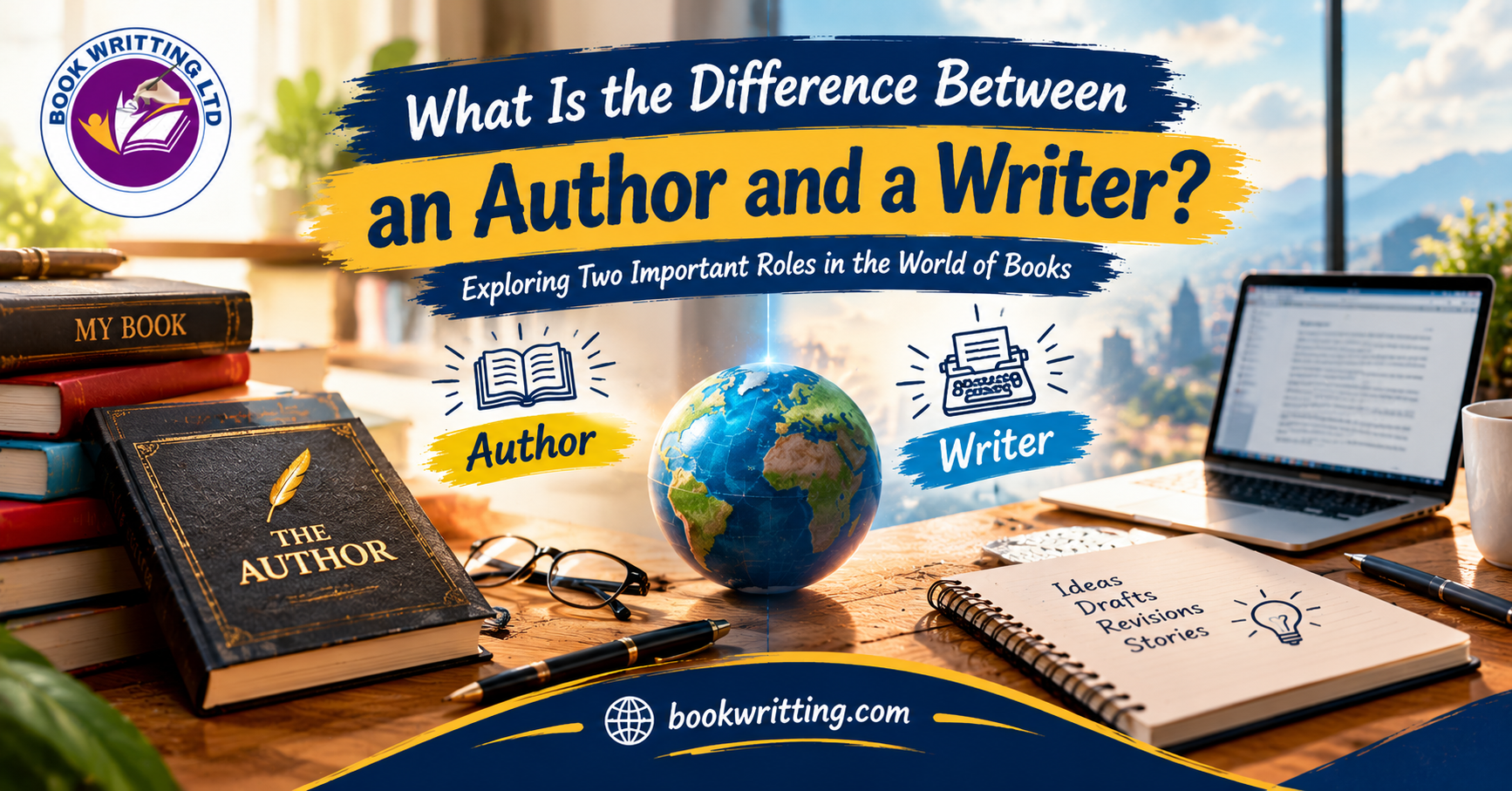
The terms author and writer are often used interchangeably, especially in the world of books and publishing. Both refer to people who create written content, develop ideas, and communicate through words. However, the terms can carry slightly different meanings depending on the type of work, the publishing context, and the person's role in creating it.
Understanding the difference between an author and a writer can help aspiring creators choose how to describe their work, explore career opportunities, and understand the publishing process.
Although the two roles overlap considerably, the main distinction is that writer emphasizes the act or profession of writing, while author often emphasizes creating or being credited with a particular work.
1. What Is a Writer?
A writer is someone who produces written content for a particular purpose. Writers may work in many different fields, creating material for entertainment, education, communication, business, or information.
Examples include:
Novelists and short-story writers
Journalists and article writers
Copywriters and content writers
Screenwriters and scriptwriters
Technical writers and educational writers
Bloggers and freelance writers
A writer's work might appear in books, magazines, newspapers, websites, advertisements, reports, scripts, or other formats.
Some writers develop their own ideas and projects, while others write according to a client's brief, an editor's instructions, or an organization's needs.
For example, a freelance writer might prepare website articles for a business without receiving individual public credit. The person is still a writer because they create the written material.
2. What Is an Author?
An author is generally the person who creates or is credited as the creator of a written work. The term is especially common in book publishing, literature, and discussions about original creative works.
Authors may create novels, nonfiction books, memoirs, poetry collections, short stories, plays, essays, or other forms of writing.
An author usually has a particular work associated with their name. For instance, someone who publishes a fantasy novel, a practical business guide, or a collection of short stories may describe themselves as an author.
Authors are often involved in developing the ideas, structure, themes, characters, or arguments behind their work. However, the exact level of involvement can vary, particularly when collaboration or ghostwriting is involved.
Being an author does not necessarily mean someone has published a traditionally printed book. Authors may publish independently, release digital books, contribute to collaborative projects, or create work in other formats.
3. Key Differences Between an Author and a Writer
Although the roles frequently overlap, several distinctions can help explain how the terms are commonly used.
Purpose: The word writer often describes a person's activity or profession, while author often identifies the creator of a particular work.
Range of work: Writers may produce everything from advertisements and technical documents to stories and books. Authors are often discussed in connection with identifiable creative or intellectual works.
Credit: Writers may work behind the scenes or receive credit for individual assignments. Authors are generally credited as creators of the works associated with their names.
Publishing: A writer does not need to publish a book to be a writer. An author may have a published book, but publication is not always necessary for the term to apply.
Overlap: A person who writes and publishes their own novel can accurately be described as both a writer and an author.
These distinctions are general conventions, not strict rules. In many situations, either term may be appropriate.
4. Can Someone Be Both an Author and a Writer?
Absolutely. Many people are both authors and writers because they create written content and develop original works.
A novelist, for example, writes the manuscript and may also be identified as the author of the finished novel. A nonfiction author might write books while producing articles, newsletters, or educational materials.
Similarly, a journalist who writes articles may be described as a writer and credited as the author of a particular article.
The terms are not competing professional titles. They describe related aspects of creating written work.
Choosing which one to use often depends on the context. Someone promoting a newly published book may prefer author, while a person describing a broad writing career may prefer writer.
5. What About Ghostwriters?
Ghostwriting offers a useful example of how the roles can differ.
A ghostwriter writes material on behalf of another person, who may receive the public credit for the finished work under an agreed arrangement. Ghostwriters may help develop memoirs, business books, speeches, articles, or other projects.
In this situation, the ghostwriter performs the writing, while the credited author may be the person whose name appears on the publication. The arrangement and responsibilities should be clearly agreed upon between the parties.
Ghostwriting does not make writing less valuable. It highlights the fact that producing a manuscript and receiving public author credit are not always the same role.
6. Which Path Should You Choose?
You do not necessarily have to choose between becoming an author and becoming a writer.
If you enjoy producing many types of content, you might explore freelance writing, journalism, copywriting, blogging, or technical writing. If you want to develop an original book or a collection of stories, becoming an author may be a goal that suits your ambitions.
You can also pursue both directions over time.
Start by identifying the subjects you enjoy, the audiences you want to reach, and the types of writing projects that interest you. Build your skills through regular practice, reading, feedback, and revision.
If you are developing a book manuscript, Book Writting Ltd offers writing-related services, including editing and publishing support, that authors can explore when preparing a project for its next stage.
7. How to Build Your Writing Career
Whether you identify as a writer, an author, or both, improving your craft is an ongoing process.
Read widely to understand different styles and formats. Practise organizing ideas, communicating clearly, and revising your work. Create writing samples that demonstrate your skills, and seek constructive feedback from trusted readers or experienced professionals.
If your goal is to publish a book, consider your manuscript's structure, intended audience, editing needs, and publishing options.
You can also explore Book Writting Ltd for information about writing, editing, publishing, and book marketing services.
Remember that professional growth takes time. Focus on developing your abilities and creating work that serves your intended readers.
The difference between an author and a writer is mainly a matter of emphasis. A writer is someone who produces written content, while an author is generally recognized as the creator of a particular work.
These roles overlap in many ways, and one person can be both. A novelist, journalist, blogger, or nonfiction creator may use either title depending on the situation.
Rather than worrying too much about labels, concentrate on improving your writing, developing your ideas, and creating meaningful work. Whether you aim to write professionally, publish a book, or explore both paths, consistent practice and thoughtful revision will help you move forward.