
Writing Cozy Mysteries | Building a Small-Town Setting
21 October 2026 · 7 min read
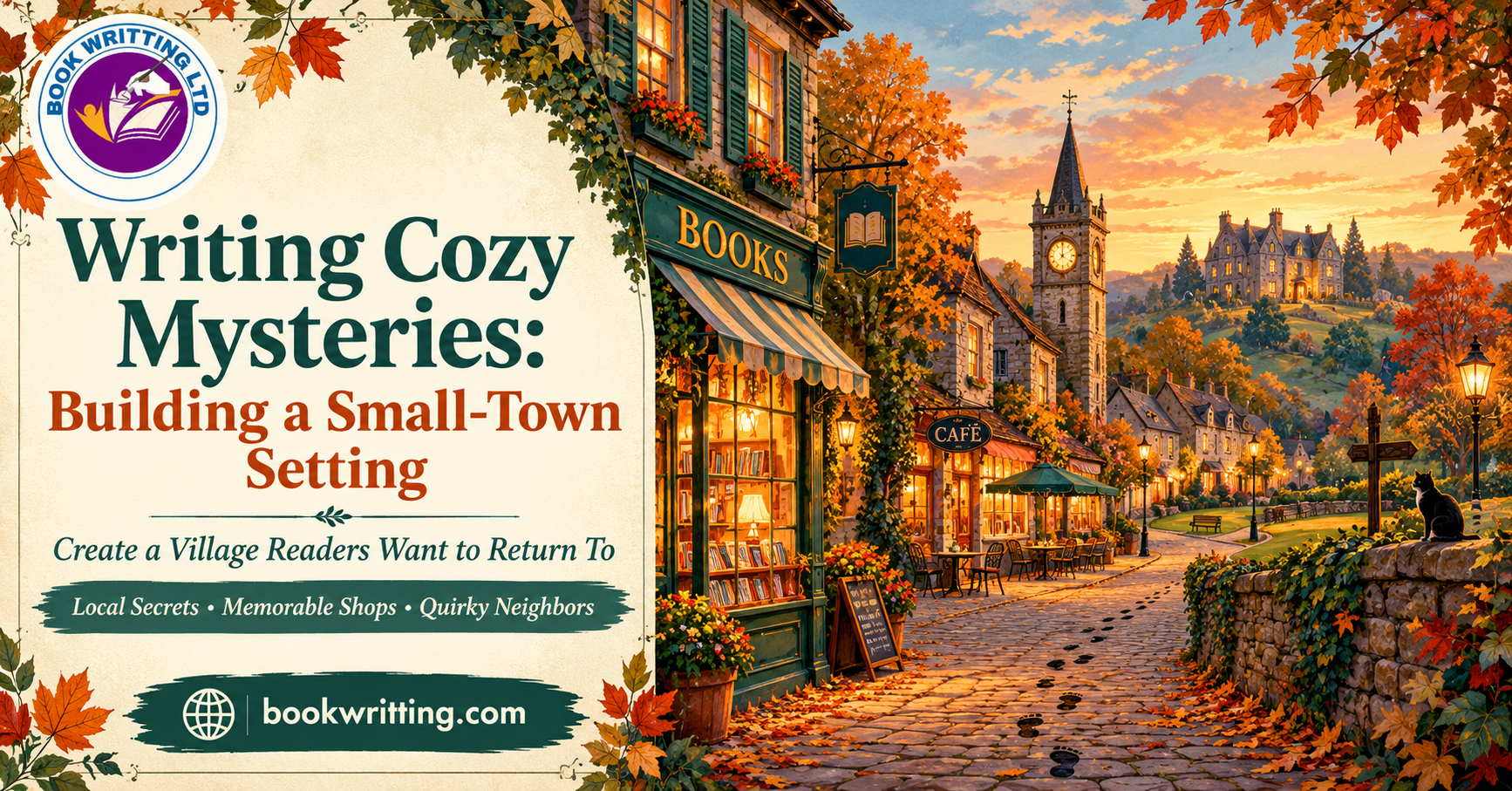
Cozy mysteries offer readers an appealing combination of puzzles, charming locations, memorable characters, and secrets waiting to be uncovered. Unlike darker crime stories that focus heavily on violence or graphic details, cozy mysteries generally emphasize investigation, community relationships, and the satisfaction of solving a mystery.
One of the most important elements of a successful cozy mystery is its setting. A small town with distinctive shops, familiar gathering places, local traditions, and complicated relationships can become much more than a backdrop. It can feel like a living part of the story.
Whether your mystery takes place in a seaside village, a mountain community, or a quiet town surrounded by farmland, thoughtful world-building can make readers eager to return. Here are practical ways to create a small-town setting that supports an engaging cozy mystery.
1. Choose a Distinctive Small Town
Begin by deciding what makes your fictional town special. A memorable setting has characteristics that influence everyday life and create opportunities for mystery.
Your town might be known for its annual flower festival, historic railway station, seaside market, local bakery, or traditional craft fair. These features give the location an identity and help distinguish it from other fictional communities.
Consider the town's geography, weather, history, economy, and population. A remote village may have limited transportation, while a tourist town might become crowded during certain seasons. These details can influence where characters meet, how information spreads, and which opportunities arise during an investigation.
You do not need to describe every aspect of the town immediately. Introduce details naturally as characters move through the setting and interact with its residents.
2. Create Memorable Local Businesses
Local businesses are useful places for conversations, discoveries, and unexpected encounters. A cozy mystery might feature a bookshop, café, garden center, antique store, craft shop, or neighborhood bakery.
Give each important business its own atmosphere and personality. A family-run café might be known for its unusual pastries and lively morning conversations. An old bookshop could contain forgotten letters, local histories, and customers who know more than they initially reveal.
These locations can also provide practical reasons for characters to interact. Customers exchange news, employees notice unusual behavior, and regular visitors develop familiar routines.
Avoid using every business simply as a place where clues appear. Let these locations contribute to the town's charm and reveal something about the people who depend on them.
3. Develop a Community of Distinctive Characters
A small-town mystery becomes more interesting when its residents have individual personalities, ambitions, and relationships.
Create characters with different occupations, hobbies, backgrounds, and perspectives. A retired teacher might remember details from the town's past, while a new shop owner struggles to fit into established social circles. A friendly neighbor might enjoy organizing community events but fiercely protect a family secret.
Give supporting characters their own lives beyond the central mystery. Their responsibilities, rivalries, friendships, and worries make the community feel authentic.
Not every unusual character needs to be suspicious, and not every secret should involve the crime. Sometimes an apparently mysterious behavior has an ordinary explanation, allowing the investigation to develop naturally.
4. Make the Town Feel Connected
Small towns often provide opportunities for recurring relationships. Residents may attend the same events, shop at the same businesses, or know one another through family, school, work, and community organizations.
These connections can strengthen the plot. A disagreement between neighbors might reveal an old rivalry, while a local celebration gives several characters a reason to be in the same place.
However, avoid making every resident know everything about everyone. People can hold different versions of the same event, misunderstand one another, or remain unaware of secrets occurring nearby.
This balance creates a community that feels connected without becoming predictable.
5. Hide Secrets Beneath the Charming Surface
Cozy mysteries often contrast a welcoming setting with an unresolved problem. A picturesque village may contain family disagreements, competing business interests, old resentments, or long-forgotten events.
Start by asking what the community presents to outsiders and what its residents prefer to keep private.
Perhaps a respected local family has concealed an important part of its history. Maybe two businesses are competing over a valuable property, or an old dispute resurfaces during a popular town festival.
Connect these secrets to the characters' motivations. When people have understandable reasons for withholding information, the mystery becomes more convincing.
Reveal information gradually through conversations, discoveries, and changes in relationships. The town itself can become part of the puzzle.
6. Use Local Traditions to Move the Plot
Festivals, farmers' markets, book clubs, charity events, gardening competitions, and seasonal celebrations can give your mystery a natural structure.
These gatherings bring characters together and create opportunities for misunderstandings, unexpected discoveries, and important conversations. They also allow readers to experience the town's culture and traditions.
For example, a flower show might place competing gardeners in close contact, while a winter market could reveal a disagreement over the ownership of an old family business.
Choose events that fit the setting rather than adding traditions solely to manufacture drama. When local activities are meaningful to the residents, they help the fictional community feel alive.
7. Make the Setting Part of the Investigation
The strongest cozy mystery settings contribute directly to how the puzzle unfolds.
A closed railway station, a network of garden paths, a historic town archive, or a shop with unusual opening hours might provide information that becomes important later. A character's familiarity with the community can also help the protagonist recognize inconsistencies that an outsider might overlook.
Plant clues fairly and make sure they fit the established setting. If a local landmark becomes important to the solution, introduce it early enough that readers can remember it.
At the same time, avoid making the mystery too easy to solve simply because the protagonist knows everyone. Familiarity should offer advantages, but personal relationships can also create blind spots.
8. Keep the Atmosphere Warm and Inviting
Readers often return to cozy mysteries because they enjoy spending time in a familiar fictional world. Balance the suspense of the investigation with moments of everyday life.
A warm café, a friendly book club, a garden in bloom, or a shared meal can provide a welcome contrast to the central mystery. Such scenes also strengthen relationships and give readers reasons to care about the community.
You can create atmosphere through sensory details: the smell of fresh bread, the sound of rain on shop windows, colorful displays at a local market, or the quiet of a village street in the early morning.
These small details help readers imagine the setting without requiring long descriptions.
9. Revise Your Setting for Consistency
After completing your first draft, review the town as carefully as you review the plot.
Check that travel times, business locations, seasonal details, character routines, and community relationships remain consistent. Make sure readers understand where important events occur and why characters can reasonably be present.
Ask whether each major location contributes to the mystery, character development, atmosphere, or community life. Remove unnecessary details that interrupt the story, but keep the features that make the town distinctive.
Writers who need help refining a manuscript can explore writing, editing, publishing, and book marketing services through Book Writting Ltd.
Building a small-town setting for a cozy mystery involves more than creating charming streets and friendly businesses. It means developing a believable community filled with memorable residents, meaningful relationships, local traditions, and secrets that influence the investigation.
Choose a distinctive location, give its businesses and residents individual personalities, and make the setting contribute naturally to the plot. Balance intriguing clues with warm everyday moments so readers can enjoy both the mystery and the world surrounding it.
When your town feels real and its residents feel worth knowing, readers may become just as eager to revisit the setting as they are to solve the next mystery.