
Writing Crime Fiction: Creating a Strong Plot
14 October 2026 · 7 min read
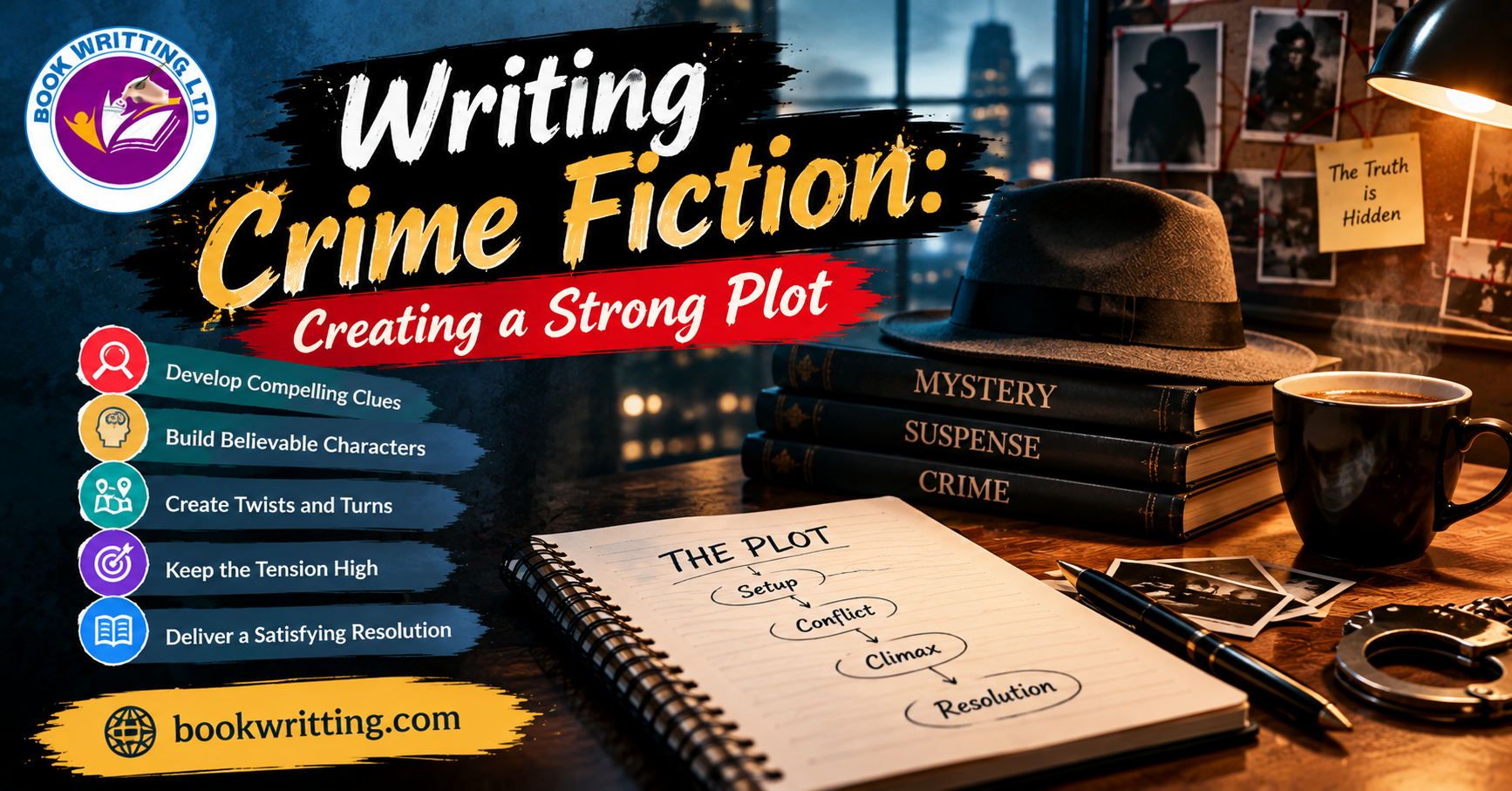
Crime fiction has fascinated readers for generations. From mysterious disappearances and complex investigations to clever detectives and unexpected revelations, the genre offers a unique combination of suspense, curiosity, and intellectual challenge. Readers enjoy following clues, questioning suspects, and trying to solve a mystery before the final pages.
However, a successful crime novel requires more than an interesting crime or a surprising ending. It needs a carefully constructed plot in which every important event contributes to the investigation and the eventual resolution.
Whether you're writing a detective novel, a police procedural, a psychological crime thriller, or a classic whodunit, understanding plot development can help you create a story that keeps readers engaged from beginning to end.
1. Start with a Compelling Crime
Every crime fiction story needs a central problem that captures the reader's attention. This might involve a mysterious theft, a disappearance, a fraud investigation, or a fictional murder mystery.
The central crime should raise important questions. What happened? Who was involved? Why did it happen? What information is being hidden?
You don't need to reveal every detail immediately. Instead, introduce enough information to establish the mystery and encourage readers to search for answers alongside the protagonist.
Consider what makes your crime distinctive. An unusual setting, a complicated motive, a surprising connection between characters, or an apparently impossible situation can provide a strong foundation for the plot.
The crime should also connect meaningfully to the characters and the wider story. When the investigation reveals something important about human behavior, relationships, or society, the narrative becomes more engaging.
2. Develop a Strong Investigator
A compelling investigator gives readers someone to follow throughout the mystery. This character might be a professional detective, a journalist, a lawyer, or an ordinary person drawn into an unexpected investigation.
Give your investigator clear motivations, strengths, weaknesses, and personal challenges. Perhaps they are exceptionally observant but struggle to trust others. Maybe they understand people well but overlook technical evidence.
These qualities influence how the investigation unfolds and create opportunities for character development.
An investigator should also make mistakes occasionally. Incorrect assumptions, conflicting evidence, and personal biases can complicate the search for answers. Such obstacles make the eventual discovery more satisfying because the solution feels earned.
3. Build a Cast of Believable Suspects
Crime fiction becomes more interesting when readers have several plausible explanations to consider.
Create suspects who have distinct personalities, relationships, and reasons for behaving suspiciously. Each important suspect should contribute something meaningful to the investigation.
Consider developing the following details for each character:
Their relationship to the central crime
Their possible motives
Their connection to other characters
Information they may be withholding
Evidence that appears to support or contradict their involvement
Not every suspicious character needs to be guilty. Some may be hiding unrelated secrets, protecting someone they care about, or attempting to avoid embarrassment.
These competing explanations create uncertainty without making the story unnecessarily complicated.
4. Plan the Plot Before Writing
Although some writers discover their stories as they write, crime fiction often benefits from careful planning. Because clues, timelines, motives, and revelations must fit together, outlining can help prevent inconsistencies.
Start by identifying the truth behind the central mystery. Decide what actually happened, who was responsible, why the event occurred, and what evidence can eventually establish the answer.
Then work backward to determine which clues the investigator discovers and when those discoveries happen.
Your outline might include:
The opening crime or mystery
The introduction of the investigator
Initial interviews and evidence
The discovery of misleading information
A major turning point
The final breakthrough
The resolution and explanation
You can change the outline as the manuscript develops, but knowing the underlying solution helps keep the plot coherent.
5. Use Clues and Red Herrings Effectively
Clues allow readers to participate in solving the mystery. They might appear through dialogue, physical evidence, conflicting accounts, unusual behavior, or overlooked details.
A fair mystery gives readers enough information to make reasonable deductions, even if the complete picture is not immediately obvious.
Red herrings are misleading clues or details that encourage incorrect assumptions. Used carefully, they can create suspense and make the solution less predictable.
However, misleading information should have a logical explanation. Avoid introducing clues that contradict established facts simply to surprise the reader.
When the truth is revealed, readers should be able to look back and understand how the evidence fits together.
6. Create Twists That Feel Earned
Unexpected twists can transform a crime story, but surprises are most effective when they grow naturally from the plot.
A revelation might change the reader's understanding of a suspect, uncover a hidden relationship, or expose a false assumption that has shaped the investigation.
To prepare an effective twist, introduce subtle details earlier in the narrative. These details should seem reasonable in their original context but take on a different meaning after the truth becomes clear.
Avoid adding a new culprit or explanation at the last moment without sufficient groundwork. A satisfying twist surprises readers while still making sense.
7. Maintain Suspense and Pacing
A strong crime plot needs momentum. Readers should feel that the investigation is progressing, even when the investigator encounters setbacks.
Alternate information-rich scenes with moments of uncertainty, conflict, and reflection. Interviews, discoveries, disagreements, and changes in the evidence can each move the investigation forward.
Consider ending chapters with meaningful developments: a newly discovered clue, a contradiction in a witness's statement, or a revelation that changes the direction of the investigation.
Avoid repeating the same information or allowing the investigation to stall without a clear purpose. Every major scene should deepen the mystery, develop a character, or change the investigator's understanding.
8. Make the Final Reveal Satisfying
The ending should resolve the central mystery and explain the most important pieces of evidence.
Readers should understand who was responsible, what motivated the crime, and how the investigator reached the conclusion. Depending on your story, you may also explore the emotional or social consequences of the discovery.
A strong resolution connects earlier clues to the final explanation. It should answer the major questions raised by the plot without requiring an entirely new set of facts.
You can leave some secondary questions unanswered if that suits the story, but the central mystery should receive a meaningful conclusion.
9. Revise for Logic and Consistency
After completing your first draft, review the manuscript from the perspective of both the investigator and the reader.
Check that the timeline makes sense, characters behave consistently, and important discoveries occur in a believable sequence. Make sure the final explanation accounts for the clues introduced earlier.
Ask yourself:
Does the central crime create enough interest?
Are the suspects believable?
Are the clues fair and understandable?
Does each major development advance the plot?
Is the ending surprising but logical?
A careful revision can strengthen the story and eliminate gaps that might distract readers.
Writers who need support preparing their manuscripts can explore writing, editing, publishing, and book marketing services through Book Writting Ltd.
Creating a strong crime fiction plot requires planning, believable characters, carefully placed clues, and a satisfying resolution. The best mysteries encourage readers to think critically while keeping them emotionally invested in the investigation.
Start with a compelling crime, develop suspects with meaningful motives, organize the evidence, and make every revelation contribute to the larger story. Then revise carefully to ensure that the solution feels both surprising and logical.
With patience and thoughtful storytelling, you can build a crime novel that keeps readers guessing until the final pages.