
Writing Fantasy Worlds | Building Places Readers Long to Return To
1 November 2026 · 7 min read
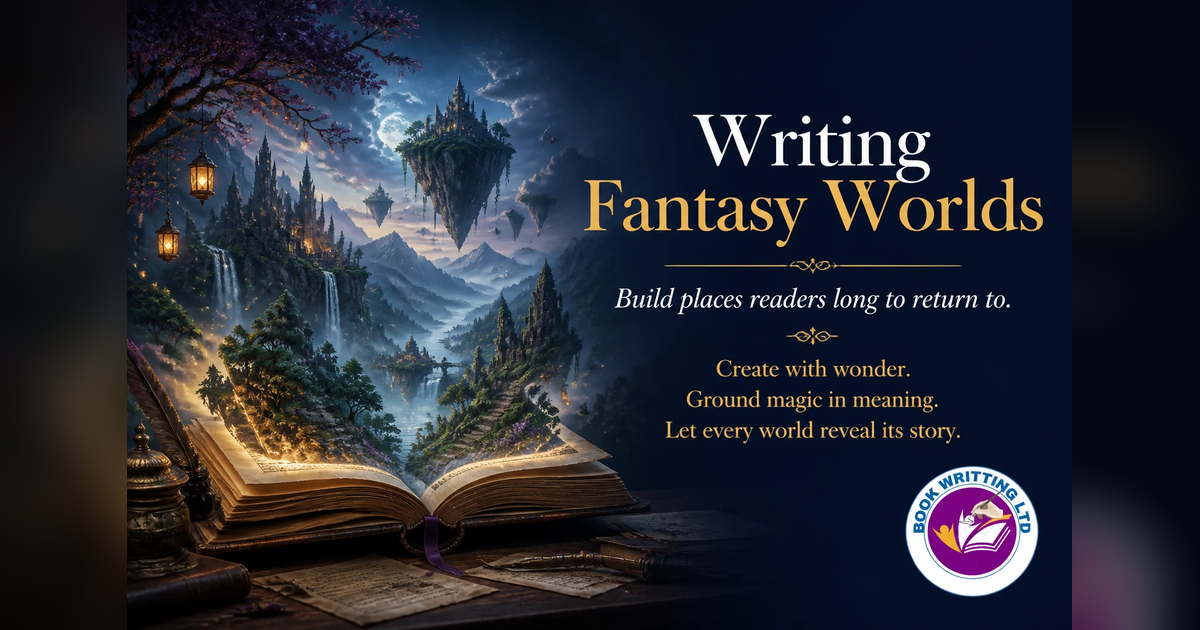
Fantasy fiction gives writers the freedom to create extraordinary places where magic, mythical creatures, ancient civilizations, and unforgettable adventures become part of everyday life. From enchanted forests and floating kingdoms to mysterious underground cities and distant magical lands, fantasy worlds allow readers to explore possibilities beyond ordinary reality.
However, creating an imaginary world involves much more than inventing unusual names or describing beautiful landscapes. A memorable fantasy setting needs its own history, geography, cultures, rules, and challenges. Everything should work together to make the world feel believable, even when it contains extraordinary elements.
Whether you're writing an epic fantasy novel, a magical adventure, or a story for younger readers, thoughtful world-building can turn an imaginary setting into a place readers want to revisit.
1. Begin with a Clear World-Building Idea
Before developing maps, characters, or magical systems, decide what makes your fantasy world distinctive.
Perhaps your story takes place in a kingdom where ancient forests move with the seasons, a civilization built among floating islands, or a coastal land where mysterious creatures protect forgotten secrets.
Start by identifying the central idea behind your setting. Ask yourself what makes this world different from the real world and how those differences influence everyday life.
You do not need to invent everything immediately. Begin with the features that are most important to your story, then expand the world as your characters explore it.
A focused concept helps you create a distinctive setting without becoming overwhelmed by unnecessary details.
2. Design Geography and Landscapes
Geography gives your fantasy world a physical structure. Consider its mountains, rivers, forests, islands, deserts, villages, and major cities.
Think about how the landscape affects transportation, trade, agriculture, communication, and relationships between communities.
A kingdom surrounded by mountains may have limited contact with neighboring civilizations. A coastal city might depend on fishing and maritime trade, while a settlement near a magical forest could have traditions shaped by its unusual environment.
You can sketch a simple map to understand where important places are located. You do not need professional cartography skills. Even a basic drawing can help maintain consistency when characters travel between locations.
Use sensory descriptions to make environments memorable. The sound of waterfalls, the glow of unfamiliar plants, or the smell of rain in an ancient forest can help readers imagine the setting.
3. Create a Consistent Magical System
Magic is often one of the most recognizable features of fantasy fiction. However, magic becomes more interesting when readers understand something about how it operates.
Decide where magical abilities come from, who can use them, what they can accomplish, and what limitations exist.
Perhaps magic requires years of study, depends on natural resources, or is connected to certain traditions. Another world might contain different forms of magic that affect people and communities in distinct ways.
Limitations are especially important. When magic can solve every problem without consequences, conflicts may lose their importance.
You do not need to explain every magical detail in the first chapter. Introduce the rules gradually through the characters' experiences and important story events.
The most effective magical systems support the plot rather than replace the need for interesting decisions and meaningful challenges.
4. Develop Unique Cultures and Traditions
A fantasy world becomes more believable when its communities have distinctive cultures, beliefs, customs, and ways of life.
Think about how different groups celebrate important events, prepare food, organize families, educate children, and make decisions.
You might create a mountain community that values craftsmanship, a coastal civilization with elaborate sailing traditions, or a kingdom where storytelling preserves historical knowledge.
Avoid making every culture identical except for clothing or appearance. Give communities different values, histories, resources, and perspectives.
These differences can also create opportunities for meaningful conflicts. Two neighboring kingdoms might disagree about an important tradition, while travelers may misunderstand customs that seem unusual to them.
Cultural details should influence the characters' experiences and help readers understand the world.
5. Give Your Fantasy World a Rich History
History adds depth to an imaginary setting. Ancient conflicts, legendary rulers, forgotten discoveries, migrations, and political changes can explain why the world exists in its current form.
Create a simple timeline of important events that occurred before your story begins.
Consider questions such as:
Who established the major kingdoms?
What important events changed the world?
Which traditions have survived for generations?
Are there forgotten places or lost civilizations?
What historical disagreements still influence the present?
You do not need to include the entire timeline in your novel. Select historical details that affect the current story.
A forgotten event might explain a character's motivation, while an ancient agreement could become important to the central conflict.
History should enrich the narrative without turning chapters into lengthy background explanations.
6. Create Memorable Characters Who Belong to the World
Even the most imaginative fantasy setting needs characters readers care about.
Your protagonist should have personal goals, strengths, weaknesses, relationships, and reasons for making important decisions.
Think about how the fantasy world has shaped the character. Someone raised in a remote village may have different knowledge and expectations from someone who grew up in a royal city.
Supporting characters should also represent different experiences and perspectives. A traveling scholar, a village craftsperson, a young explorer, or a royal advisor can introduce different aspects of the fictional world.
Allow characters to disagree, make mistakes, and change as the story develops.
The relationship between characters and their environment is what makes world-building meaningful. Readers should understand how the setting influences the people who live in it.
7. Build Conflicts That Fit Your World
A fantasy setting becomes especially interesting when its unique features create meaningful challenges.
Your central conflict might involve a disagreement between kingdoms, competition for a rare resource, an ancient mystery, or a community struggling with a major change.
The conflict should emerge naturally from the world you have created.
For example, if magical energy depends on a limited natural resource, disagreements about its use could affect trade, leadership, and relationships between communities.
Consider what each side wants and why their goals differ. Avoid making every conflict depend on a simple division between entirely good and entirely evil characters.
Complex motivations make the fictional world feel more realistic and give readers more reasons to become invested in the story.
8. Avoid Overloading Readers with Information
One common challenge in fantasy writing is introducing too many unfamiliar names, locations, histories, and magical rules too quickly.
Readers need time to understand the world. Introduce information when it becomes relevant to the current scene.
Instead of explaining the complete history of a kingdom, show a character responding to a historical symbol or participating in a local tradition.
Instead of describing every magical rule at once, reveal how magic works through meaningful events.
This technique allows readers to discover the world alongside the characters.
Remember that world-building should support storytelling. If a detail does not contribute to the plot, atmosphere, or character development, consider whether it needs to appear in the manuscript.
9. Revise Your Fantasy World for Consistency
Once you have completed your first draft, review the world carefully.
Check the spelling of place names, travel distances, historical timelines, cultural traditions, magical limitations, and relationships between different communities.
Make sure the rules established earlier remain consistent throughout the story. If magic has certain limitations, characters should not suddenly overcome those limitations without an understandable explanation.
Consider keeping a world-building document containing maps, character backgrounds, timelines, important locations, and magical rules. This reference can be especially helpful when writing a series.
If you need assistance refining your manuscript or preparing it for publication, explore the writing, editing, publishing, and book marketing services offered by Book Writting Ltd.
Writing fantasy worlds involves combining imagination with thoughtful planning. Create distinctive landscapes, establish consistent magical systems, develop unique cultures, and give your fictional world a history that influences its present.
Most importantly, remember that a fantasy world is more than a collection of unusual places and extraordinary events. It is a place where characters live, relationships develop, difficult choices emerge, and meaningful stories unfold.
Build a world with enough depth to support your characters and enough mystery to encourage readers to explore. When the setting feels believable and the story captures their imagination, readers may find themselves longing to return long after they finish the book.