Writing Non-Fiction That Inspires | A Complete Guide
2 November 2026 · 10 min read
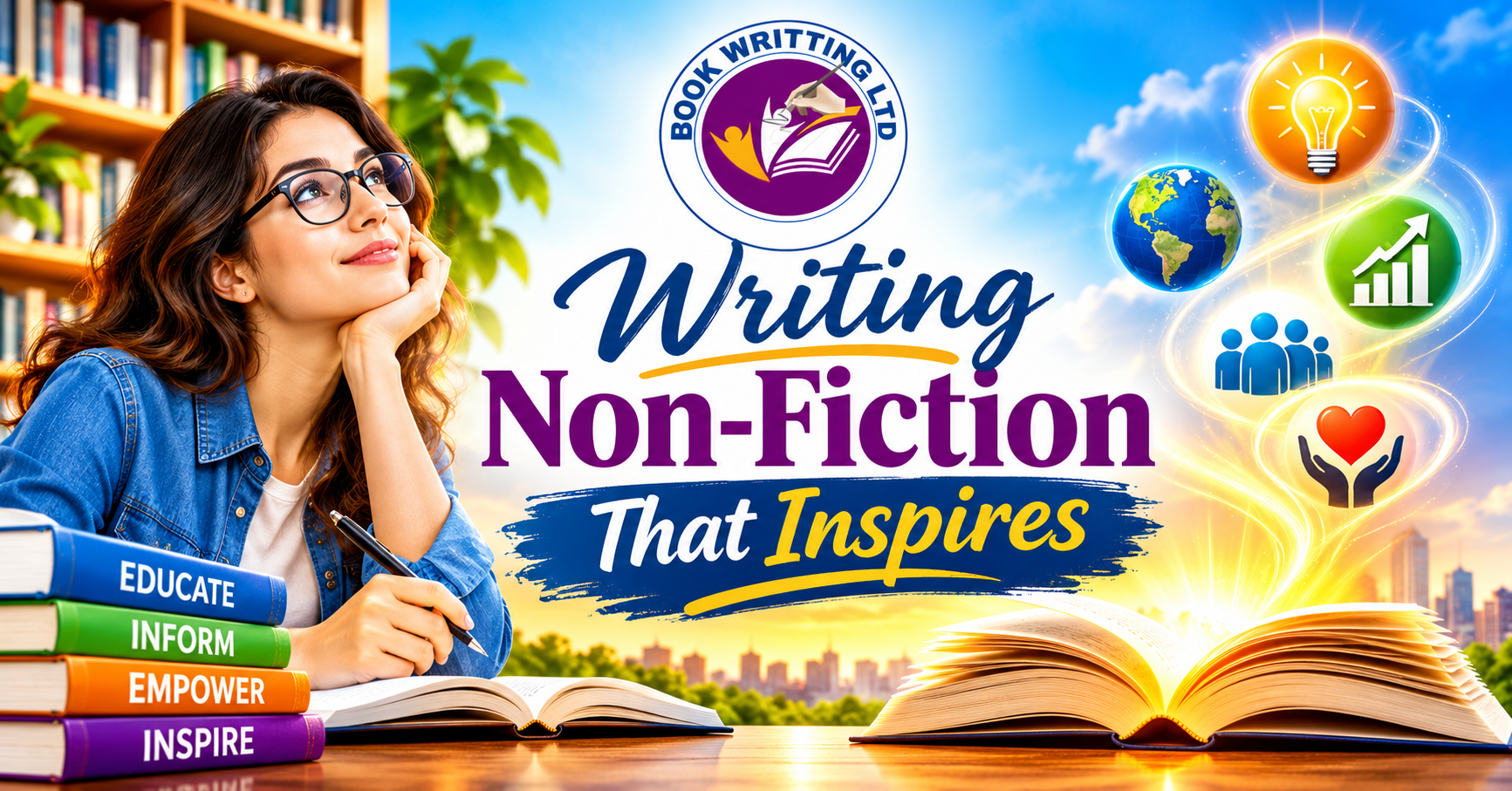
Non-fiction books have the power to educate, motivate, and change the way people see the world. Unlike fictional stories, non-fiction focuses on real experiences, practical knowledge, personal discoveries, and valuable lessons that readers can apply to their own lives.
However, writing non-fiction is about more than presenting facts and information. The most memorable non-fiction books connect with readers emotionally, offer fresh perspectives, and encourage people to take meaningful action.
Whether you want to write a self-help book, personal development guide, memoir, biography, educational book, or inspirational story, learning how to create engaging non-fiction can help you share your knowledge effectively.
In this guide, you will discover practical techniques for writing non-fiction that inspires readers and leaves a lasting impression.
What Is Inspirational Non-Fiction?
Inspirational non-fiction is writing based on real information, experiences, research, or personal knowledge that encourages readers to learn, improve, or see life differently.
It combines useful information with engaging communication to make complex ideas easier to understand and remember.
Examples include:
Personal development books.
Motivational and self-help guides.
Inspirational biographies.
Personal memoirs.
Educational books.
Business and entrepreneurship guides.
Books about overcoming challenges.
Health, lifestyle, and productivity guides.
The main purpose is to give readers something valuable. It might be a new skill, a useful perspective, a practical solution, or encouragement to pursue their goals.
1. Choose a Topic You Truly Understand
The first step in writing inspiring non-fiction is choosing a subject that matters to you.
Think about your knowledge, professional experience, interests, and lessons you have learned throughout your life.
Ask yourself:
What information can I share that would help other people?
Which subjects am I passionate about?
What problems can my knowledge help readers solve?
What experiences have taught me valuable lessons?
What questions do people frequently ask about my area of expertise?
For example, if you have experience managing a business, you might write a practical guide about starting a small business.
If you have developed effective time-management habits, you could create a book explaining how readers can organize their daily schedules.
Choose a topic that offers genuine value rather than selecting one simply because it seems popular.
2. Understand Your Target Audience
A successful non-fiction book begins with a clear understanding of its readers.
Different audiences have different interests, challenges, knowledge levels, and expectations.
A book written for beginners should explain basic concepts clearly. A book written for professionals can explore advanced techniques and detailed strategies.
Before writing, consider:
Who will benefit from your book?
What challenges are they experiencing?
What information are they looking for?
What do they already know?
What practical results do they want?
For example, a beginner's guide to online business should explain fundamental concepts, common mistakes, and practical first steps.
Understanding your audience helps you select relevant examples, organize your chapters, and communicate in a way that feels natural.
3. Develop a Clear Purpose for Your Book
Every inspiring non-fiction book should have a central purpose.
Ask yourself what readers should understand, learn, or accomplish after finishing your book.
Your purpose might be to help readers:
Develop confidence.
Improve their communication skills.
Manage their finances more effectively.
Build healthier habits.
Develop professional skills.
Understand a complicated subject.
Overcome a common challenge.
Write a simple statement describing your book's main promise.
For example:
"This book will help beginners develop practical writing skills and build confidence in sharing their ideas."
A clear purpose gives your project direction and helps prevent unnecessary information from distracting readers.
4. Research Your Subject Carefully
Credibility is essential when writing non-fiction.
Readers expect accurate, trustworthy, and useful information. Therefore, research should be an important part of your writing process.
Use reliable sources such as:
Books written by knowledgeable authors.
Academic research and reputable journals.
Government publications.
Professional organizations.
Expert interviews.
Credible educational resources.
Verified reports and statistics.
Keep notes about where information comes from so you can check facts and prepare accurate references.
When using statistics, quotations, or other people's ideas, verify the original sources and provide appropriate attribution.
Avoid presenting personal opinions as established facts. Clearly distinguish between research findings, personal experiences, and individual recommendations.
5. Create an Effective Book Outline
An organized outline makes writing easier and helps readers follow your ideas.
Start by dividing your main subject into several important sections. Then organize those sections into chapters.
For example, a book about personal growth might follow this structure:
Chapter 1: Understanding Personal Growth
Introduce the subject and explain why personal development matters.
Chapter 2: Discovering Your Strengths
Help readers identify their abilities, interests, and opportunities.
Chapter 3: Setting Meaningful Goals
Explain how to establish realistic and achievable objectives.
Chapter 4: Overcoming Challenges
Discuss practical ways to handle obstacles and setbacks.
Chapter 5: Building Positive Habits
Explore techniques for creating consistent routines.
Chapter 6: Maintaining Long-Term Progress
Help readers develop a sustainable approach to continued improvement.
Your outline does not need to be perfect from the beginning. You can adjust it as your research and writing develop.
6. Use Real-Life Examples and Experiences
Real-life examples make non-fiction more interesting and easier to understand.
Readers often connect with information when they can see how it works in practical situations.
Consider including:
Personal experiences.
Lessons learned from professional situations.
Carefully verified case studies.
Interviews with relevant experts.
Historical examples.
Practical demonstrations.
For instance, when explaining the importance of persistence, you could describe a verified example of someone who faced repeated setbacks before achieving a meaningful goal.
If you use personal stories, focus on the lesson they communicate rather than including unnecessary details.
Always obtain permission when appropriate and protect people's privacy.
7. Write in Clear and Engaging Language
Non-fiction should be informative without becoming unnecessarily complicated.
Use straightforward language, clear explanations, and well-organized paragraphs.
Avoid excessive technical terminology unless your target audience understands it.
Here are some useful writing techniques:
Use short paragraphs: Break complicated explanations into smaller sections.
Explain unfamiliar terms: Introduce definitions when readers encounter new concepts.
Use descriptive headings: Help readers understand what each section covers.
Include examples: Make abstract ideas easier to understand.
Vary sentence structure: Create a natural reading rhythm.
Remove unnecessary words: Keep your writing focused and meaningful.
Your goal is not to impress readers with complicated language. It is to help them understand and remember valuable information.
8. Combine Facts With Storytelling
One of the best ways to make non-fiction inspiring is to combine accurate information with storytelling.
Facts explain what readers need to know. Stories help readers understand why that information matters.
For example, when writing about the importance of goal setting, you could explain the relevant principles and then introduce a realistic example showing how someone uses those principles to organize their work.
A good story can make an abstract concept more memorable.
However, never invent real-life experiences or present fictional examples as verified events. If you create an illustrative scenario, identify it as an example.
9. Provide Practical Advice Readers Can Use
Inspirational non-fiction should offer more than interesting ideas.
Readers appreciate guidance they can apply to real situations.
Depending on your subject, you might include:
Step-by-step instructions.
Practical exercises.
Checklists.
Reflection questions.
Worksheets.
Action plans.
Useful resources.
Chapter summaries.
For example, a book about improving productivity could include a weekly planning exercise that helps readers identify priorities and organize their schedules.
Practical activities encourage readers to engage with your content instead of simply reading passively.
10. Develop an Authentic and Consistent Writing Voice
Your writing voice helps distinguish your book from others covering similar subjects.
Some authors prefer a friendly and conversational approach. Others use a professional, academic, reflective, or motivational style.
Choose a tone that suits your subject and audience.
Most importantly, remain authentic.
Do not force your writing to sound like another author. Share your ideas in a natural way while maintaining clarity and professionalism.
A consistent writing voice helps build trust and makes readers more comfortable engaging with your material.
11. Edit and Proofread Your Manuscript
Writing the first draft is only one part of creating a quality non-fiction book.
Revision helps improve the structure, accuracy, clarity, and overall reading experience.
During editing, consider the following:
Content editing: Check whether the information is relevant, complete, and logically organized.
Structural editing: Make sure chapters follow a clear and useful sequence.
Line editing: Improve sentence structure, word choice, and readability.
Copyediting: Correct grammar, punctuation, spelling, and consistency.
Proofreading: Review the final manuscript for remaining errors.
You can also ask beta readers or a professional editor to provide feedback.
Be willing to revise sections that are confusing, repetitive, or unnecessary.
12. Create a Strong and Memorable Conclusion
The conclusion should bring your book's main ideas together.
Remind readers of the most important lessons and explain how they can apply what they have learned.
Avoid simply repeating the introduction.
Instead, provide a meaningful final perspective that encourages readers to continue learning or taking action.
For example, a book about personal development might finish by reminding readers that progress comes from consistent effort, realistic goals, and a willingness to learn from mistakes.
A thoughtful conclusion can leave readers feeling informed, motivated, and ready to move forward.
Common Mistakes to Avoid When Writing Non-Fiction
Even valuable information can become difficult to read when the manuscript contains avoidable problems.
Here are some common mistakes:
1. Writing without a clear audience: Understand who your book is intended to help.
2. Including unnecessary information: Keep chapters focused on the book's main purpose.
3. Neglecting research: Verify important facts, claims, and statistics.
4. Using complicated language: Make information accessible to your intended readers.
5. Repeating the same ideas: Remove unnecessary repetition during editing.
6. Ignoring practical examples: Show readers how information applies in real situations.
7. Skipping proofreading: Review your manuscript carefully before publication.
8. Making unrealistic promises: Describe what readers can realistically expect to learn or achieve.
Avoiding these mistakes can improve your book's credibility and reading experience.
Practical Exercises to Become a Better Non-Fiction Writer
You do not need to wait until you have a complete book idea to begin practicing.
Try these exercises:
Exercise 1: Identify your expertise
Write down five subjects you understand well. Choose one and list the ways your knowledge could help readers.
Exercise 2: Define your audience
Describe your ideal reader, including their experience level, challenges, and goals.
Exercise 3: Create a chapter outline
Choose one subject and develop a six-chapter outline with a clear progression of ideas.
Exercise 4: Explain a difficult concept
Write a 300-word explanation of a complicated subject using simple language and practical examples.
Exercise 5: Turn an experience into a lesson
Write about a real experience and identify three useful lessons someone else could learn from it.
Practice these activities regularly to strengthen your research, organization, and communication skills.
Write Non-Fiction That Makes a Difference
Writing non-fiction that inspires requires a combination of knowledge, research, authenticity, and thoughtful storytelling.
The most valuable books do more than present information. They help readers understand important ideas, explore new possibilities, and discover practical ways to improve their lives.
Start with a subject you genuinely care about. Understand your audience, organize your ideas, research carefully, and communicate clearly.
Remember that you do not need to know everything to write a valuable book. You need to share accurate information, meaningful experiences, and useful lessons that serve your readers.
Your knowledge and experiences may be exactly what someone else needs to take their next step.
Start writing today, share what you know, and create a non-fiction book that inspires others.
Discover inspiring non-fiction writing tips, creative ideas, and practical guidance to help your writing grow. Visit https://bookwritting.com/ for more resources.