What Is the Difference Between a Hardcover and a Paperback Book? A Complete Guide
16 November 2026 · 6 min read
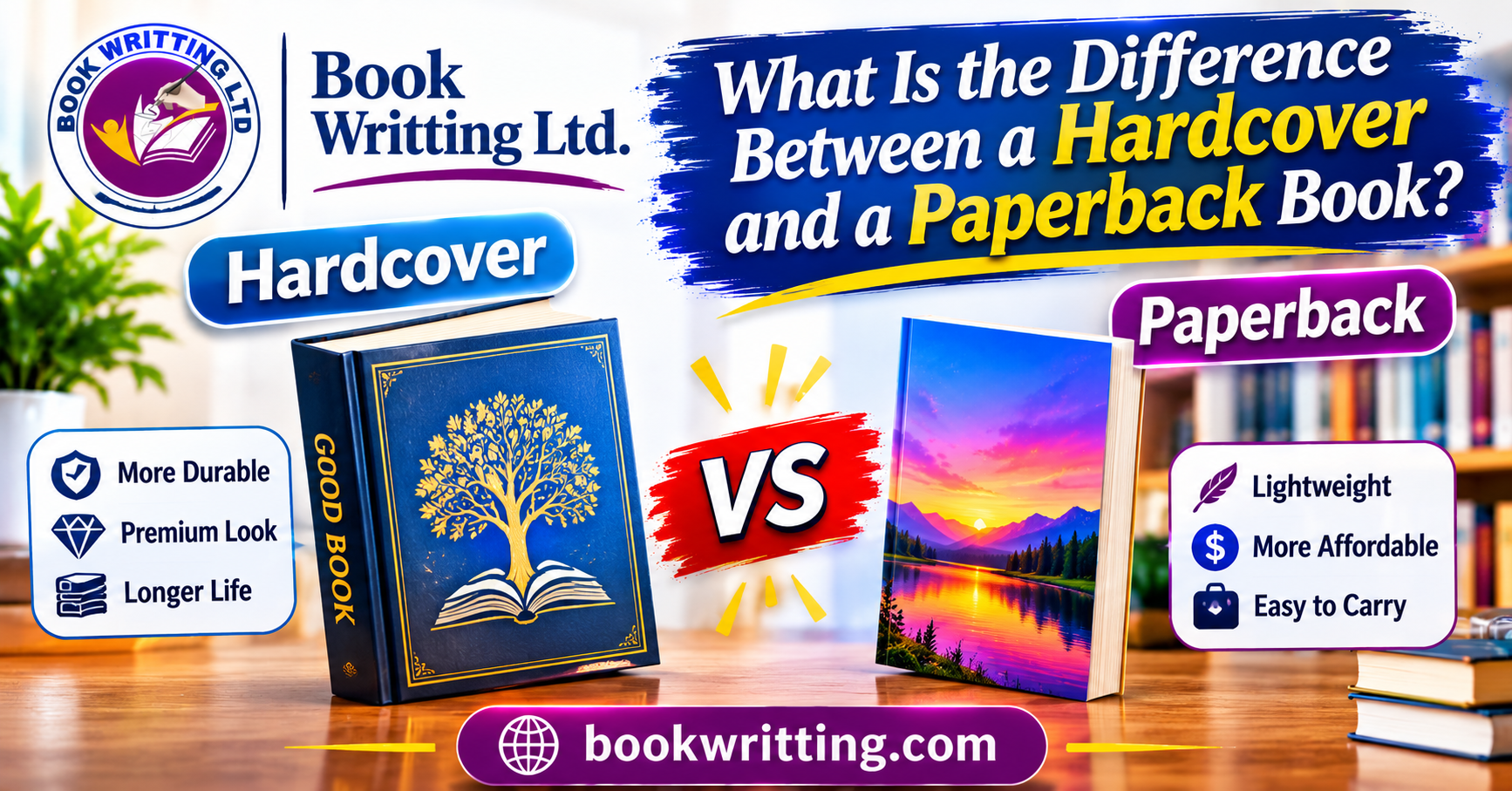
When choosing a book, readers often notice two common formats: hardcover and paperback. Both contain the same type of written content, but they differ in construction, appearance, durability, price, and convenience.
For authors preparing to publish their work, understanding these differences is equally important. Selecting the right format can influence production costs, retail pricing, presentation, and the type of readers a book may attract.
So, what exactly is the difference between a hardcover and a paperback book? Which format is more durable, affordable, and suitable for your publishing goals?
Let's explore the main differences and discover how to choose the right option for your next book.
1. What Is a Hardcover Book?
A hardcover book is a printed book with a rigid protective cover. Its covers are generally made from sturdy boards wrapped in printed paper, cloth, or another covering material.
Hardcover books are designed to provide greater protection for the pages and often have a more substantial appearance.
Common characteristics include:
Rigid front and back covers.
Stronger overall construction.
A more substantial appearance.
Greater protection for the interior pages.
Often higher production costs.
Some hardcover editions include a removable dust jacket featuring the book title, author information, and cover artwork. Others use printed designs directly on the cover.
Hardcover editions are popular for special publications, gift books, illustrated books, reference materials, and collectible editions.
2. What Is a Paperback Book?
A paperback book has a flexible cover, usually made from thick printed paper or cardstock.
Unlike a hardcover edition, its cover bends more easily, making the book lighter and generally easier to carry.
Common characteristics include:
Flexible front and back covers.
Lower production costs in many cases.
Lightweight construction.
Convenient portability.
A wide range of available sizes.
Paperbacks are commonly used for novels, educational guides, memoirs, travel books, and many other publications.
They are particularly popular with readers who want an affordable and convenient way to enjoy books.
Two common paperback styles are trade paperbacks and mass-market paperbacks. Trade editions are generally larger, while mass-market editions are often more compact.
3. Hardcover vs. Paperback: Key Differences
Although both formats contain printed pages, their physical construction creates several differences.
Feature | Hardcover | Paperback |
|---|---|---|
Cover | Rigid and sturdy | Flexible |
Weight | Usually heavier | Usually lighter |
Durability | Generally more durable | More susceptible to cover wear |
Production cost | Usually higher | Usually lower |
Retail price | Often higher | Often more affordable |
Portability | Less convenient to carry | Easier to carry |
Appearance | More formal and substantial | Simple and practical |
Protection | Better cover protection | Less rigid protection |
The best option depends on the book's purpose, intended audience, production budget, and publishing strategy.
4. Which Book Format Is More Durable?
Durability is one of the biggest differences between hardcover and paperback books.
Hardcover editions generally offer better protection because their rigid covers help protect the pages from bending and everyday handling.
They can be suitable for books expected to receive frequent use, such as reference books, special editions, and educational publications.
Paperback books have flexible covers, which can develop creases, bent corners, or other signs of wear more easily.
However, the actual lifespan of either format depends on several factors, including paper quality, binding construction, printing quality, storage conditions, and how carefully the book is handled.
A well-made paperback can remain in good condition for many years.
5. Which Format Is More Affordable?
Paperback books are generally more affordable to produce because their flexible covers require fewer materials and a simpler construction process.
This can allow publishers to offer them at lower retail prices.
Hardcover books generally involve additional production expenses because of their rigid covers and more substantial binding construction.
For authors and independent publishers, production costs are important when planning the book's retail price.
Consider your manuscript length, printing specifications, distribution arrangements, and expected audience before selecting a format.
Remember that the cheapest production option is not automatically the most profitable. Pricing should also reflect your book's quality, market position, and publishing expenses.
6. Which Format Should Authors Choose?
The right format depends on what you want your book to achieve.
Choose Hardcover When:
You want a premium-looking edition.
Your book is intended as a gift or collectible.
You want a more substantial physical presentation.
Your publication is a reference or illustrated book.
Your budget supports the additional production cost.
Choose Paperback When:
You want a more affordable edition.
Portability is important to your readers.
You're publishing a general fiction or nonfiction book.
You want to keep physical production costs lower.
You want to offer readers a practical everyday format.
Many authors eventually publish both editions to serve readers with different preferences and budgets.
7. Do Hardcover and Paperback Books Have Different Page Counts?
Not necessarily.
A hardcover and paperback edition can contain the same manuscript and have similar page counts.
However, the final number of pages may differ because of variations in:
Trim size.
Paper thickness.
Font selection.
Line spacing.
Margins.
Interior layout.
Additional introductory or supplementary pages.
For example, a larger paperback may contain fewer pages than a smaller hardcover edition, even when both use the same manuscript.
Authors should complete interior formatting separately for each edition rather than assuming one layout will work perfectly for every format.
8. Can Authors Publish Both Hardcover and Paperback Editions?
Yes. Many authors choose to release both formats to reach a wider range of readers.
A paperback can provide a more affordable option, while a hardcover can appeal to readers who prefer a durable or premium edition.
Publishing platforms such as Amazon Kindle Direct Publishing offer paperback and hardcover publishing options, subject to their current eligibility and formatting requirements.
Authors should review the available trim sizes, cover specifications, printing costs, pricing conditions, and distribution arrangements before selecting their formats.
Publishing both editions can offer readers additional choices, but each format requires careful production and pricing decisions.
9. How to Prepare Your Book for Professional Printing
Regardless of the format you select, professional preparation is important.
Before publication, make sure your manuscript has been edited and proofread carefully.
You should also:
Choose an appropriate trim size.
Prepare the interior layout.
Select suitable fonts and margins.
Design a professional book cover.
Check the spine and cover dimensions.
Review a printed proof when available.
Verify that all publishing files meet platform requirements.
A carefully prepared book creates a better reading experience and helps present your work professionally.
Authors who need assistance can explore writing, editing, proofreading, publishing, and book marketing services through Book Writting Ltd at https://bookwritting.com/.
The main difference between hardcover and paperback books is their physical construction.
Hardcover books feature rigid protective covers and generally offer greater durability and a premium appearance. Paperback books have flexible covers, are usually lighter, and are often more affordable.
Neither format is automatically better for every publication.
The right choice depends on your publishing budget, target audience, book content, production requirements, and long-term goals.
Whether you're preparing your first novel, publishing a nonfiction guide, or developing a special edition, understanding these formats can help you make informed publishing decisions.
For more writing inspiration, manuscript preparation, editing, and publishing resources, visit Book Writting Ltd at https://bookwritting.com/ and ex