What’s the Best Length for a Children’s Book? A Complete Guide
9 November 2026 · 5 min read
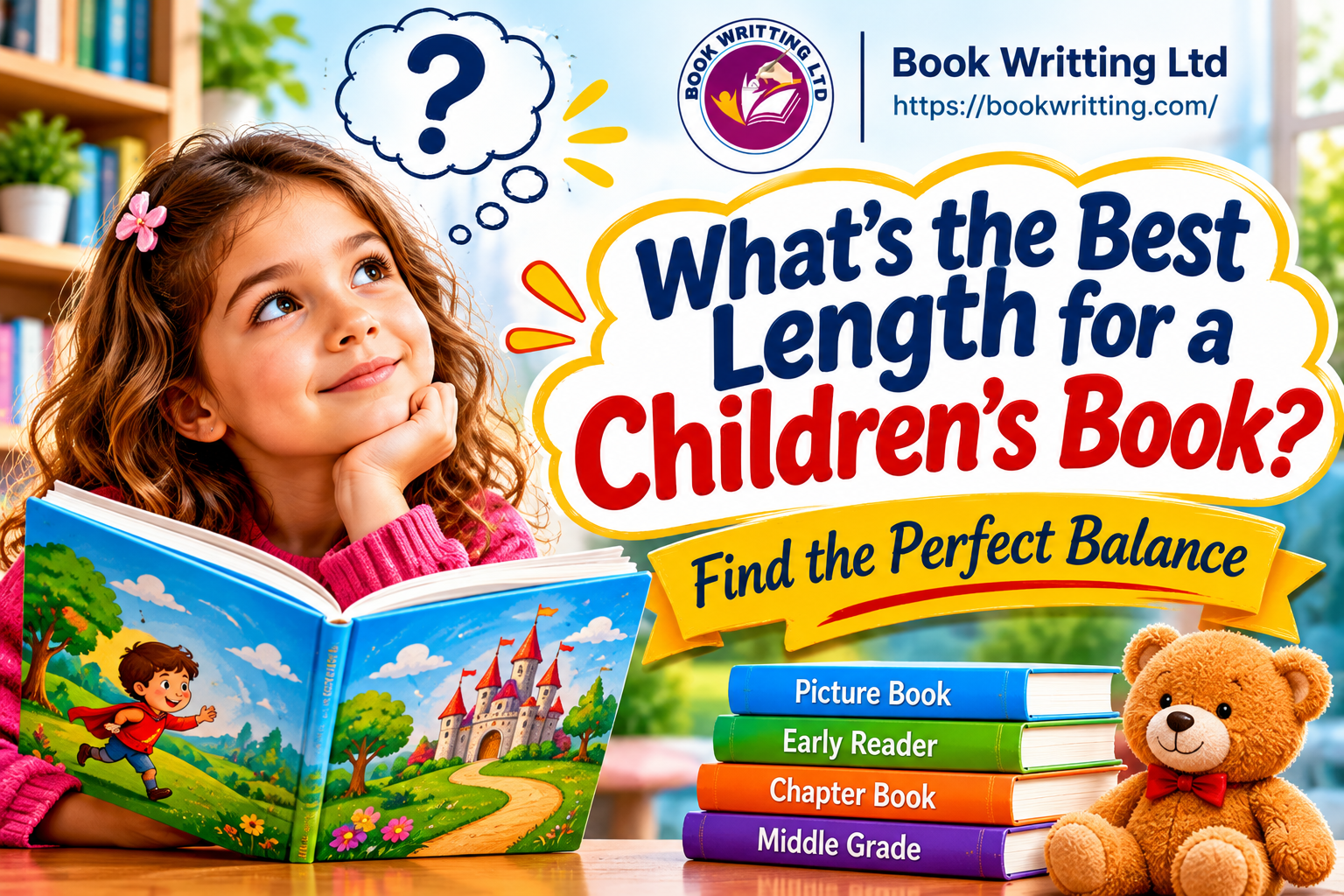
Writing a children's book is an exciting creative journey. You may have a wonderful story idea, memorable characters, and beautiful illustrations in mind. But before you begin preparing your manuscript, an important question comes up: How long should a children's book be?
The ideal length depends on the age of your readers, the type of book you are writing, and how much storytelling the subject requires. A picture book for preschoolers is very different from a chapter book for children who are beginning to read independently.
In this guide, we will explore typical children's book word counts, page ranges, and practical tips to help you choose the right length for your story.
Why Does Children's Book Length Matter?
Children have different reading abilities at different stages of development. Younger readers often enjoy short sentences, repeated phrases, colorful illustrations, and simple storylines. Older children may prefer longer stories with more developed characters, exciting adventures, and interesting challenges.
Choosing an appropriate length helps you:
Keep young readers interested.
Match the story to the reader's age.
Balance written content with illustrations.
Make the book easier to read and understand.
Prepare a manuscript that fits its intended publishing category.
Remember that a longer book is not automatically better. The goal is to tell a complete, engaging story without unnecessary words.
Recommended Children's Book Length by Age
There is no single word count that works for every children's book. However, these general industry ranges provide a useful starting point.
1. Board Books: Ages 0–3
Board books are designed for babies and toddlers. They usually introduce basic concepts such as colors, animals, numbers, shapes, and everyday activities.
Typical length:
Word count: Up to approximately 100 words
Page count: Around 12–24 pages
Keep the language simple and repetitive. Clear illustrations and familiar objects are especially important for this age group.
2. Picture Books: Ages 3–7
Picture books combine storytelling with illustrations. They are often read aloud by parents, teachers, or caregivers.
Typical length:
Word count: Approximately 300–800 words
Page count: Commonly around 32 pages
A picture book should have a clear beginning, middle, and ending. Use engaging language, memorable characters, and opportunities for illustrations to communicate important parts of the story.
3. Early Reader Books: Ages 5–8
Early reader books help children develop independent reading skills. They generally use familiar vocabulary, short sentences, and straightforward plots.
Typical length:
Word count: Approximately 1,000–3,500 words
Page count: Around 32–64 pages
Consider short chapters or clearly separated sections. Repetition, dialogue, and accessible language can make reading more enjoyable.
4. Chapter Books: Ages 7–10
Chapter books are intended for children who are becoming more confident independent readers. They usually feature a stronger storyline, a small cast of characters, and short chapters.
Typical length:
Word count: Approximately 5,000–15,000 words
Page count: Around 48–100 pages
Adventure, friendship, school life, humor, and everyday challenges are popular themes. Keep chapters manageable and maintain a sense of progress throughout the story.
5. Middle-Grade Books: Ages 8–12
Middle-grade books offer more developed stories for readers who are ready for greater complexity. They may include fantasy, mystery, adventure, historical fiction, or realistic themes.
Typical length:
Word count: Approximately 25,000–50,000 words
Page count: Often around 100–300 pages
These stories can include more detailed settings, character development, emotional challenges, and subplots.
These figures are guidelines rather than strict rules. Different publishers, genres, and reading levels may have different expectations.
Five Tips for Choosing the Right Book Length
1. Identify Your Target Age Group
Before writing, decide who will read your book. A story for a four-year-old requires a different approach from a novel for an eleven-year-old.
Think about vocabulary, reading ability, attention span, and the themes that interest your audience.
2. Choose the Right Book Format
Decide whether your idea works best as a board book, picture book, early reader, chapter book, or middle-grade novel.
The format influences your word count, page layout, illustration requirements, and storytelling approach.
3. Focus on the Story, Not the Word Count
Do not add unnecessary scenes simply to make your manuscript longer. Every paragraph should help develop the characters, advance the plot, or make the story more enjoyable.
Likewise, avoid cutting important details just to reach an arbitrary target.
4. Use Illustrations Effectively
In younger children's books, illustrations can communicate emotions, settings, actions, and details that do not need to appear in the text.
Work with the visual storytelling rather than describing everything readers can already see.
5. Edit and Read Your Story Aloud
Reading aloud is a helpful way to identify awkward sentences, repetitive descriptions, and sections that feel too long.
Ask parents, teachers, or suitable young readers to provide feedback when possible. Their responses can help you improve the reading experience.
Common Mistakes to Avoid
New children's book authors sometimes make these mistakes:
Writing for too many age groups at once.
Using vocabulary that is too difficult for the intended readers.
Adding unnecessary descriptions and explanations.
Making picture books too long.
Ignoring the importance of illustrations.
Focusing on page count instead of storytelling quality.
A successful children's book should feel natural for its intended audience. Keep the language, structure, and story complexity appropriate for the reader.
The best length for a children's book depends on its format and target age group. Board books are usually very short, picture books rely on illustrations, and chapter books and middle-grade novels offer room for more developed stories.
Before writing, identify your audience, choose the right format, and use recommended word counts as a practical guide. Most importantly, focus on creating a story that children will enjoy reading again and again.
Ready to write your children's book? Visit Book Writting Ltd. at https://bookwritting.com/ for more writing inspiration, helpful advice, and resources to support your writing journey.