Writing Biography | Telling Someone’s Life Story
25 October 2026 · 6 min read
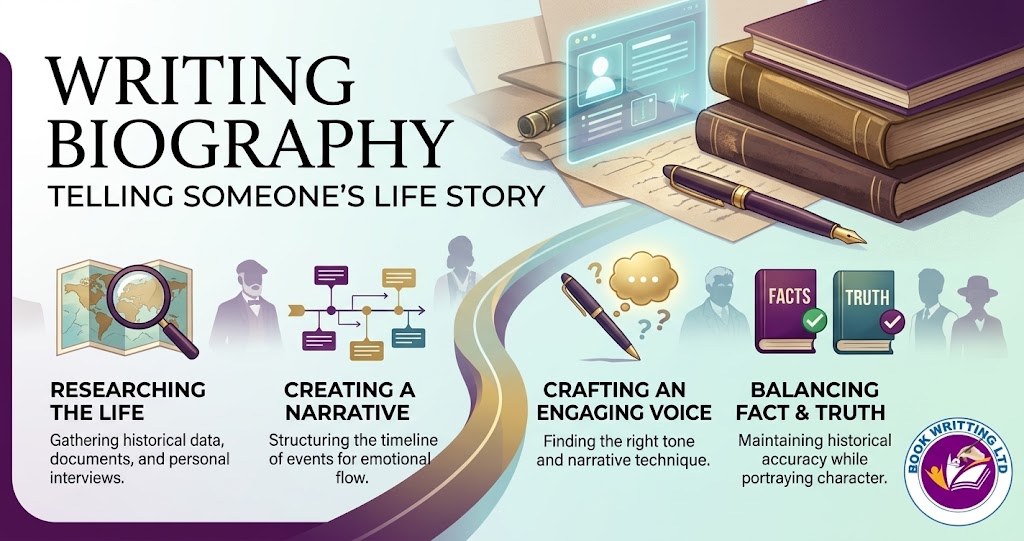
Every life contains experiences, decisions, challenges, and achievements that help explain who a person becomes. Writing a biography allows an author to explore those experiences and present them as a meaningful story. Whether you're documenting the life of a historical figure, a respected professional, a family member, or someone whose experiences deserve wider recognition, biography writing combines research with thoughtful storytelling.
However, writing a biography involves more than collecting dates and listing accomplishments. A successful biography helps readers understand the person behind the events, the circumstances that shaped their life, and the impact they had on others.
With careful research, a clear narrative structure, and attention to accuracy, you can transform a collection of facts into a compelling account of someone's life.
1. Understand the Purpose of the Biography
Before beginning your research, decide why you want to tell this person's story. Are you documenting a significant historical life, exploring a professional achievement, preserving family history, or examining how someone overcame particular challenges?
Your purpose will influence which events you investigate and how you organize the book.
For example, a biography of a scientist might focus on the person's discoveries, education, working relationships, and the circumstances surrounding their research. A biography of a community leader might explore family influences, important decisions, public service, and their impact on local life.
Identify the central question your biography will explore. This gives the project direction and helps you distinguish essential information from details that do not support the story.
2. Research the Person’s Life Thoroughly
Reliable research is the foundation of an accurate biography. Begin by collecting information from credible sources, such as published books, newspaper archives, official records, letters, photographs, and previously recorded interviews.
When possible, consult several independent sources rather than relying on a single account. Different sources may offer conflicting details or reveal different perspectives on the same event.
Keep a record of where each important fact comes from. This makes it easier to verify information during writing and prepare references if your publication requires them.
Avoid filling gaps in the historical record with assumptions. If a detail cannot be confirmed, consider whether it is necessary to include it and make any uncertainty clear to readers.
3. Conduct Meaningful Personal Interviews
Interviews can add valuable context that formal records may not provide. Family members, colleagues, friends, historians, and other people who knew the subject may remember experiences that help bring the story to life.
Prepare questions that encourage detailed answers. Instead of asking only whether an event occurred, ask what the person remembers, why the event mattered, and how it affected the people involved.
Listen for personal observations, memorable conversations, and descriptions of everyday life. These details can help readers understand the subject as a person rather than merely a name in historical records.
However, memories can be incomplete or influenced by personal perspectives. Whenever possible, verify important claims against documents or other reliable accounts, and represent differences in recollection fairly.
4. Build a Clear Narrative Structure
A biography may cover decades of a person's life, so organization is essential. Without a clear structure, the manuscript can become a sequence of dates and events rather than an engaging narrative.
A chronological structure is often a useful starting point. You might begin with the person's early life, explore their education and formative experiences, describe major turning points, and conclude with later achievements or lasting influence.
Other biographies may organize material around themes, professional milestones, personal relationships, or a central question.
Choose the structure that best explains the person's development. Each chapter should contribute something important to the overall account and help readers understand how one stage of life connects to another.
5. Bring the Person’s Character to Life
Readers want to understand not only what someone did but also what motivated their actions. Explore the person's values, ambitions, doubts, habits, relationships, and responses to difficult circumstances.
Use verified anecdotes and specific examples to reveal personality. A small moment, such as how someone approached a challenging task or treated a colleague, may communicate more than a long list of achievements.
Avoid presenting the subject as flawless. Honest biographies can acknowledge mistakes, disagreements, and setbacks while providing appropriate context.
At the same time, avoid making unsupported psychological judgments. Distinguish documented facts from interpretations, and give readers enough information to understand the choices being described.
6. Balance Facts with Storytelling
A strong biography combines factual accuracy with readable prose. The goal is to explain real events in a way that holds readers' attention without inventing details.
Use concrete descriptions when they are supported by your sources. Explain the circumstances surrounding important decisions and show how significant events affected the subject's life.
Dialogue requires particular care. Use direct quotations only when you have a reliable basis for the wording. If the exact words cannot be verified, paraphrase the person's account instead of presenting reconstructed dialogue as a confirmed quotation.
Keep the writing clear and focused. Technical explanations, dates, and background information should help readers understand the story rather than interrupt its flow.
7. Handle Sensitive Information Responsibly
Biographies may involve personal relationships, family disagreements, professional controversies, or difficult experiences. These subjects require careful judgment and responsible research.
Verify potentially damaging claims, distinguish allegations from established facts, and consider whether private details are genuinely relevant to the biography.
Respect privacy, copyright, and applicable legal requirements. If the project includes living people or sensitive material, appropriate permissions and professional advice may be necessary.
A compelling biography does not need sensational claims. Its strength comes from credible evidence, thoughtful context, and a fair presentation of the subject's life.
8. Revise and Verify the Manuscript
After completing the first draft, review the manuscript for both storytelling and accuracy. Check names, dates, locations, quotations, professional titles, and the sequence of important events.
Look for repeated information, unnecessary background passages, and chapters that do not advance the narrative. Make sure readers can follow the person's journey and understand why major events matter.
Ask knowledgeable readers or a qualified editor to review the work where appropriate. An independent perspective can help identify unclear passages, missing context, or claims that need further verification.
Writers who need help preparing their manuscripts can explore writing, editing, publishing, and book marketing services through Book Writting Ltd.
Writing a biography is an opportunity to preserve a life story and help readers understand the person behind the events. The process requires thorough research, meaningful interviews, clear organization, responsible handling of sensitive information, and engaging storytelling.
Begin by defining your purpose, gathering credible evidence, and identifying the experiences that best explain the subject's life. Then organize those experiences into a narrative that combines accuracy with human depth.
Remember that a strong biography is more than a record of what happened. It helps readers understand why those events mattered and how they shaped the person whose story deserves to be told.