Writing Contemporary Romance: How to Develop Relationships
24 October 2026 · 7 min read
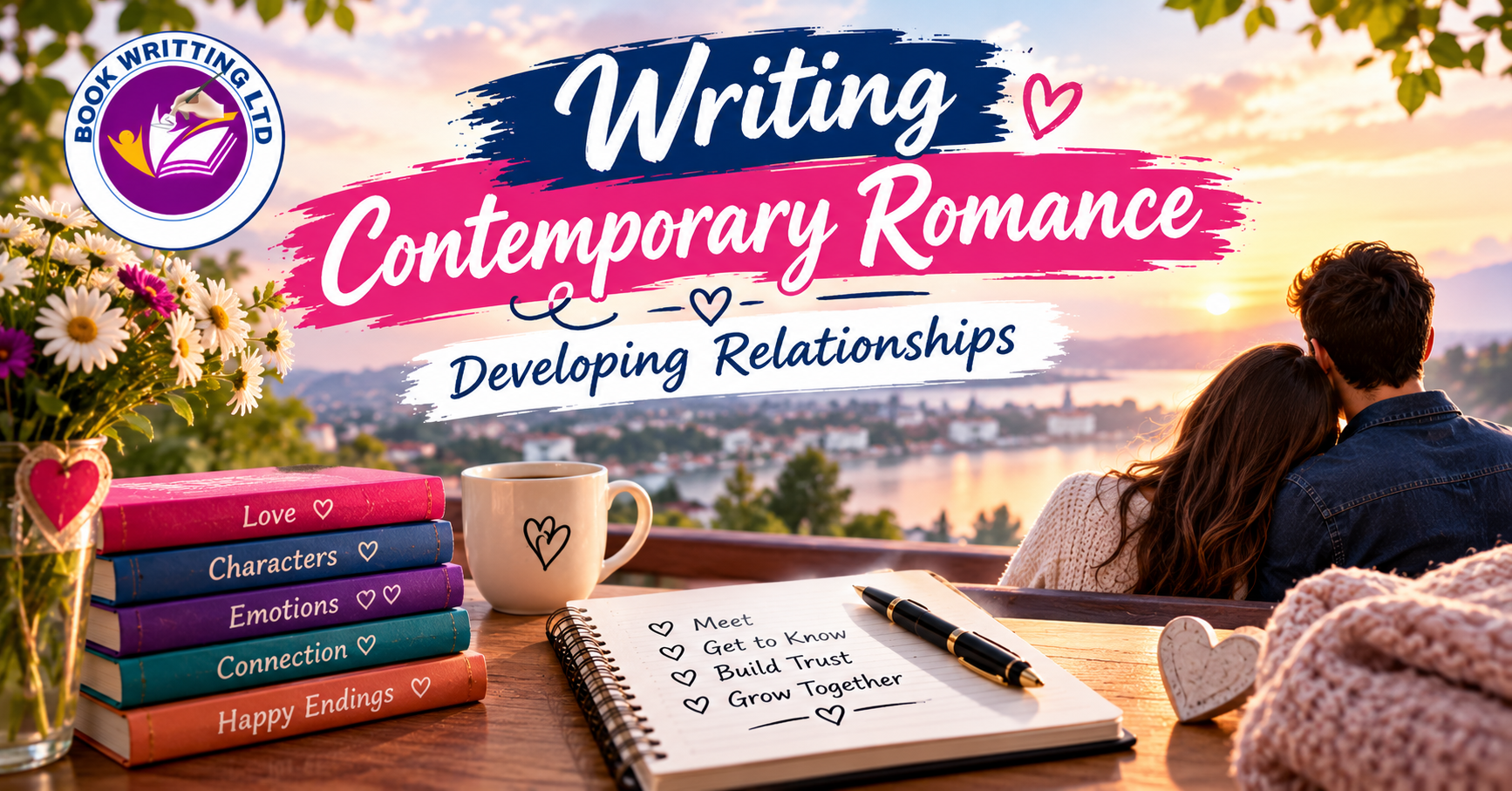
Contemporary romance explores love and relationships in the modern world. From unexpected meetings and growing friendships to emotional misunderstandings and second chances, these stories allow readers to experience the excitement and challenges of building a connection with another person.
However, a memorable romance requires more than attraction between two characters. Readers need to understand why the characters are drawn to each other, what makes their relationship complicated, and how their experiences change them over time.
Whether you're writing a lighthearted romantic comedy, an emotional love story, or a contemporary romance with serious personal challenges, thoughtful relationship development can make your story more convincing. By combining believable characters, natural chemistry, meaningful conflict, and emotional growth, you can create a romance that readers will remember.
1. Create Characters with Lives of Their Own
Strong romantic characters should have individual identities before their relationship develops. Give each protagonist personal ambitions, responsibilities, interests, strengths, and weaknesses.
One character might be focused on building a career, while another wants to reconnect with family or pursue a long-delayed creative dream. These independent goals make the characters feel like complete individuals rather than people whose only purpose is to fall in love.
Their personalities should also influence how they approach relationships. Someone who values independence may find it difficult to ask for help, while a person who wants to please everyone may struggle to express their true feelings.
When both characters have meaningful lives outside the romance, their eventual connection becomes more interesting.
2. Build Romantic Chemistry Gradually
Romantic chemistry develops through the way characters interact, respond to challenges, and discover each other's personalities.
A first meeting can create curiosity, but a believable relationship usually needs more than immediate attraction. Show the characters learning about one another through conversations, shared experiences, disagreements, and small acts of consideration.
Perhaps one character notices when the other feels uncomfortable in a group. Maybe they discover a shared interest or learn to appreciate a quality they initially misunderstood.
These moments help readers understand why the relationship matters.
Chemistry can also emerge through differences. Two characters may have contrasting personalities or approaches to life, creating opportunities for humor, tension, and mutual learning. Their differences should be interesting and compatible with the kind of relationship you're building.
3. Give the Relationship Meaningful Conflict
Every engaging romance needs obstacles, but the strongest conflicts arise naturally from the characters' goals, fears, and circumstances.
One protagonist might receive a career opportunity that requires moving away. Another might struggle to trust a new partner because of past disappointments. Family responsibilities, financial pressures, competing ambitions, or different expectations about the future can also create believable tension.
Make sure both characters have understandable reasons for their decisions. Avoid making one person behave unreasonably simply to delay the relationship's resolution.
Conflict should reveal personality and encourage change. As the characters work through their problems, they can learn to communicate more honestly, understand their own needs, and recognize what matters most.
4. Write Natural Dialogue
Dialogue is essential in contemporary romance because it reveals personality, develops chemistry, and allows readers to experience relationships directly.
Characters should speak according to their backgrounds, personalities, moods, and relationships. Friends may joke freely, colleagues may communicate more cautiously, and two people who are beginning to trust each other may gradually become more open.
Avoid making every conversation overly polished or filled with dramatic declarations. Ordinary exchanges can be meaningful when they reveal something about the characters.
Humor, hesitation, playful disagreement, and moments of silence can all contribute to romantic tension.
During revision, read conversations aloud. Remove repetitive exchanges and make sure each important conversation changes something, reveals new information, or deepens the relationship.
5. Let Emotional Intimacy Develop
Physical attraction alone cannot sustain a compelling romance. Emotional intimacy grows when characters begin to understand each other's hopes, vulnerabilities, values, and concerns.
Show this development through actions as well as conversations. A character might remember an important detail, offer support during a difficult moment, or respect a boundary even when doing so is inconvenient.
Trust often develops through repeated experiences rather than one dramatic scene. Let the characters demonstrate reliability over time.
At the same time, avoid making emotional closeness happen too quickly without sufficient explanation. Readers should see why the characters feel comfortable opening up and how their interactions gradually change the relationship.
6. Use the Modern Setting Meaningfully
Contemporary romance takes place in a recognizable modern world, which gives writers many opportunities to create relatable situations.
Workplaces, universities, cafés, apartment buildings, community events, family gatherings, and online communication can all influence how characters meet and maintain relationships.
Modern technology can also create complications. Messages may be misunderstood, schedules may conflict, and social media may introduce questions about privacy or expectations.
However, do not rely on misunderstandings that could easily disappear after one simple conversation. Make sure conflicts have believable emotional or practical reasons.
The setting should contribute to the characters' lives rather than function merely as decoration.
7. Develop Both Characters Through the Relationship
A satisfying romance allows both protagonists to grow. Their experiences together should challenge their assumptions, reveal their weaknesses, and help them make thoughtful decisions.
For example, a character who always avoids difficult conversations might learn to express concerns honestly. Another who places work above everything else might reconsider how to balance ambition with personal relationships.
Growth should not require characters to abandon their identities or give up every independent goal. A healthy, believable relationship can encourage both people to pursue their ambitions while learning how to support each other.
The most meaningful development occurs when characters make choices that reflect what they have learned.
8. Avoid Common Romance Writing Mistakes
Several common problems can weaken an otherwise promising contemporary romance.
Rushing the relationship: Give the characters enough time to build trust and understanding.
Using unnecessary misunderstandings: Make conflicts arise from meaningful differences or circumstances.
Creating one-dimensional characters: Give both protagonists independent motivations and weaknesses.
Ignoring supporting characters: Friends and family can reveal important aspects of each protagonist's personality.
Resolving every problem too easily: Make important decisions feel earned through the characters' actions.
Repeating romantic moments: Ensure each scene adds something new to the relationship.
During revision, examine whether the romance develops naturally from beginning to end.
9. Revise Your Romance Manuscript
After completing your first draft, review the relationship's progression carefully. Check whether attraction develops convincingly, the conflicts make sense, and important emotional changes receive enough attention.
Look for scenes where dialogue feels unnatural or where a character's behavior changes without a clear reason. Consider whether each protagonist has a satisfying personal journey as well as a meaningful romantic arc.
Feedback from trusted readers can help you identify moments that feel especially engaging or areas that need further development.
If you need support refining your manuscript, Book Writting Ltd offers writing-related services, including editing and publishing support, that authors can explore when preparing their projects.
Writing contemporary romance involves creating believable people whose lives become meaningfully connected. Develop characters with independent goals, build chemistry through shared experiences, and introduce conflicts that reveal their values and fears.
Allow emotional intimacy to grow gradually, use dialogue to communicate personality, and create a modern setting that naturally influences the relationship.
Most importantly, give both protagonists room to change without losing their individuality. When readers understand why the characters choose each other and how their relationship develops, the romance becomes more satisfying and memorable.
A compelling contemporary love story is not simply about two people getting together. It is about the experiences, decisions, and personal growth that make their connection matter.