
Writing Science Fiction: A Beginner’s Guide to Creating Futuristic Stories
9 November 2026 · 6 min read
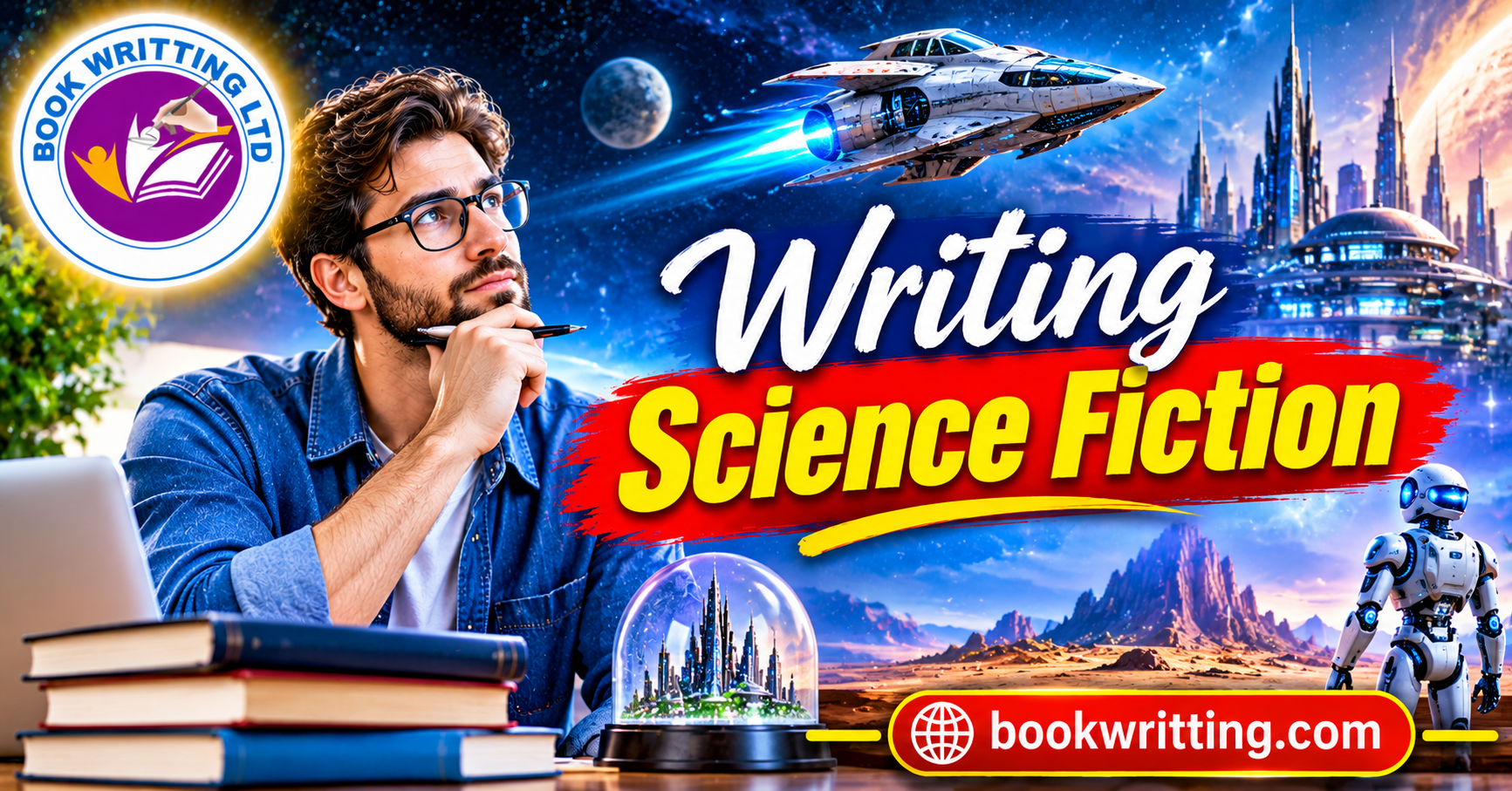
Have you ever imagined traveling to distant planets, meeting intelligent alien civilizations, exploring futuristic cities, or discovering technology that could change humanity forever? These exciting possibilities are at the heart of science fiction.
Science fiction is a creative genre that allows writers to explore imagined futures, scientific discoveries, advanced technology, space exploration, and alternative realities. It gives readers an opportunity to experience extraordinary worlds while thinking about the possibilities and challenges of human life.
If you enjoy imaginative storytelling and want to write your own science fiction novel, this guide will help you get started.
What Is Science Fiction Writing?
Science fiction is a genre of storytelling that explores imaginative ideas connected to science, technology, space, time, and the future. Stories may take place on distant planets, in advanced societies, or in versions of Earth that have changed dramatically.
Popular science fiction themes include:
Space travel and alien civilizations
Artificial intelligence and robotics
Time travel and parallel universes
Futuristic inventions and scientific discoveries
Environmental changes and survival
Life in advanced or dystopian societies
The most interesting science fiction stories combine imaginative ideas with believable characters and meaningful conflicts.
1. Start With an Interesting Science Fiction Idea
Every great science fiction story begins with an interesting concept. Think about a question that makes readers curious.
For example:
What if humans could travel to another galaxy?
What if artificial intelligence controlled every major decision?
What if people could communicate with their future selves?
What if scientists discovered a planet similar to Earth?
Choose one central idea and explore its possibilities. Consider how it could affect ordinary people, communities, and the world.
You do not need to create an entirely new universe immediately. A single imaginative idea can provide enough inspiration for an exciting story.
2. Build a Believable Futuristic World
Worldbuilding is an important part of science fiction. Your setting might be a futuristic Earth, a distant planet, a space station, or an entirely imagined civilization.
Think about the environment, society, culture, technology, transportation, and everyday life in your fictional world.
Ask yourself:
What does the environment look like?
How do people travel and communicate?
What technology do they use?
Who controls the society?
What challenges do people face?
Your world should follow consistent rules. Even extraordinary technology needs limitations and consequences. Reveal important details gradually through characters' experiences instead of overwhelming readers with long explanations.
3. Create Memorable Characters
Although science fiction often features futuristic technology and extraordinary settings, characters are what make readers emotionally connected to a story.
Create a protagonist with clear goals, strengths, weaknesses, fears, and motivations.
Your main character could be:
An astronaut exploring an unknown planet.
A scientist developing a revolutionary invention.
A robot learning about human emotions.
A young explorer searching for a new home.
A survivor trying to rebuild civilization.
Give your characters personal challenges alongside the larger science fiction conflict. Their decisions, relationships, and emotions should drive the story forward.
4. Develop Interesting Technology
Technology is often central to science fiction. You can imagine advanced robots, intelligent computers, spacecraft, futuristic medical devices, or machines capable of changing the world.
However, technology should serve the story rather than simply decorate it.
Consider three important questions:
What can it do? Explain its main purpose and capabilities.
What are its limitations? Give your inventions realistic restrictions within the fictional world.
What happens when something goes wrong? Technical failures and unexpected consequences can create exciting conflicts.
For example, a spacecraft might travel between planets but have limited fuel. This creates tension and forces the characters to make difficult decisions.
5. Create an Exciting Plot
A strong science fiction plot needs a clear beginning, middle, and ending.
Start by introducing your main character, the setting, and the central problem. Gradually increase the tension as the characters encounter unexpected discoveries, dangers, and difficult choices.
A simple structure could include:
Beginning: Introduce the world, protagonist, and main challenge.
Middle: Develop the conflict, reveal discoveries, and create obstacles.
Ending: Bring the major conflict to a satisfying conclusion.
You can include mysteries, unexpected twists, scientific discoveries, dangerous journeys, or conflicts between different civilizations.
Make sure every major event contributes to the story.
6. Research Scientific Ideas
Science fiction gives you freedom to imagine possibilities, but research can make your stories more convincing.
Explore subjects such as astronomy, physics, biology, artificial intelligence, robotics, and space exploration.
You do not need to become a scientist to write science fiction. However, understanding the basic principles behind your ideas can help you create more believable situations.
If you deliberately imagine something beyond current scientific knowledge, establish clear fictional rules so readers can understand how it works.
7. Balance Science With Storytelling
One common mistake new science fiction writers make is focusing too much on technology and explanations.
Readers may enjoy learning about futuristic inventions, but they also want interesting characters, emotional moments, suspense, and meaningful conflicts.
Instead of explaining every detail of a machine, show a character using it to solve a problem or facing unexpected consequences when it fails.
Let the science support the story rather than interrupt it.
8. Edit and Improve Your Manuscript
Once your first draft is complete, take time to review and improve it.
Check whether your world follows consistent rules, your characters have believable motivations, and your plot moves forward naturally.
Look for unnecessary explanations, confusing technical descriptions, weak dialogue, and repetitive scenes.
Reading your manuscript aloud can help identify awkward sentences and improve the flow. You can also ask trusted readers to provide feedback on the story.
Writing science fiction is an exciting opportunity to explore imaginative ideas and create unforgettable adventures. From distant galaxies and intelligent robots to futuristic societies and extraordinary discoveries, the possibilities are almost limitless.
Start with one interesting idea, build a believable world, develop memorable characters, and create a plot that keeps readers curious.
Most importantly, remember that the best science fiction stories are not only about technology or the future. They are also about people, choices, emotions, and the challenges of living in extraordinary circumstances.
Ready to begin your writing journey? Visit Book Writting Ltd. for more helpful writing guides, creative inspiration, and practical advice to help turn your ideas into books.